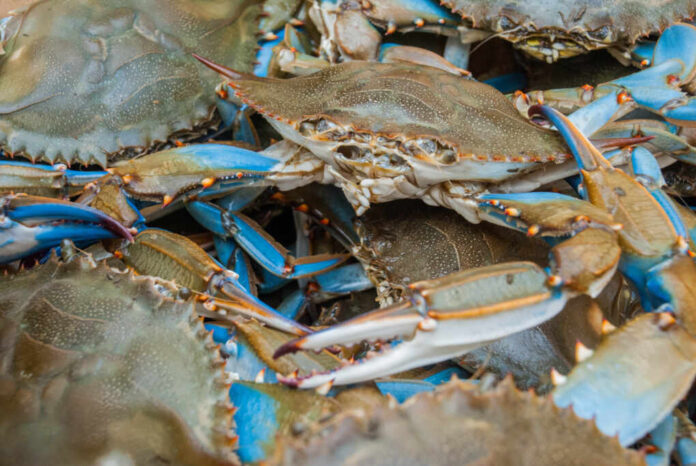
A parasitic worm once feared by fishermen could become the secret weapon to save America’s most iconic crustacean fishery from total collapse.
Story Highlights
- Chesapeake Bay blue crab numbers hit second-lowest levels since 1990, threatening a $170 million industry
- Parasitic worm *Carcinonemertes carcinophila* can track female crab spawning patterns better than current methods
- Revolutionary biomarker approach could replace costly, ineffective government monitoring programs
- Research published in *PLOS One* validates worm’s resilience across varying Bay conditions
From Parasite to Partner: Revolutionary Discovery
Scientists at William & Mary’s Virginia Institute of Marine Science have transformed our understanding of *Carcinonemertes carcinophila*, a tiny worm that feeds on blue crab eggs. Professor Jeffrey Shields and his research team discovered this supposed threat actually serves as nature’s own reproductive tracking system. The worm’s presence and color changes after feeding provide precise indicators of when and how often female crabs spawn, offering fisheries managers unprecedented insight into crab reproduction cycles.
Unlike previous parasitic species studied, *C. carcinophila* demonstrates remarkable resilience to salinity fluctuations throughout Chesapeake Bay. This adaptability makes it the first viable natural biomarker capable of functioning across the Bay’s diverse habitats. Alex Schneider from VIMS notes the symbiotic relationship allows researchers to distinguish between first-time spawners and repeat breeders, critical information for targeted conservation efforts.
Egg-eating worms could be the secret to saving Chesapeake Bay’s blue crabs https://t.co/SQ7hlvyflL
— Zicutake USA Comment (@Zicutake) September 20, 2025
Crisis Demands Innovation: Current Management Failures
The 2025 Winter Dredge Survey delivered devastating news: blue crab populations reached their second-lowest point since 1990. Traditional management approaches relying on population surveys and blanket harvest restrictions have proven inadequate against declining stocks. The Maryland Department of Natural Resources’ collaborative surveys highlight the urgent need for more precise, data-driven management tools that can identify and protect the most reproductively valuable female crabs.
Current monitoring methods fail to account for individual crab reproductive histories, leading to inefficient protection strategies. Fisheries managers have struggled with the Bay’s complex estuarine system, where female crabs migrate between high and low-salinity waters to spawn. This movement pattern has made consistent tracking nearly impossible using conventional techniques, resulting in management decisions based on incomplete data.
Economic and Cultural Preservation at Stake
The Chesapeake Bay blue crab fishery supports thousands of jobs and represents a cultural cornerstone of Mid-Atlantic communities. Local crabbers and seafood industry workers depend on healthy crab stocks for their livelihoods, while restaurants and processors rely on consistent supply chains. The potential collapse of this fishery threatens not only economic stability but also generations of maritime traditions deeply embedded in regional identity.
Implementing worm-based biomarker monitoring could stabilize crab populations while maintaining fishing opportunities for law-abiding commercial operators. The approach offers hope for sustainable fishery management that protects both conservation goals and the economic interests of hardworking American fishermen. Early discussions with regulatory agencies suggest growing interest in integrating these scientific findings into future management frameworks that prioritize both ecological health and economic viability.
Sources:
Parasitic Worms Could Help Save Chesapeake Bay’s Blue Crab Fishery
Can a parasitic worm help rebuild the Bay’s blue crab population?
Egg-eating worms could be the secret to saving Chesapeake Bay’s blue crabs
How a parasitic worm could help revive the Chesapeake Bay blue crab population
Worm Biomarker Blue Crabs Chesapeake