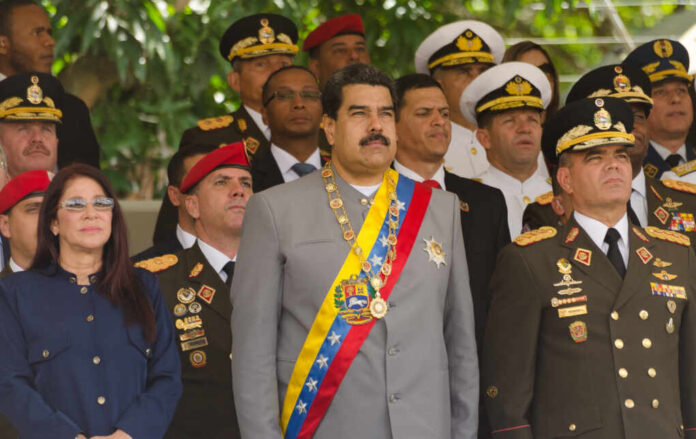
In a move echoing historical U.S. interventions, President Trump announces the capture of Nicolás Maduro, sending shockwaves through international politics.
Story Snapshot
- President Trump declares the capture of Venezuelan leader Nicolás Maduro.
- Photos reveal Maduro in U.S. custody, escalating U.S.-Venezuela tensions.
- The decisive action presents a stark shift in U.S. foreign policy strategies.
- Maduro’s capture may trigger significant geopolitical and economic repercussions.
Trump’s Unexpected Announcement
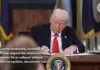
On January 3, 2026, President Donald Trump took to social media to announce a dramatic development: the capture of Venezuelan President Nicolás Maduro. The arrest, conducted by the U.S. Drug Enforcement Administration, marked a bold escalation in the troubled relations between the two countries. Trump’s decision to reveal the event through social media, coupled with images of Maduro in handcuffs, underscores a significant shift in the U.S.’s approach to international diplomacy, particularly in Latin America.
The unexpected capture has thrust the U.S. into the spotlight, showcasing a more aggressive stance in its foreign policy. Historically, the U.S. has imposed sanctions and diplomatic pressures, but the physical capture of a sitting foreign leader is rare. This move aligns with Trump’s campaign promises to take a hard line against socialist regimes, potentially setting a new precedent for dealing with adversarial governments.
https://youtu.be/BHyWpjWAgmk?si=0GtGG5NW9KmkMwoP
The Historical Context of U.S.-Venezuela Relations
U.S.-Venezuela relations have been fraught with tension since Nicolás Maduro assumed power in 2013. Following in the footsteps of his predecessor, Hugo Chávez, Maduro’s regime has been characterized by economic turmoil and allegations of electoral fraud. The U.S. has long been critical of Maduro’s leadership, especially after the contested 2018 elections. The U.S. recognized opposition leader Juan Guaidó as the interim president, further straining relations.
Maduro’s capture comes amid ongoing U.S. efforts to curb his influence and destabilize Venezuela’s alliances with Russia, China, and Iran. This intervention echoes past U.S. military actions in Latin America, such as the 1989 Panama invasion. The current geopolitical landscape, however, is more complex, with global powers keenly watching how the situation unfolds.
The Immediate and Long-Term Implications
In the short term, Maduro’s capture could lead to internal chaos in Venezuela. With the military on high alert, there’s potential for a power vacuum that could result in civil unrest or even a military coup. Opposition figures, such as María Corina Machado, may seize the opportunity to assert influence, but the path forward remains uncertain.
Long-term implications could see a shift in Venezuela’s political landscape, potentially paving the way for a democratic transition. However, the involvement of Maduro’s international allies could transform the situation into a proxy conflict. The capture may bolster Trump’s image domestically, but it risks further straining U.S. relations with Latin American countries that are wary of U.S. interventionism.
Economic and Social Repercussions
The capture of Nicolás Maduro is likely to have significant economic and social consequences. Venezuela, which holds approximately 20% of the world’s oil reserves, could see disruptions in its oil sector. Such instability might lead to volatility in global energy markets, affecting economies worldwide.
Socially, Venezuela is already grappling with a humanitarian crisis, with over 90% of its population living in poverty. The capture might exacerbate the situation, prompting further migration. For the Venezuelan diaspora, estimated at over seven million, the capture could represent a glimmer of hope for eventual repatriation.
Sources:
ABC News – Venezuela Live Updates