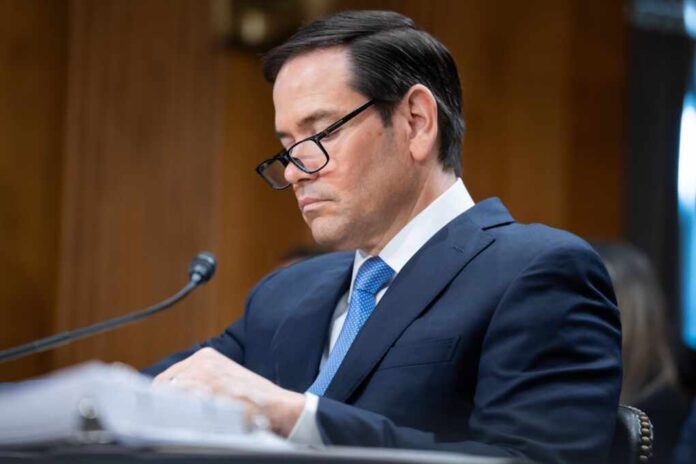
The capture of Nicolás Maduro has sparked heated debates about U.S. intervention in Venezuela, with Secretary of State Marco Rubio dismissing critics as out of touch.
Story Highlights
- Secretary of State Marco Rubio defends the U.S. military operation capturing Venezuelan President Nicolás Maduro.
- Rubio emphasizes that the operation is not a war but a necessary action for U.S. national security.
- The Trump administration maintains sanctions and asset seizures against Venezuela.
- Critics question U.S. intentions, but Rubio reassures no day-to-day governance by the U.S.
Rubio’s Defense of U.S. Actions
On January 4, 2026, Secretary of State Marco Rubio appeared on NBC’s Meet the Press to discuss the recent U.S. military operation that led to the capture of Venezuelan President Nicolás Maduro. Rubio firmly stated that the actions were not aimed at waging war against Venezuela but were crucial for ensuring U.S. national security. He criticized the media’s portrayal of the operation, calling it “clown hour,” and emphasized that the U.S. would not involve itself in Venezuela’s day-to-day governance.
Rubio’s remarks were aimed at clarifying the Trump administration’s policy objectives, which include maintaining sanctions on Venezuelan entities and seizing assets through legal channels. He assured that the military operation was carefully planned, resulting in no equipment loss, and was necessary due to the inability to negotiate with Maduro.
https://youtu.be/n7e_8GVN760?si=IlkuaNuq1iyj98wI
Policy and International Reactions
The Trump administration has outlined a policy direction focusing on encouraging Venezuela to align with U.S. interests. This includes the continuation of sanctions and legal asset seizures, seen as tools to foster change within the country. Rubio has made it clear that while the U.S. has no intention of occupying Venezuela, it retains the option should circumstances necessitate such action. The operation has set a precedent for U.S. involvement in regional affairs, highlighting the nation’s commitment to defending its interests in the Western Hemisphere.
Critics, however, question the legitimacy of the U.S. intervention and its potential consequences on Venezuelan governance. Rubio has responded by emphasizing the suffering of the Venezuelan people under Maduro’s regime and the operation’s intent to open pathways for a better future. The administration’s actions have been framed as necessary to safeguard regional stability and prevent external actors from destabilizing the hemisphere.
Implications for Venezuela and the Region
The capture of Maduro has introduced uncertainty in Venezuela, particularly regarding its political and economic future. The Trump administration’s strategy may lead to significant restructuring of Venezuela’s political system, influenced by U.S. policies. Economic changes, including potential sanctions relief, are contingent on Venezuela’s compliance with U.S. policy directions. Regional dynamics are also affected, as the operation signals a willingness by the U.S. to intervene in hemispheric affairs, potentially influencing foreign policy approaches toward other authoritarian regimes.
The Venezuelan population faces both challenges and opportunities as they navigate the transition. Rubio has portrayed the operation as a step towards alleviating their suffering and fostering a stable, democratic future. The U.S. government’s commitment to national security interests and regional stability underscores its actions, with Rubio warning against external influences that may threaten the Western Hemisphere’s peace.
Sources:
CBS News (January 4, 2026)
Pittsburgh Post-Gazette (January 4, 2026)