President Trump’s potential use of the Insurrection Act to deploy federal troops to Minneapolis has ignited fierce debate, highlighting a critical clash between federal authority and state resistance.
Story Highlights
- President Trump threatens to invoke the Insurrection Act amid Minneapolis protests over ICE shootings.
- Minnesota Governor Tim Walz mobilizes the National Guard, creating a potential federal-state conflict.
- Protests continue in Minneapolis following two ICE-related shootings, fueling tensions.
- The DOJ launches a probe into local officials for allegedly obstructing ICE operations.
Federal Troop Deployment Threats and State Resistance
President Trump has signaled a willingness to deploy federal troops to Minneapolis, invoking the Insurrection Act as a response to ongoing protests sparked by ICE-related shootings. This move comes as tensions rise between federal and state authorities, with Minnesota Governor Tim Walz mobilizing the National Guard, although they have yet to be deployed on the streets. The dual military standbys highlight the escalating situation and potential for conflict.
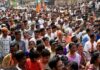
The protests were triggered by two recent incidents involving ICE officers, including the fatal January 7 shooting of Renee Good in south Minneapolis. The shootings have intensified public outcry and demonstrations, particularly at the Whipple federal building, which serves as a headquarters for ICE and the Department of Homeland Security. The clashes between protesters, counterprotesters, and law enforcement underscore the city’s fraught atmosphere.
https://youtu.be/0koPx6QQeIg?si=W3VH3g884QLuHL6t
Local and Federal Authorities Under Scrutiny
Amidst the turmoil, the Department of Justice has announced an investigation into Governor Walz and Minneapolis Mayor Jacob Frey for potentially obstructing federal immigration enforcement efforts. The probe examines whether their actions and statements have hindered ICE operations. This legal scrutiny adds another layer of complexity to the already tense situation, with federal and local authorities now pitted against each other.
The National Guard’s readiness, signaled through social media posts, has raised eyebrows and sparked discussions about the role of state forces in maintaining public order. The Guard’s mobilization, while a precautionary measure, emphasizes the ongoing power struggle between state and federal authorities over immigration enforcement and public safety.
Implications for National Policy and Local Communities
The situation in Minneapolis not only reflects local tensions but also raises questions about the broader implications of federal intervention in state matters. The potential deployment of troops could set a precedent for future federal-state military clashes, particularly in areas with strong resistance to federal immigration policies. This development underscores the ongoing national debate over immigration enforcement and state sovereignty.
The protests have also had a significant impact on local communities, with residents expressing concerns about safety and property damage. The rhetoric employed by both protesters and counterprotesters has further polarized public opinion, complicating efforts towards finding a peaceful resolution. As the situation continues to evolve, the eyes of the nation remain on Minneapolis, anticipating the next developments in this high-stakes standoff.
Sources:
Minnesota Protests: ICE Shooting and Law Enforcement Updates