
Hundreds of clergy and faith volunteers are set to stand outside polling places in battleground states, trained to calm tensions rather than confront trouble, as midterm voting nears.
Story Highlights
- An interfaith coalition plans to deploy trained “peacekeepers” outside polling sites in key states.
- Volunteers are taught de-escalation and bystander techniques and follow state-specific rules.
- Organizers say the role is a peaceful presence, not direct confrontation or electioneering.
- Officials and experts have reported rising threats against election workers since 2020.
Who Is Deploying And Where They Will Serve
Faiths United to Save Democracy and partner groups say they are training and certifying clergy and lay volunteers to serve outside polling places during the November midterms. Reporting describes plans for deployments in several battleground states, with volunteers wearing identifying hats or vests and staying beyond restricted zones set by local law. Organizers frame the effort as nonpartisan and interfaith, with pastors, imams, rabbis, and lay leaders working together to support a calm voting experience.
Earlier cycles saw similar activity. In 2024, more than 1,000 poll chaplains and peacekeepers participated across 10 states, including Wisconsin, Michigan, Pennsylvania, Georgia, Ohio, Arizona, Texas, Florida, North Carolina, and Alabama, according to local reporting. The current effort follows that model, focusing on a visible, steady presence outside sites. Teams aim to reassure voters who feel uneasy and to signal that communities are watching for harassment or disorder without inserting themselves into election operations.
What Peacekeepers Will And Will Not Do
Training materials from Interfaith America describe a narrow role: serve as a peaceful presence, avoid direct confrontations, and respect local election rules. The playbook points volunteers to bystander and de-escalation training and to state-specific guidance that explains where they may stand and how they should respond to tense moments. Organizers emphasize that volunteers do not police lines, do not challenge voters, and do not interact with ballots or machines. They seek to calm situations and, when needed, contact poll workers or law enforcement.
Organizers and trainers also stress nonconfrontation at the personal level. One trainer explained that a peacekeeper’s job is not to “square up” with someone causing a problem, but to support voters so they feel safe staying in line. That approach mirrors the playbook’s advice to de-escalate, offer information about voter rights when asked, and step back if a presence might inflame a dispute. The aim is to ease fear and reduce confusion while keeping the official election workers in charge.
Why This Is Happening Now
Local officials and researchers have tracked rising threats and harassment tied to elections since 2020. A 2024 survey summarized for journalists reported that 38 percent of 928 local election officials had faced threats, harassment, or abuse because of their jobs, up from 30 percent the year prior. That climate has spurred new safety plans, including law enforcement posture, legal guides on voter intimidation, and civic groups offering trained, nonintrusive observers near polling places.
ELECTION DAY: @AP reports an interfaith coalition recruited 1,235 volunteer poll chaplains and peacekeepers as of Oct. 19 for deployment in 9 states Nov. 3. The group says its mission is nonpartisan. Volunteers are not election officials.
— republican flatline (@jared8397742809) October 20, 2026
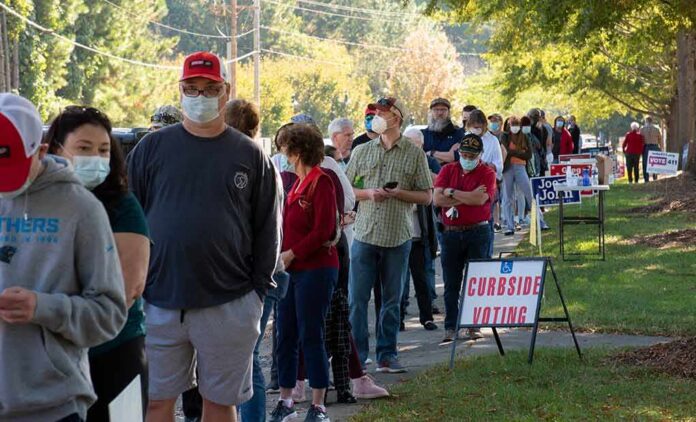
The peacekeeper model tries to navigate a hard line. Some voters want reassurance that they can vote without being hassled. Other voters worry that any visible presence near polls could feel like monitoring or soft pressure. Organizers answer that concern by keeping volunteers outside, avoiding political messages, and coordinating with local rules. Still, access and rules vary by state and county, so teams rely on training and clear boundaries to avoid crossing into restricted electioneering zones.
How It Could Affect Voters On Election Day
On-site volunteers can help in simple but useful ways. They can greet voters, point them to official signage, and encourage patience during long waits. If tempers rise, they can use practiced de-escalation steps and call a poll worker or officer if needed. The hope is that a calm presence reduces stress and keeps lines moving. Available reporting does not quantify the impact on incidents or wait times, so effects may be noticed anecdotally rather than in formal data.
The Bottom Line For A Polarized Moment
Faith-based peacekeepers reflect a broader reality: people across the spectrum want safe, fair, and peaceful voting. Supporters on the left and right distrust elites and fear that the system no longer serves them. This effort tries to meet voters where they are—at the polls—without adding to the noise. The role is narrow by design: be visible, be calm, and step back when necessary. In a tense season, measured actions at the edges can help protect the heart of the process.
Sources:
youtube.com, mercurynews.com, interfaithamerica.org, ncronline.org, greenvilleonline.com, news.bgov.com