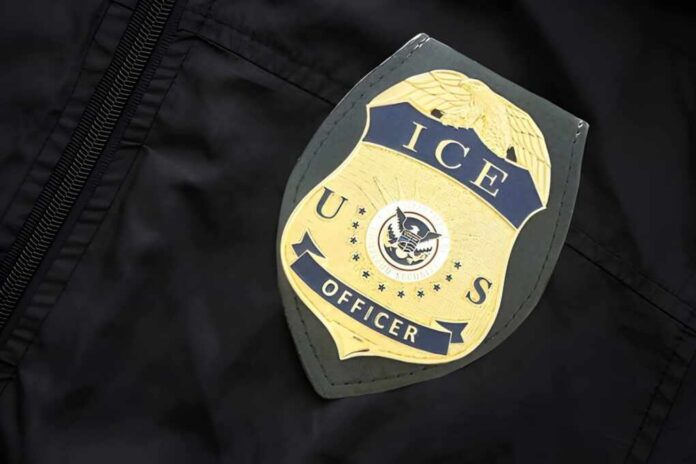
A California professor publicly named an Immigration and Customs Enforcement agent at a socialist conference and urged the crowd to “f**k him up,” igniting a fast-moving fight over protest, doxxing, and officer safety.
Story Snapshot
- A Cal State Los Angeles professor identified an ICE agent and his lodging to a conference audience.
- Homeland Security and Immigration and Customs Enforcement call doxxing a threat to officer safety.
- Federal prosecutors have previously charged activists for revealing an ICE agent’s personal details.
- The clash spotlights a broader legal and moral fight over speech, privacy, and intimidation.
What Happened On Stage In Oxnard
Townhall reported that Melina Abdullah, a Cal State Los Angeles professor and Black Lives Matter organizer, told a crowd in Oxnard that an Immigration and Customs Enforcement agent named “Brian Palacios” was staying “right down the road” at a Hilton Garden Inn, and told the audience to “f**k him up”. Daily Wire reported similar details from the same event. The reports say the remarks occurred at a socialist conference focused on opposing immigration enforcement. Video was cited by both outlets, but was not included in our materials.
Both outlets framed the remarks as incitement and doxxing. Neither outlet supplied a full transcript in the research provided here. We therefore rely on their reporting for quotes and context. The accounts align on the key facts: the public naming of the agent, the claimed hotel location, and the profane call to action. Those details shape the legal and safety concerns raised by federal officials and past cases involving public exposure of officers.
How Federal Officials Define The Risk
Immigration and Customs Enforcement has described doxxing as deliberate intimidation that endangers its employees. In a 2025 release, the agency said doxxing threatens officers and vowed enforcement against those responsible. A Department of Homeland Security statement echoed this, warning that doxxing and harassment will not be tolerated and linking such acts to surging threats and assaults against officers. These government statements set the stakes: when a crowd hears where an officer sleeps, risk can rise fast.
Federal officials are not only talking. Prosecutors have charged activists who allegedly revealed an Immigration and Customs Enforcement agent’s personal details in Los Angeles. Public filings described actions that included going to an agent’s home and shouting warnings to neighbors, and the case included a count tied to revealing a federal agent’s information. Those charges show how far the line can move from protest to alleged crime when personal identifiers and physical locations are involved.
Where Free Speech Meets Targeted Exposure
Scholars and civil liberties groups note that criticism of public officials is protected speech, and some activist groups frame exposure as accountability. The Foundation for Individual Rights and Expression argues that disclosing certain information about officials can be part of public debate when it does not enable harm or crime. Academic work defines doxxing as publishing personal information, often to intimidate or silence, and stresses that context and intent matter for how society judges the act.
That tension explains today’s divide. Supporters of aggressive protest say naming officials brings sunlight. Opponents say naming a person and linking them to a hotel or home puts a target on their back. Research on doxxing highlights the gray areas: disclosures tied to threats or to a person’s real-time location heighten risk and legal exposure. That is true even when protest aims are political, because safety and intimidation concerns do not vanish in a rally setting.
Why This Fight Resonates Nationally
This incident lands in a country already split over immigration enforcement and trust in government. Many conservatives see attacks on Immigration and Customs Enforcement as part of a broader breakdown in law and order. Many liberals see harsh enforcement as unjust and demand accountability for officers. Yet a growing share across the spectrum doubts that leaders protect ordinary people. That shared worry spikes when a professor’s microphone can turn a specific officer into a live target.
Clear rules help lower the temperature. Protesters can press leaders without sharing where a person sleeps. Schools and event hosts can set conduct standards that shield people from targeted exposure. Lawmakers can clarify when speech becomes a doxxing offense, while guarding space for dissent. None of this resolves the core policy fights. But it signals that power, protest, and safety must share the same stage without inviting real harm to people doing their jobs.
Sources:
townhall.com, dailywire.com, oxnard.gov, calstatela.edu, ihg.com, kpfa.org, latimes.com, lasentinel.net, capitalandmain.com