
Two conservative video activists now face felony charges in Minnesota after walking into polling places and handing election workers the names of real registered voters who never gave permission.
Story Snapshot
- Hennepin County charged James O’Keefe and Cam Higby with felony unlawful voting and identity theft.
- The pair visited four Hennepin County precincts during the August 11 primary to test the state’s voter “vouching” law.
- Election judges refused to give them ballots after they declined to sign a required oath.
- Minnesota’s Secretary of State called their video “heavily edited” and said it showed ignorance of the law, not a flaw in it.
- National data shows in-person voter impersonation is extremely rare, raising questions about what the stunt actually proved.
What Happened at the Polling Places
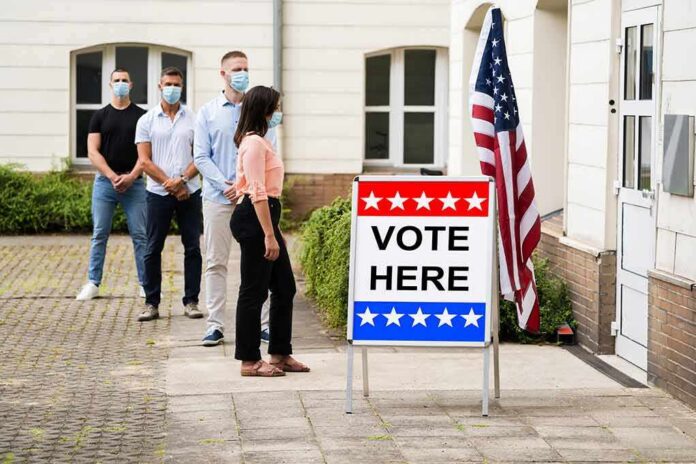
James O’Keefe and Cam Higby visited four Hennepin County precincts during Minnesota’s August 11 primary. They gave election judges the names of registered voters, according to prosecutors. Those voters reportedly had no idea their names were being used. The pair filmed the entire interaction, later posting video online that questioned how Minnesota verifies who is allowed to vote.
Neither man signed the oath required to receive a ballot. Election workers did not let them vote. That detail matters because it shows the system stopped the attempt before any ballot was cast, even as prosecutors say the men still broke the law by misrepresenting who they were.
How Minnesota’s Vouching Law Works
Minnesota allows a registered voter who lives in a precinct to vouch for another person’s residence, confirming they live where they say they do. In some cases, one voter can vouch for up to eight others. The law exists mainly to help new residents who lack updated address documents register and vote on the same day.
Separately, state law bars anyone from intentionally misrepresenting their identity when applying for a ballot, handing in a ballot, or trying to vote by machine. Prosecutors say that rule, not the vouching statute itself, is what the activists violated by using other people’s names without consent.
Officials Reject the Testing Narrative
Hennepin County Attorney Mary Moriarty said the two men entered polling places and identified themselves using the names of registered voters in those precincts, without those voters knowing. Her office said the Minnesota Secretary of State’s Office flagged the matter to prosecutors after learning of an effort to test, or undermine, the vouching system.
Secretary of State Steve Simon pushed back hard on the activists’ framing. He said their video was heavily edited and showed ignorance of how the state’s election laws actually work, rather than exposing any real weakness. He added that poll workers reported the visits to election officials and law enforcement right away.
Felony Charges Raise the Stakes
Hennepin County filed felony charges for unlawful voting and identity theft. That is a serious legal escalation from an online video stunt to a criminal case with real consequences for the two men. The charges shift public attention away from debates over election procedure and toward the defendants’ alleged conduct and intent.
The activists say their goal was to expose confusion or risk in how Minnesota verifies voter identity at the polls. Prosecutors describe the same actions as a deliberate attempt to undermine the vouching system and steal real people’s identities to make a political point. No judge has yet ruled on which description is accurate.
A Rare Crime, A Recurring Fight
National research suggests in-person voter impersonation, the exact crime this case centers on, is exceptionally rare. A News21 review of more than 2,000 alleged fraud cases nationwide since 2000 found only 10 instances of voter impersonation among roughly 146 million registered voters, a rate close to one in 15 million.
#BreakingNews Journalists James O’Keefe and Cam Higby have been Charged with Two Felony Charges in Minneapolis for their video exposing Voter Fraud in Minnesota's Elections
Higby walked in wearing a burqa to show they’d let him vote with a female's name with no questions… pic.twitter.com/19UAvoAv0M
— Christina Aguayo (@ChristinaNewstv) October 28, 2026
That rarity cuts both ways in the public debate. It raises doubts about whether the activists’ stunt revealed a meaningful weakness worth testing. At the same time, it does not erase the central fact that prosecutors say real voters’ names were used without permission, a concern that resonates with voters across the political spectrum who want confidence in how elections are run.
Sources:
cbsnews.com, nbcnews.com, mprnews.org, fox9.com, bringmethenews.com, audacy.com