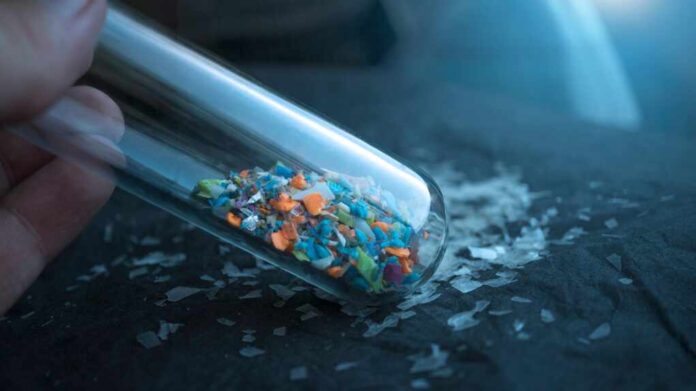
Scientists have discovered that nanoplastic particles can penetrate deep into edible vegetables, bypassing natural plant defenses and accumulating in tissues that cannot be removed by washing—exposing American families to an invisible contamination that government regulators have failed to address.
Story Highlights
- Nanoplastics breach natural plant barriers and accumulate inside edible radish tissues
- Traditional washing cannot remove these microscopic contaminants from vegetables
- First direct evidence shows plastic particles infiltrating the food chain at cellular level
- Regulatory agencies have no current standards to monitor or prevent nanoplastic food contamination
Breakthrough Study Reveals Plant Defense Failures
University of Plymouth researchers published groundbreaking evidence in Environmental Research demonstrating that nanoplastics—particles smaller than one micrometer—successfully cross the Casparian strip barrier in radish roots. This natural defense mechanism was previously believed to protect plants from such microscopic invaders. The controlled hydroponic study used radiolabeled nanoplastics to track particle movement, conclusively proving internal contamination occurs throughout edible plant tissues including roots and leaves.
Plastic nanoparticles found inside edible vegetables for first time, scientists say | The Independent https://t.co/t6OzkOb8YC
— Robert Olson (@MaxxWinter) September 19, 2025
Government Oversight Gaps Leave Families Vulnerable
Federal food safety agencies currently lack monitoring protocols or safety standards for nanoplastic contamination in produce. Dr. Nathaniel Clark’s research team warns that these findings likely extend beyond radishes to other crops, yet no regulatory framework exists to assess widespread contamination levels. The absence of government oversight means American families unknowingly consume plastic particles that accumulate in vegetables through environmental pollution, with zero accountability from agencies tasked with protecting food safety.
Environmental Mismanagement Creates Health Risks
Decades of poor environmental policies have allowed plastic pollution to infiltrate soil and water systems, creating the conditions for this contamination. Unlike surface residues from pesticides or bacteria that washing can remove, nanoplastics embed within plant cellular structures during growth. The particles represent a new category of food safety concern that traditional preparation methods cannot address, highlighting how environmental negligence directly threatens family health through the food supply.
Limited Research Exposes Regulatory Blind Spots
The Plymouth study tested only radishes using laboratory concentrations higher than typical environmental levels, revealing significant knowledge gaps about real-world exposure scenarios. Researchers acknowledge the need for comprehensive studies across various crops and plastic types to understand the full scope of contamination. This limited understanding underscores how regulatory agencies have failed to proactively investigate emerging environmental threats that could impact millions of American families through everyday food consumption.
Constitutional Concerns Over Federal Inaction
The federal government’s failure to address nanoplastic contamination raises questions about agencies fulfilling their basic constitutional duty to protect public welfare. While bureaucrats focus on overregulation in other areas, this genuine threat to food security receives inadequate attention or resources. American families deserve transparent information about food safety risks and proactive government action to prevent contamination, not reactive studies conducted after widespread exposure has already occurred throughout the agricultural system.
Sources:
Nanoplastics Penetrate Natural Barriers in Radish Roots – PubMed
Microplastics found in salad vegetables for first time – The Independent
Washing vegetables won’t remove plastic particles inside them – Study Finds
Plastic nanoparticles found inside edible vegetables for first time – The Independent