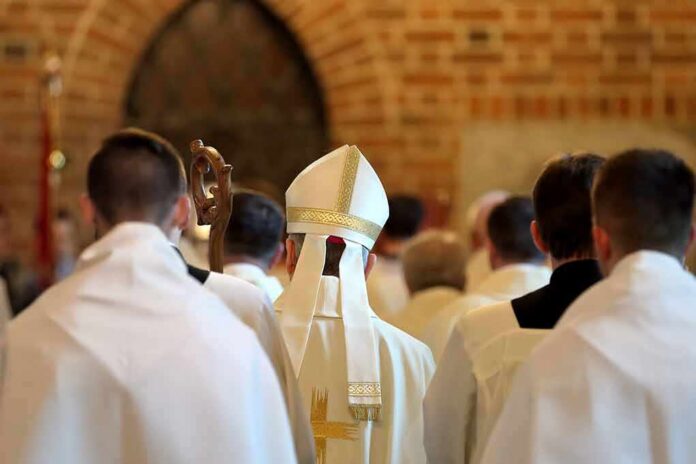
Pope Leo XIV’s choice of Octavi Vilà as Barcelona’s new archbishop is sparking fresh questions about Church discipline, doctrine, and transparency.
Story Snapshot
- The Vatican named Bishop Octavi Vilà as Archbishop of Barcelona, citing his record and service.
- Critics highlight a 2017 Freemason gathering at a monastery he led, but no proof shows he attended or approved it.
- Reported 2024 remarks linked to women’s ordination and priestly celibacy fuel debate over his views.
- The Catholic ban on Freemasonry and Church teaching on male-only ordination frame the dispute.
Vatican Appointment And Public Record
The Vatican announced that Pope Leo XIV appointed Bishop Octavi Vilà Mayo as the new Archbishop of Barcelona, following his service in Girona and earlier leadership as abbot of Poblet. Supportive profiles cite his education, late vocation, and management experience as reasons for confidence in his leadership. Local coverage adds that many church voices judged him suitable for the role and praised his cultural ties in Catalonia. The appointment itself is not in dispute, and the handover process is underway.
Supporters present the move as a considered choice shaped by on-the-ground knowledge of Catalonia’s needs. They say Vilà’s background as a monk and bishop shows steady service, not a single-issue profile. They also point to public welcomes from Catalan sectors that view him as cultured and close to local language and identity. Backers argue this is the type of pastoral fit that Rome often seeks when filling a major archdiocese with complex civic and cultural demands.
Freemasonry Controversy And What Is Proven
Critics focus on a national meeting of senior Freemasons held at the Royal Monastery of Santa María de Poblet in June 2017, when Vilà was abbot. Reports identify the organizers and some participants in the gathering. However, available accounts do not show that Vilà attended, approved, or joined the event, and they offer no membership evidence linking him personally to Freemasonry. The core facts support venue proximity, not personal affiliation, which is a key difference for fair judgment.
The Church’s teaching makes the stakes clear. The Vatican has repeatedly reaffirmed that Catholics may not join Masonic groups because their principles conflict with Church doctrine. That rule shapes how many Catholics read any report about Freemasonry and church institutions. Even a venue-based association can look troubling to laypeople who expect leaders to draw bright lines. Without proof of personal involvement, though, the claim remains about optics more than direct action.
Reported Remarks On Women’s Ordination And Celibacy
Separate reporting links Vilà to comments in 2024 that women’s ordination “could happen,” and that ending mandatory priestly celibacy was still possible under the synodal process. Those reports rely on secondary summaries of an interview, not a full transcript, which limits clarity on context and intent. The Church teaches that only men can be ordained, while celibacy is a discipline that the Church could change in principle, creating different levels of concern among Catholics.
Pope Leo XIV has appointed a new Archbishop of Barcelona, I think the choice offers a fascinating insight into the direction of his pontificate.
Fra Octavi Vilà Mayo is a Cistercian monk, former Abbot of Poblet and Bishop of Girona, appointed to that diocese by Pope Francis in… pic.twitter.com/SnRzSSDVoE
— Mark Lambert (@sitsio) November 11, 2026
Some profiles describe Vilà expanding lay roles, including women leading Liturgies of the Word and helping at funerals, during his time in Girona. That practice does not equal support for ordaining women, but critics see a pattern and seek clearer lines. Supporters counter that pastoral flexibility on lay roles is not doctrinal change. The record so far lacks an official statement from Vilà as archbishop clarifying his position, which keeps debate active and invites calls for transparency.
Why This Matters Beyond Church Circles
Large institutions lose trust when leaders leave key questions unanswered. Many Americans, on the left and right, see a pattern: powerful bodies make big choices but reveal little about how they weighed known concerns. This Vatican appointment includes open questions about Freemasonry optics and reported doctrinal remarks. Clear answers could lower the temperature. Silence, by contrast, fuels narratives that elites close ranks and expect people to accept, not understand, their decisions.
What To Watch Next
Watch for three things. First, an official archdiocesan statement clarifying Vilà’s views on women’s ordination and priestly celibacy. Second, any record from Poblet or event organizers that addresses who approved the 2017 booking and what policies now govern outside groups. Third, steady reporting on Vilà’s governance in Barcelona. Real decisions over time will speak more loudly than fragments from an old interview or a controversial venue booking.
Sources:
lifesitenews.com, russpain.com, en.wikipedia.org, en.ara.cat, infovaticana.com