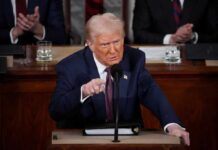
President Donald Trump has approved the deployment of 350 National Guard troops to New Orleans, a decisive move that comes amid escalating concerns over violent crime in the Democrat-led city. Requested by Republican Governor Jeff Landry, the mission is set to reinforce federal law enforcement during high-risk periods like New Year’s and Mardi Gras. This action highlights a deep partisan division, with critics arguing the move is unnecessary while proponents insist local leadership has failed to ensure public safety.
Story Snapshot
- President Trump approved 350 National Guard troops for New Orleans to back up federal law enforcement during New Year’s and Mardi Gras.
- Louisiana’s Republican Governor Jeff Landry requested the Guard amid violent crime concerns and an aggressive Border Patrol immigration crackdown.
- The troops operate under Landry’s command through February 28, 2026, reinforcing the Department of Justice and Homeland Security.
- Critics claim crime is already trending down, exposing a sharp partisan divide over law and order in Democrat-run cities.
Trump Backs Law and Order Where Local Leaders Fell Short
President Donald Trump approved the deployment of 350 National Guard members to New Orleans after months of concern about violent crime and public safety in the Democrat-led city. The move came at the request of Louisiana Governor Jeff Landry, a Republican who has made no secret of his frustration with soft-on-crime approaches that leave residents and tourists exposed. New Orleans had recorded 97 murders by November 1, 2025, a stark reminder that “better than last year” still is not safe.
The Guard mission, announced by Pentagon spokesman Sean Parnell on December 23, 2025, is designed to support federal law enforcement agencies, including the Department of Justice and the Department of Homeland Security. Troops will provide extra manpower and visible deterrence during high‑risk periods like New Year’s celebrations and the Mardi Gras season, when massive crowds and alcohol have historically combined with existing gang activity to create a perfect storm for violence.
🚨 BREAKING: President Trump and Secretary Hegseth are surging HUNDREDS of National Guard troops to New Orleans to clean up crime, per Gov. Landry
This’ll also help free up State Police who can assist ICE
This is EXACTLY how it should work EVERYWHERE 🔥 pic.twitter.com/XVxipGJx3j
— Nick Sortor (@nicksortor) December 23, 2025
How the National Guard Mission Will Work on the Ground
Under the arrangement, the 350 Guard members will operate through February 28, 2026, remaining under Governor Landry’s command despite federal approval of the mission. That structure respects state authority while allowing close coordination with federal partners such as Border Patrol and federal prosecutors. Many of the same Louisiana Guard troops had previously been federalized for missions in Washington, D.C., and are now returning home with experience working in complex urban security environments.
Pentagon officials have emphasized that these Guard members are highly trained citizen-soldiers used to working alongside local police and federal agents rather than replacing them. Their role is to reinforce, not nationalize, law enforcement by providing perimeter security, logistics, surveillance support, and rapid-response capability for joint task forces. For conservatives who watched federal power weaponized against parents and gun owners under the prior administration, the key distinction here is that the Guard is backing up law enforcement against criminals, not being aimed at law‑abiding citizens.
Crime, Immigration, and the “Swamp Sweep” Crackdown
The deployment is closely tied to a broader immigration and crime operation underway across Louisiana. In early December, Border Patrol launched “Swamp Sweep,” a crackdown targeting 5,000 arrests tied to illegal immigration and related criminal activity, with several hundred people already detained. The National Guard presence gives federal agents additional security and logistical depth as they track, process, and transport suspects, especially in and around New Orleans where local policies have often been more lenient toward unlawful migrants.
For many conservatives, this combined approach represents the exact opposite of the Biden-era mindset that encouraged sanctuary policies, de facto open borders, and revolving-door prosecutions. By pairing an immigration enforcement surge with Guard support, the Trump administration and Governor Landry are signaling that New Orleans will not be allowed to drift into the lawless pattern seen in other progressive strongholds. Visitors planning to travel for New Year’s and Mardi Gras may see more uniforms on the streets, but the goal is to make their stay safer, not more restricted.
Democrat Leadership Under Fire as Partisan Divide Widens
The move also highlights a deep political clash between Republican leadership focused on order and Democrat officials who insist the city is already improving. Critics argue that violent crime in New Orleans is trending downward and that bringing in hundreds of Guard members is unnecessary and potentially intimidating. Yet those same critics cannot ignore nearly one hundred homicides in ten months, nor the reality that many residents still do not feel safe walking their own neighborhoods after dark.
New Orleans Mayor LaToya Cantrell’s office reportedly did not respond to requests for comment on the deployment, underlining the disconnect between City Hall and state and federal leaders now taking action. For many in the conservative base, this silence is part of a familiar pattern: progressive mayors downplaying crime, resisting federal help, and then blaming everyone else when families and small businesses suffer. Trump’s approval of the Guard mission shows that, at least in Louisiana, that pattern will not be allowed to stand unchallenged.
Watch the report: Louisiana calls the National Guard in: 350 troops deployed
Sources:
Trump Approves Deployment of 350 National Guard Members to New Orleans
Pentagon to send 350 National Guard troops to New Orleans as violent crime surges ahead of major events
Trump approves deployment of 350 national guard members to New Orleans