The U.S. military operation to capture Nicolás Maduro marks a significant moment in the fight against narco-terrorism, but raises questions about the future of Venezuelan sovereignty.
Story Snapshot
- The U.S. launched airstrikes on Caracas on January 3, 2026, capturing President Maduro.
- Operation “Absolute Resolve” involved over 150 aircraft and integrated military elements.
- Venezuela condemned the action as aggression and appealed to the UN.
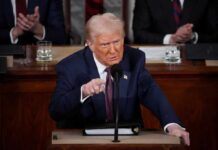
- President Trump justified the operation citing narco-terrorism charges against Maduro.
- Concerns arise over regional instability and the legality of unilateral military actions.
U.S. Military Action in Venezuela: The Capture of Nicolás Maduro
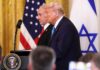
On January 3, 2026, the United States executed a large-scale military operation, named “Absolute Resolve,” which resulted in the capture of Venezuelan President Nicolás Maduro. The operation was ordered by President Trump and involved over 150 aircraft launching from 20 different bases across the Western Hemisphere. This decisive action was framed as a necessary step to combat narco-terrorism, with Maduro’s indictment for such charges previously announced by the U.S. Attorney General.
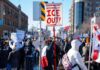
This bold move has been met with mixed reactions. While the Trump administration sees this as a victory in its ongoing battle against drug cartels, the Venezuelan government has condemned the strikes as a violation of their sovereignty. They have called for an urgent meeting of the UN Security Council to address what they describe as an act of aggression.
Early this morning, the Trump administration carried out military strikes in Venezuela and captured dictator Nicolás Maduro and his wife. @IamGermania explains why Venezuelans around the world are celebrating and what must come next. pic.twitter.com/JQ9pmqp9up
— The Free Press (@TheFP) January 3, 2026
Historical Context: A Long-Standing Tension
The roots of the current tensions between the U.S. and Venezuela can be traced back to the rise of Hugo Chávez in 1999. Over the years, relations have steadily deteriorated, culminating in various sanctions imposed by the Trump administration from 2017 to 2019. These included restrictions on Venezuelan bonds and the state-run oil company, PDVSA. Fast forward to 2020, and the U.S. further escalated its stance by indicting Maduro on charges of narco-terrorism.
In recent months, there has been a visible U.S. military buildup in the Caribbean, with airstrikes targeting alleged drug trafficking operations. The designation of Maduro’s “Cartel de los Soles” as a terrorist organization further exemplifies the escalating measures taken by the U.S. to dismantle the Venezuelan regime.
Implications and Reactions
The capture of Nicolás Maduro has raised significant questions regarding the future of Venezuela and the stability of the region. While the operation was executed without seeking congressional authorization, it has sparked debates about the legality and potential consequences of such unilateral military actions. In the short term, there is a power vacuum in Venezuela, with the potential for unrest and instability.
Moreover, this scenario has strained international alliances, with some nations criticizing the U.S. approach. The long-term implications could include a precedent for future interventions, which may alter the geopolitical landscape in Latin America.
https://youtu.be/xREv1PVdtJo?si=-7pJs0uBxYrXURib
Sources:
US-Venezuela timeline: From sanctions to military action
United States Captures Nicolás Maduro
Military Action in Venezuela: United States and Maduro