

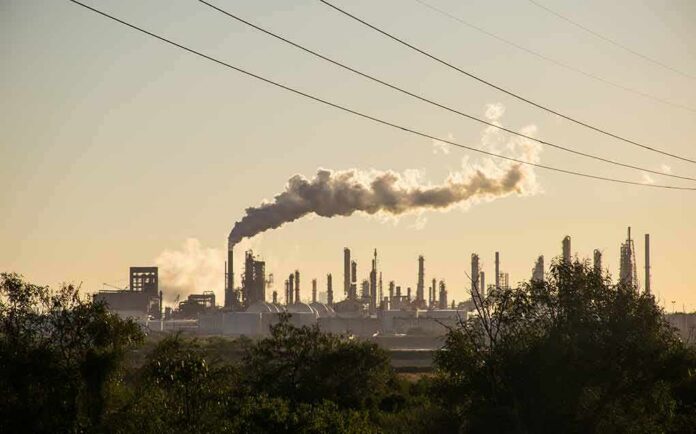
Ukraine hit a major Russian oil refinery days after President Trump announced an “energy ceasefire,” exposing a shaky truce and rising risks for fuel prices and the war itself.
Story Highlights
- Ukraine says it paused strikes after Trump’s truce, then resumed as Russia kept hitting its energy sites.
- Kyiv frames refinery attacks as conditional: stop if Russia stops targeting Ukraine’s energy.
- The Ryazan refinery, tied to Moscow’s fuel supply, was among the targets, signaling economic pressure.
- The Kremlin disputes a real pause and says the truce’s scope was never set.
Kyiv Resumes Refinery Strikes After Reported Russian Energy Attacks
Ukrainian forces struck Russian oil refineries after saying they held fire when President Trump announced an energy truce. President Volodymyr Zelenskyy said Ukraine paused attacks, but Russia still struck Ukrainian energy facilities, including fuel stations and power sites, within days of the announcement. Zelenskyy tied the renewed strikes to those hits and said Ukraine would halt refinery attacks if Russia stopped targeting its energy grid. He framed the response as conditional and reciprocal, not open-ended.
Reuters reported that one target, the Ryazan refinery, is owned by Rosneft and accounts for nearly five percent of Russia’s refining throughput. The plant helps supply Moscow, so damage there can affect both local fuel supply and national output. Ukrainian officials also pointed to strikes near Ufa and Kuibyshev, part of a broader effort to pressure Russia’s war economy by hitting refineries and logistics. These sites convert crude into products used by both civilians and the military.
Trump’s Truce Faces Confusion Over Scope and Compliance
President Trump announced that Russia and Ukraine agreed to halt attacks on energy infrastructure, and he pushed Kyiv to stop strikes on Russian refineries, which he tied to higher diesel prices. Kyiv said it supported a ceasefire but reported Russian strikes soon after the announcement. The Kremlin did not confirm a binding deal and said contacts were ongoing, leaving the terms unclear and enforcement weak. This ambiguity set the stage for fast breakdown and finger-pointing.
The Kremlin argued that Ukraine’s strikes on Russian energy assets ran against United States peace efforts and said the truce’s scope had never been defined. Moscow also claimed its own targets in Ukraine were legitimate military objects because they supported Kyiv’s war effort. That framing challenges Ukraine’s claim of reciprocity and invites more disputes over what counts as energy versus military infrastructure. Without agreed rules, each side cites its own facts and priorities.
Why Refineries Matter: War Aims, Fuel Prices, and Public Backlash
Refineries sit at the intersection of war and daily life. Disabling them can limit military fuel, squeeze government revenue, and stress supply chains. Reuters noted Ryazan’s role in Russia’s fuel system, underscoring why Kyiv sees pressure there as leverage. But strikes on refineries can also raise global fuel prices, a concern President Trump has voiced. That economic risk gives outside powers and markets a stake in how this campaign unfolds, beyond battlefield maps and front lines.
For Americans, this episode feeds a wider worry: leaders make sweeping deals with fuzzy terms, then blame others when the plan collapses. People on the right see fuel price spikes and ask why Washington cannot secure reliable energy. People on the left see war talk overshadowing civilian harm and climate goals. Both see a government class that talks tough but delivers confusion, while families pay more at the pump and watch distant fights shape their budgets.
Competing Claims and What We Do Not Know Yet
Ukraine says it paused strikes and resumed only after Russia kept hitting its energy network. The British Broadcasting Corporation and Reuters reported six Ukrainian energy sites struck after the truce claim, backing Kyiv’s timeline. The Kremlin counters that Ukraine never stopped and that the ceasefire’s scope was still under discussion. Independent, shared verification of every claimed strike during the pause is not available in the cited reporting. That gap keeps the dispute open.
‘We’re done’: Ukraine resumes strikes on Russian oil refineries as anger at Trump mounts https://t.co/qc0S1NeEeW via @nbcnews
— Larry (@Springfld) October 15, 2026
Two facts remain firm despite the noise. First, refineries are now frontline targets in a larger economic war. Second, unclear deals invite fast failure. A workable ceasefire would need clear lists of protected sites, start times, verification rules, and a way to respond to violations. Until that exists, each new blast risks higher fuel costs, deeper anger at elites who overpromise, and more pressure on a global economy already stretched by conflict and inflation.
Sources:
reuters.com, rmb.reuters.com, bbc.com, fidelity.com