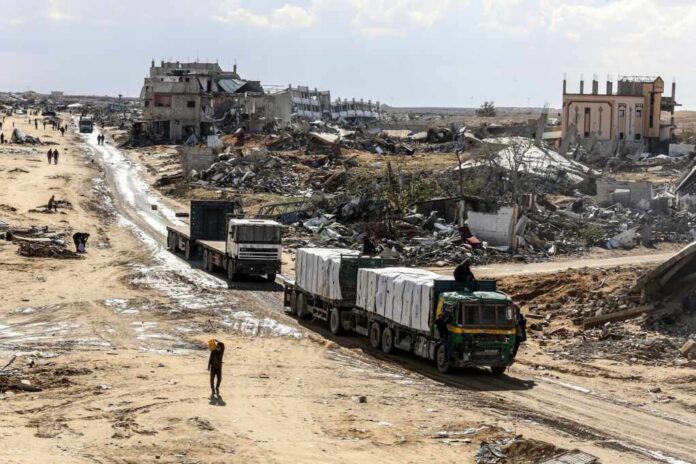
Despite fierce international criticism and deadly risks, a U.S.- and Israeli-backed aid group has now delivered 100 million meals to Gaza’s civilians.
Story Snapshot
- Gaza Humanitarian Foundation (GHF) surpasses 100 million meals delivered since May 2025
- Operations continue despite deadly attacks from Hamas and international criticism
- GHF claims to be the only reliable food aid provider in Gaza
- U.S. and Israeli governments directly back GHF with $30 million in funding
GHF’s Unprecedented Milestone Amid Turmoil
The Gaza Humanitarian Foundation (GHF) announced on August 1, 2025, that it reached the staggering milestone of 100 million meals delivered to civilians in the war-torn Gaza Strip since launching operations just ten weeks earlier. This feat, coordinated with both U.S. and Israeli authorities, comes despite ongoing violence, deadly attacks on aid workers, and mounting criticism from international organizations. GHF, led by Executive Chairman Rev. Johnnie Moore and Interim Executive Director John Acree, says it is the only aid group consistently able to deliver food on the ground, attributing its success to robust security measures and direct U.S. and Israeli support.
The Gaza Humanitarian Foundation has delivered 100 million meals to the people of Gaza since its launch at the end of May. #news https://t.co/9Gu91nOpwN
— Filtered News (@filterednews) August 1, 2025
Since its launch in late May 2025, GHF has faced relentless security threats, including the killing of a dozen local workers by Hamas in June and the placement of bounties on both American and Palestinian staff. In mid-July, about 20 civilians lost their lives in a tragic stampede at an aid distribution point, underscoring the immense risks faced not only by aid workers but also by desperate Gazan families. Despite these dangers, GHF claims to be the only reliable food aid system currently operating in Gaza, maintaining regular ground and airdrop missions even as other organizations have withdrawn or curtailed operations due to safety concerns and logistical breakdowns.
Watch: What is the Gaza Humanitarian Foundation? – YouTube
Controversy Over Security and Humanitarian Neutrality
GHF’s approach to aid delivery has ignited a heated debate within the international humanitarian community. The United Nations and several world leaders have sharply criticized the group’s reliance on armed security, warning that the blurring of lines between humanitarian work and military operations puts both recipients and workers in harm’s way.
U.N. Secretary-General António Guterres labeled GHF “inherently unsafe” and called for the suspension of U.S. support, citing civilian deaths and what he described as operational recklessness. Senate Democrats echoed these concerns in a recent letter, amplifying calls for greater oversight and accountability. GHF’s leadership, by contrast, maintains that without their unique operational model, tens of thousands more Gazans would be facing starvation, arguing that traditional humanitarian neutrality has proven ineffective or impossible under current conditions.
GHF’s direct backing from the U.S. and Israeli governments—totaling $30 million—has enabled the group to assemble a security force of American and Palestinian personnel, ensuring aid reaches civilians rather than being diverted by Hamas or looted during transit. This explicit government support is both a point of pride and a source of controversy, as critics warn it could set a precedent for the militarization of humanitarian aid and further erode the principle of impartiality in conflict zones.