A New York City mayoral candidate’s refusal to condemn Hamas has ignited outrage, exposing the dangerous moral ambiguity of leftist politics and alarming those who value America’s stance against terrorism.
Story Snapshot
- Zohran Mamdani, a Democratic mayoral candidate, faced criticism after declining to call for Hamas’s disarmament in a televised interview.
- Mamdani’s response emphasized the necessity of “international law” compliance by all parties involved in the Gaza conflict.
- The position drew condemnation from figures like Iranian-American activist Masih Alinejad, leading to debate over political rhetoric concerning international terrorism.
- The controversy highlights the ongoing tension over the role of local leaders in addressing foreign policy conflicts.
Candidate’s Response to Disarmament Question Draws Scrutiny
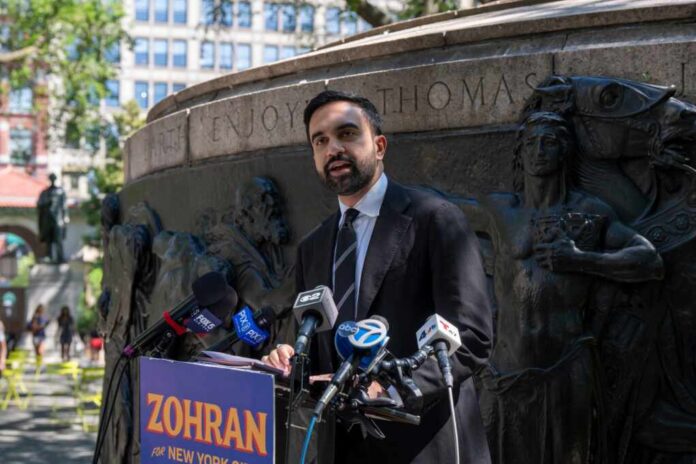
Zohran Mamdani, a New York City mayoral candidate, drew national scrutiny following a Fox News interview in which he declined to explicitly urge Hamas to disarm. When pressed on whether the designated terrorist group should lay down its weapons, Mamdani responded by stating that the requirement for “justice and safety” necessitates that anything that occurs “has to abide by international law and that applies to Hamas, that applies to the Israeli military.” This emphasis on international legal standards over a direct call for disarmament became the core of the controversy.
Masih Alinejad, a prominent Iranian-American journalist and women’s rights advocate, publicly criticized Mamdani’s position, arguing that public officials have a moral obligation to take a clear stand against groups recognized globally as terrorist organizations. Alinejad’s intervention intensified the public debate, questioning whether political figures should prioritize abstract legal principles over a clear condemnation of violence.
Zohran Mamdani slammed over refusal to condemn Hamas and ‘Globalize the Intifada’ phrase: ‘That is cold’ https://t.co/cCOTJ6z5z6 pic.twitter.com/3VsCzIp0fF
— New York Post (@nypost) October 16, 2025
Backdrop: Middle East Conflict and Political Polarization
The controversy unfolds against the backdrop of the ongoing conflict between Israel and Hamas, which controls Gaza and has been widely condemned for attacks targeting civilians. The political discourse in the U.S. regarding the conflict remains polarized. The Trump administration’s recent foreign policy, which included efforts toward a brokered ceasefire deal that required Hamas to disarm and release hostages, provides the immediate context for pressure on candidates to clearly define their stances on international terrorism.
Mamdani, who has participated in rallies critical of Israeli policies, has drawn support from progressive and leftist groups. However, his refusal to explicitly call for disarmament has increased scrutiny from centrist and pro-Israel organizations, who warn that ambiguity on terrorism can be perceived as emboldening extremist groups.
Expert Analysis: The Perils of Ambiguity on Terrorism
Legal scholars and political commentators have debated the effectiveness of Mamdani’s reliance on “international law” as a response to questions about a non-state actor’s military capability. Critics argue that international legal frameworks are often insufficient in managing non-state groups like Hamas, suggesting that public officials should offer clear, principled opposition to terrorism. Mamdani’s campaign maintains that his approach is rooted in principles of universal human rights and opposition to all violence.
The public reaction to the candidate’s ambiguity has created a critical moment for how U.S. politicians are judged on foreign policy issues. The debate highlights a central public expectation that representatives should demonstrate clarity and resolve when addressing organizations that pose a threat to international and domestic security.
Sources:
Free Beacon
The Algemeiner
AOL
AOL