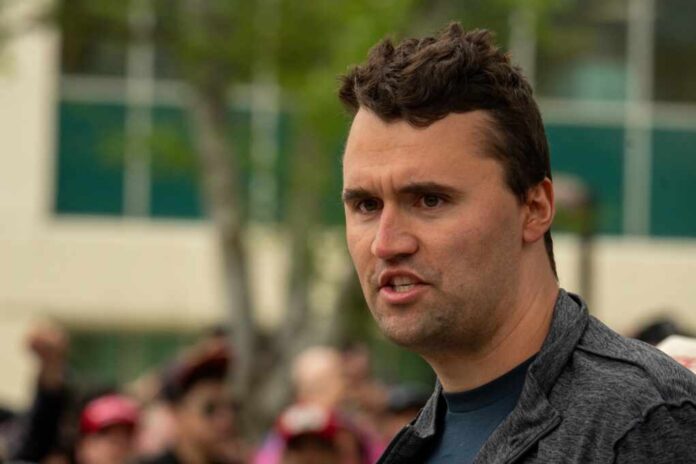
Just one day after Charlie Kirk’s assassination, a left-wing professor’s public attack on his character reignited the battle over free speech, media bias, and the demonization of conservatives in America.
Story Snapshot
- Chanda Prescod-Weinstein, a University of New Hampshire professor, publicly labeled Charlie Kirk a “white supremacist” less than 24 hours after his assassination.
- The professor’s viral posts, responding to media tributes, fueled a national debate over the boundaries of academic bias and political rhetoric.
- The controversy highlights escalating tension concerning viewpoint diversity and the use of accusations in both academia and media discourse.
- Campus tensions and legal challenges have intensified, raising questions about constitutional rights and open public debate.
Academic’s Public Critique Follows Kirk’s Assassination
On September 10, 2025, conservative activist Charlie Kirk, founder of Turning Point USA, was assassinated at Utah Valley University. Less than a day later, Chanda Prescod-Weinstein, a physics professor at the University of New Hampshire (UNH), used the social media platform Bluesky to post a critical statement. Prescod-Weinstein publicly labeled Kirk a “white supremacist” and criticized media figures who offered positive assessments of his legacy. This rapid public commentary from an academic figure immediately highlighted the deep political polarization in American society.Prescod-Weinstein’s statements were widely circulated, drawing sharp criticism from conservative commentators and individuals who viewed her remarks as an attack on the broader conservative movement’s right to participate in public debate.
Weaponization of Accusations and Impact on Conservative Speech
The controversy surrounding Prescod-Weinstein’s posts has been cited as an example of a trend in academia where accusations are deployed to discredit political opponents. This incident occurs amid existing tensions regarding the treatment of conservative voices and organizations like Turning Point USA (TPUSA) on college campuses. Critics argue that these tactics pose a challenge to constitutional principles, specifically First Amendment rights to free speech and association, by creating an environment designed to chill open inquiry.
In the wake of Kirk’s assassination, there have been reports of heightened harassment and threats directed at both conservative and liberal professors, further escalating campus tensions. Legal challenges have been initiated by professors dismissed over their public comments about the assassination, underscoring the potential spillover effects of such controversies on academic freedom and employment.
Media Amplification and the Battle for Public Legacy
Media outlets, including Fox News and other news aggregators, rapidly amplified the controversy, ensuring that Prescod-Weinstein’s remarks and the subsequent backlash reached a national audience. The framing of Kirk’s legacy by the professor as a symbol of white supremacy has been a recurring theme among some critics, despite ongoing disputes over the factual accuracy and political motivation of such claims.
Conservative figures argue that this pattern represents an effort to delegitimize constitutionalist movements and silence their leaders. The result is a widening ideological gap between segments of the population who view these accusations as politically motivated smears and those who interpret them as necessary social justice critique. The consequences of the controversy extend to campus policies, legal standards, and the perceived boundaries of acceptable speech.
Sources:
Charlie Kirk White Supremacist? – racism.org
Black Professors Watch List, Threats Kirk – Capital B News
Left-wing New Hampshire professor smeared Charlie Kirk for ‘white supremacy’ after assassination – Fox News
Professors fired over Charlie Kirk comments – AOL
Left-wing New Hampshire professor smeared Charlie Kirk for ‘white supremacy’ after assassination – Fox8TV
Charlie Kirk record bigotry hatred – AOL