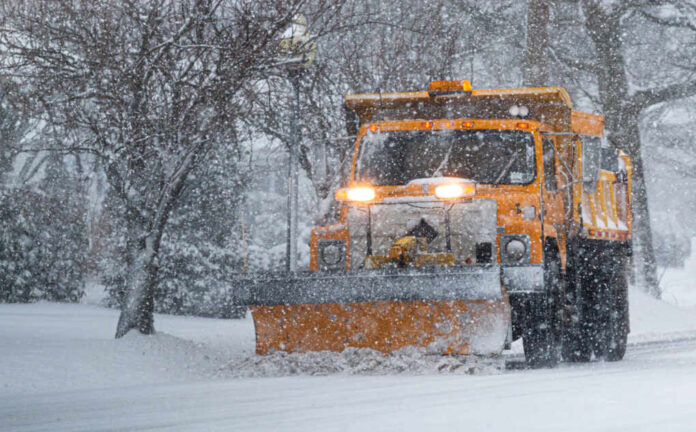
A massive winter storm spanning over 2,000 miles is bearing down on 235 million Americans across 40 states, triggering emergency declarations from governors nationwide as families brace for what meteorologists are calling a potentially historic weather event.
Story Snapshot
- Winter Storm Fern affects 235 million Americans across 40 states from Arizona to Maine
- Multiple governors declared states of emergency; National Guard mobilized in Georgia, Missouri, and other states
- Dangerous combination of heavy snow, freezing rain, and ice threatens widespread power outages and transportation disruptions
- Snow accumulations of 5-12 inches expected, with some areas potentially receiving over a foot through Monday
Unprecedented Scale of Winter Storm Emergency
Winter Storm Fern began impacting the Southern and Central Plains on Friday, January 24, with forecasters predicting the system would persist through Monday, January 27. The storm’s geographic reach stretches from the Texas Panhandle through Kansas and Missouri, breaking into Tennessee, Kentucky, Georgia, and the Carolinas before advancing into the Northeast corridor. Major metropolitan areas including Dallas, Atlanta, Charlotte, Washington D.C., Philadelphia, New York City, and Boston face significant impacts. The FOX Forecast Center deployed hurricane hunter airplanes to collect data on the complex system, demonstrating the storm’s meteorological intensity and forecasting challenges.
We're tracking the impacts of Winter Storm Fern, & our @ENERGY response team is ready to support industry, state, local, & federal partners.
Follow @DOE_CESER for updates. pic.twitter.com/OtYQ1GVkxB
— DOE CESER (@DOE_CESER) January 24, 2026
Multi-State Emergency Response Coordination
Governors from Texas, Louisiana, Georgia, Alabama, Mississippi, Tennessee, Kentucky, Missouri, Kansas, West Virginia, Virginia, Maryland, New York, and Washington D.C. declared states of emergency as the storm approached. Georgia mobilized 500 National Guard personnel while Ohio positioned 1,500 snowplows for rapid deployment. This coordinated response reflects the serious threat to public safety and infrastructure that officials recognized. Emergency Operations Centers activated across affected regions, with state and local agencies working to protect citizens from the dangerous combination of heavy snow, freezing rain, and extreme cold temperatures following the storm.
Critical Infrastructure and Transportation Threats
The storm threatens major transportation arteries including Interstates 40, 20, 65, 81, 95, 80, and 75, with dangerous driving conditions expected across multiple regions. Snow rates could reach one inch per hour during peak intensity Sunday, when the storm was forecast to impact northern Virginia through the New York tri-state area. Winter Storm Watches issued from Washington D.C. through Boston indicated over a foot of snow was likely across 10 Northeastern states. Major airports from Dallas to Boston faced operational challenges. Widespread icing from Midland, Texas, to Dallas and Little Rock posed severe threats to power infrastructure, potentially leaving families without electricity during dangerously cold conditions.
Economic and Public Safety Implications
The multi-day impacts across 40 states threaten commerce, supply chains, and business operations during a critical period when Americans are working to rebuild economic stability under the Trump administration. Early voting was cancelled in New York for January 25, and universities delayed student move-ins, demonstrating the storm’s broad societal disruption. Louisville expected 8-12 inches of snow, with the highest totals along and north of I-40 in Tennessee, particularly the Cumberland Plateau and southern Appalachians. The Atlanta-Charlotte corridor faced dangerous freezing rain Saturday afternoon. Prolonged exposure to extreme cold following the storm could stress power grids and water systems, creating additional challenges for families already dealing with the initial impacts.
This historic storm demonstrates the importance of robust state and local emergency management systems that can respond quickly without excessive federal intervention. The coordinated efforts of governors, National Guard units, and transportation departments reflect the principle that emergency response functions best when executed closest to affected communities. As the storm system winds down from west to east Monday, with extremely low temperatures locking in winter weather conditions, the resilience of American families and communities will be tested once again.
https://youtube.com/shorts/C_NOAtMhUh8?si=l0bqiBFj0ho7ovUm
Sources:
Timeline: Potentially Historic Winter Storm Sweeps Across US – FOX Weather
January 2026 United States Winter Storm – Wikipedia
Historic Winter Storm Set to Impact Millions of Americans – KTXS
Maps: Winter Storm Snow Cold Weekend – CBS News