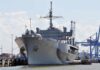
America’s carrier fleet is hitting a hard reality: the USS John C. Stennis won’t be ready to deploy until 2027 after spending 5.5 years in the shipyard.
Quick Take
- USS John C. Stennis (CVN-74) entered a midlife Refueling and Complex Overhaul in 2021 that has slipped well past its original timeline.
- The Navy now projects completion around October 2026, but real-world deployment readiness is expected to extend into 2027.
- Officials cite “growth work” discovered after tear-down, workforce and material shortfalls, and limited shipyard capacity as key causes.
- The delays ripple across the 11-carrier force as other carriers queue for maintenance, including USS Harry S. Truman starting its own overhaul in 2026.
Stennis’ “midlife reset” is running long—and the fleet can’t easily absorb it
USS John C. Stennis, a Nimitz-class nuclear-powered aircraft carrier commissioned in 1995, is undergoing the Refueling and Complex Overhaul that typically extends a carrier’s service life and modernizes combat systems. The work began in 2021 and was initially expected to finish by August 2025. That schedule has slipped to roughly October 2026, with deployment readiness pushed into 2027 as testing and integration continue.
The distinction between “shipyard completion” and “deployment-ready” matters to taxpayers and to deterrence. A carrier leaving the yard still needs post-maintenance trials, air wing integration, and certifications before it can credibly surge into a crisis. The research available does not provide an exact deployment month in 2027, but multiple reports converge on the same bottom line: Stennis will not be an operational option for commanders until sometime after the current completion target.
“Growth work” and aging steel: why timelines collapse once the ship is opened up
Navy leaders and reporting point to “growth work” as a central driver of the delay—unplanned repairs discovered after the ship is opened, stripped, and inspected. In Stennis’ case, reporting cites issues such as corrosion, outdated wiring, and a degraded steam turbine as examples of what can surface once a 25-plus-year-old warship enters deep maintenance. Those discoveries trigger redesigns, added labor, new parts, and sequence changes that can snowball into long delays.
That mechanical reality collides with an industrial reality. Rear Adm. Casey Moton and Navy statements cited in the research link the schedule slip to workforce and material shortfalls, with pandemic-era disruptions worsening existing stress on the shipyard labor pool and supply chain. The most conservative takeaway is not partisan—it is structural: when highly specialized labor is short, even funded work slows down, and each delay pushes the next ship further right on the calendar.
One yard, one bottleneck: the capacity problem Washington ignored for too long
Only a limited number of facilities can perform nuclear aircraft carrier refueling overhauls, and the research emphasizes the lack of redundancy—particularly the dependence on Newport News Shipbuilding for this kind of work. That concentration means the Navy can’t simply “shop around” for a faster slot when a project grows. When one carrier runs long in a dry dock, every carrier behind it faces a higher risk of delay, regardless of how urgent the operational demand becomes.
This is where frustration with past governance intersects with national defense reality. The sources describe a Navy trying to sustain an 11-carrier fleet while simultaneously managing extended deployments and aging hulls. When the country spends big but cannot translate dollars into throughput—trained workers, available dry docks, predictable supply—capability erodes quietly. No constitutional issue is required for this to matter; readiness is a core federal responsibility, and the schedule suggests the system has been stretched thin.
The ripple effects: Nimitz extended, Truman next, and fewer carriers to cover more hotspots
The Stennis delay is not occurring in isolation. Reporting in the research notes that USS Nimitz decommissioning has been pushed back to March 2027 to align with the future force structure as newer Ford-class ships arrive. That kind of extension can help bridge a gap on paper, but it also underscores how carefully timed the carrier lifecycle is supposed to be—and how disruptive it becomes when overhauls take five to six years instead of the planned four.
Meanwhile, USS Harry S. Truman is next in line for a major overhaul beginning in 2026, and past experience with USS George Washington shows what happens when extended yard periods collide with sailor quality-of-life problems. The Navy has responded with new habitability standards, including more reliance on off-ship housing during RCOH, and budget requests have reflected that need. Those are responsible steps, but they also add complexity and cost to an already strained pipeline.
What can be said with confidence—and what still isn’t clear
The strongest, best-supported facts in the research are the timeline slip (from an August 2025 target to around October 2026) and the expected deployment readiness stretching into 2027, plus the stated causes: growth work, workforce and material constraints, and limited shipyard redundancy. The less-settled detail is the exact point in 2027 when Stennis can deploy, because post-yard certification timelines vary and depend on testing results and integration milestones.
Aircraft Carrier USS John C. Stennis Won’t Be Ready to Deploy Until 2027 — 5.5 Years in the Shipyard and the U.S. Navy Is Still at Warhttps://t.co/zeGgD1ikOz
— 19FortyFive (@19_forty_five) March 22, 2026
For conservative readers who value a strong defense and competent governance, the lesson is straightforward: America can’t deter adversaries with press releases. The carrier force is a crown jewel of U.S. power projection, but it depends on an industrial base that must be staffed, supplied, and expanded realistically. The available reporting frames Stennis as a warning sign; even if every delay has an explanation, the cumulative outcome still reduces readiness during a high-threat period.
Sources:
USS Nimitz Decommissioning Pushed Back 2027
Carrier USS John C. Stennis Overhaul Delayed, Work Will Take More Than 5 Years to Complete
Navy Nimitz-Class Nuclear Aircraft Carrier USS John C. Stennis Out Action for 5 Years