President Donald Trump’s vow that Iran will “pay many times over” for killing American soldiers signals a harsh new stage in a war that is already costing lives and stoking fears of unchecked power.
Story Snapshot
- Trump promises Iran will suffer “many times over” for every US troop killed, after new deaths in Jordan and Iraq.
- The United States says its latest strikes on Iran are defensive retaliation for a deadly missile and drone attack on a base in Jordan.
- Iran’s forces and militias are hitting US-linked targets across the region, while also claiming strikes were payback for earlier American attacks.
- Years of “self-defense” missions have turned into a steady pattern of war that many Americans feel they never truly agreed to.
Deadly Attack on US Forces in Jordan
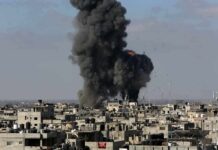
On July 17, United States Central Command said American and partner forces in Jordan came under ballistic missile and drone fire from Iran, killing two service members and leaving one missing in action. The strike hit Muwaffaq Salti Air Base, a site known to host US personnel and aircraft supporting operations across the Middle East. Officials reported at least four more US troops were wounded, adding to a growing list of casualties in a war many Americans mostly see through brief headlines.
Reports from regional and international outlets described the attack as part of a wider Iranian campaign against US-linked bases, following earlier American strikes on Iranian targets. Iran’s Islamic Revolutionary Guard Corps announced it had launched missiles and drones at US military assets in Jordan and other Gulf locations, framing its actions as retaliation for prior US attacks. That back-and-forth response shows how quickly “defense” on one side becomes “revenge” on the other, trapping troops in the middle.
Trump’s Warning: “Many Times Over”
After the deadly weekend, President Trump used social media to issue a blunt threat: “Every time Iran kills an American Soldier they will pay for that killing many times over.” He said this directive had been passed to senior Pentagon leaders, signaling that future US missions would aim not only to stop attacks, but to inflict much heavier losses on Iran in return. In separate comments, Trump acknowledged US casualties as “expected” in this conflict and insisted the struggle would lead to a “great deal for the world.”
Reporting from Reuters and regional media said the confirmed number of US military deaths in the Iran conflict has climbed to at least 17, with more remains still being examined. Over the weekend alone, two troops died in the Jordan strike, and another was killed in northern Iraq while handling unexploded ordnance from a downed Iranian drone. These deaths add to earlier casualties from large joint operations like Operation Epic Fury, where the US and Israel struck Iranian missile, naval, and security sites across the country.
US Strikes Cast as “Self-Defense”
The Pentagon and United States Central Command have consistently described recent strikes on Iran and Iran-backed forces as “self-defense” actions, triggered by attacks on American troops and equipment. A Central Command release on June 9 said US forces hit Iranian air defenses, radar, and surveillance sites after Iran downed a US Army Apache helicopter, calling the mission a “proportional response to unjustified Iranian aggression.” This same framing now appears in the response to the Jordan base attack, with officials stressing that the US does not seek a wider war.
This language follows a pattern seen in past conflicts with Iran-linked militias. Since late 2023, US officials have documented dozens of rocket and drone attacks on American bases in Iraq and Syria, with at least 60 personnel reporting minor injuries, mostly from blasts. US airstrikes in those cases were also labeled defensive, targeting facilities tied to Iranian-backed groups after fatal or serious attacks on US service members. For many citizens, though, “self-defense” missions now look like a long, grinding war being fought without a clear end or open national debate.
Iran’s Moves and Regional Escalation
Iranian leaders and military units are pushing their own narrative of defense and payback. The Islamic Revolutionary Guard Corps has claimed responsibility for missile and drone strikes on US bases in Jordan and other locations, saying they were carried out in revenge for American attacks on Iranian soil. Tehran has also complained to the United Nations that countries like Jordan allow their territory to be used for strikes on Iran, calling this a violation of its security. These claims aim to cast Iran as the victim of foreign aggression, even as it fires weapons across borders.
https://t.co/WuSr7TKe8m
Two U.S. soldiers killed in Jordanhttps://t.co/JEwL2ew89JMon, Jul 20 at 2:32 AM
View in browserhttps://t.co/NRGa96Zfu3
MONDAY, JULY 20
TWO US SERVICE MEMBERS KILLED IN IRANIAN ATTACK ON JORDAN Two U.S. service members were killed and one remains…
— drwildasays (@HeardWilda) July 20, 2026
Regional coverage notes that Jordan is becoming a new focal point in the US–Iran war, with multiple attacks on US forces there over a span of days that wounded dozens of service members and damaged helicopters. Iran’s Revolutionary Guard has boasted of hitting targets in Syria, Jordan, and Kuwait overnight, underscoring how the conflict is spilling across several countries at once. For people on both the right and the left in America, this kind of shadow war fuels a common fear: powerful actors decide on strikes, and ordinary citizens and troops bear the cost.
Growing Pattern, Growing Public Frustration
Analyses of Trump’s second term show a sharp rise in US military operations, with hundreds of airstrikes ordered across multiple regions in just one year. These missions range from counterterrorism raids in Africa to major blows against Iran’s nuclear and missile infrastructure. Each strike is justified as necessary, defensive, or proportional. But taken together, they look like a steady expansion of American force abroad at a time when many feel the government struggles to fix problems at home.
Conservatives angry about globalism, open-ended wars, and bloated spending see another costly conflict where elites make choices and working families send their sons and daughters. Liberals worried about human rights and inequality see a war where some leaders openly talk about killing “many times” more people in response, raising real moral and legal questions under international law. Both sides share a deeper concern: when presidents and generals move from careful defense to broad revenge, it can erode the very principles of restraint and accountability that the United States was supposed to stand for.
Sources:
independent.co.uk, usatoday.com, nbcnews.com, al-monitor.com, facebook.com, abcnews.go.com, middleeasteye.net, caliber.az, ibtimes.co.in, newarab.com, militarytimes.com, cfr.org, centcom.mil, wtae.com, nebraskaexaminer.com