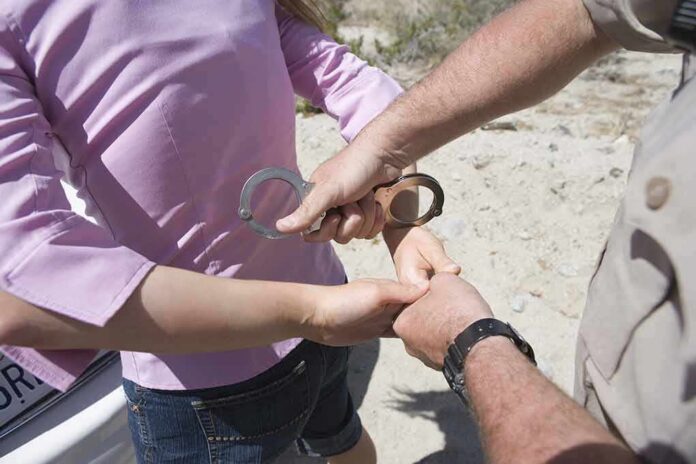
Nine months after a famed surfer was stabbed to death in Costa Rica, investigators arrested his girlfriend and a second suspect, alleging the home invasion story was a ruse to steal his banking information.
Story Snapshot
- Investigators arrested the victim’s girlfriend and another man after coordinated raids.
- Officials say the pair planned the attack to obtain banking and hotel account details.
- Authorities believe a reported home invasion and vehicle theft were staged.
- Prosecutors were still determining charges as the case moved forward.
Arrests After Months-Long Investigation
Costa Rica’s Judicial Investigation Agency arrested two suspects after a nine-month probe into the February killing of California surf figure Kurt Van Dyke. Agents detained the victim’s girlfriend, identified by her surname Arroyo, and a 34-year-old man, identified as Gutiérrez, in raids on three homes in Roxana, Pococí. Officials said the arrests followed sustained investigative work that moved beyond the initial incident report. Authorities stated that they are also looking for two additional men linked to the attack.
OIJ Deputy Director Vladimir Muñoz publicly identified Arroyo as a suspected facilitator of the attack, tying her alleged role to planning before the killing. Initial accounts given to police described a violent home invasion, with Arroyo restrained using zip ties and robbers fleeing with valuables and a vehicle. Investigators later advanced a different view, saying the scene pointed to a planned assault rather than a random break-in. The new theory reframed the girlfriend from survivor to alleged participant.
Alleged Motive Focused on Banking Access
Investigators said the suspected motive was to obtain Van Dyke’s bank information and security codes, including details linked to his hotel operations in Costa Rica. Reporting tied the fatal attack to efforts to force those codes from the victim. Authorities have not publicly released specific bank records or transaction logs, and they have not described any seized proceeds in the case summaries carried by news outlets. The stated motive anchors the alleged conspiracy and helps explain why the crime scene may have been staged.
Reports also described a vehicle discrepancy that investigators viewed as inconsistent with the original story. Arroyo reportedly said assailants stole a Hyundai Elantra during the break-in. Later accounts said the vehicle was found intact, suggesting to authorities that the theft claim could have been part of staging. Public reports did not include technical details about the vehicle’s recovery, damage, or forensic testing, but they cited this point as a key thread in the investigative shift.
What Authorities Say Happened That Night
Earlier coverage quoted Arroyo as telling police she was showering when armed men entered, restrained her with zip ties, and assaulted the couple before fleeing with valuables. That story cast both people as victims of a home invasion. The revised account from investigators alleges the opposite: that the girlfriend helped plan the attack with others to force access to money. Officials said two men are still at large, which leaves parts of the alleged team unidentified in public view.
The woman who told police robbers killed Kurt Van Dyke is now under arrest for his murder.
Kurt was 66, a Santa Cruz surfing legend who built a life and a hotel on Costa Rica's Caribbean coast. On February 14, he was found dead in his home in Hone Creek, under a bed. The woman… pic.twitter.com/a6hGC1J1Y4
— Nino America (@Nino_Merica) November 19, 2026
Authorities emphasized that arrests mark a major step but do not end the legal process. Reports said prosecutors were still determining formal charges and precautionary measures after the raids. Costa Rican procedures generally require quick judicial review of detention, with courts assessing the grounds for holding suspects and any requests for pretrial measures. That means the next phase shifts from police work to prosecutorial filings and court oversight as evidence is prepared for potential trial.
Why This Case Grabs Public Attention
High-profile killings often spark fast narratives, and this one touches raw nerves across politics and culture. People worry that violent crime is rising, that justice moves slowly, and that powerful interests shape outcomes. This case adds another layer: investigators now allege the home invasion was staged to look like random violence. Research on intimate-partner homicides shows staged robberies and home invasions appear with notable frequency in studied samples. That pattern helps explain why investigators pursued the staging lead.
The story also shows how cross-border cases can strain public understanding. The crime, arrests, and court process are in Costa Rica, while many readers are in the United States. Newsrooms rely on official statements and local media, which can limit detail on evidence before court filings appear. That gap does not change the core development: two arrests after months of work, a stated motive tied to bank access, and an alleged staging of a robbery. The legal process now must test those claims in court.
Sources:
facebook.com, latimes.com, sfchronicle.com, people.com, inquisitr.com, foxla.com, sfist.com, sfgate.com, foxnews.com, surfer.com, journals.sagepub.com, state.gov, bjs.ojp.gov