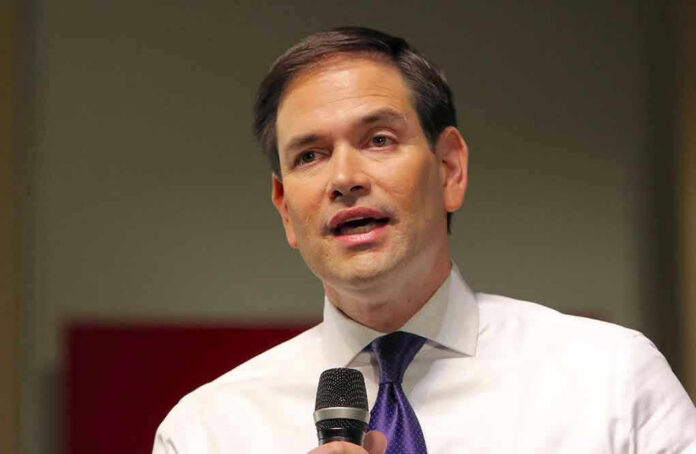
President Trump said he never heard from Secretary of State Marco Rubio that Jensen Huang’s girlfriend was a Chinese spy, even as reports claim senior officials were warned.
Story Snapshot
- Trump said he did not hear from Rubio about a spy warning tied to Nvidia’s Jensen Huang.
- Media reports say U.S. intelligence suspected Alice Huang, while evidence remains disputed.
- Rubio publicly declined to confirm any briefing or memo when asked by reporters.
- Nvidia’s board launched an independent investigation into the alleged foreign operation.
What Trump Said And Why It Matters
President Trump said he did not regret his actions and believed Jensen Huang did not know about any espionage motive linked to Alice Huang, according to reporting that summarized his remarks without an official transcript. Trump’s comment collides with claims that senior officials had circulated warnings. The clash highlights a gap between what the public hears and what officials say in private. That gap feeds anger on both the right and the left about secrecy and elite control.
Some outlets reported that U.S. intelligence suspected Alice Huang was spying for China, while also noting debate inside the government about the proof. That mix—strong suspicion but incomplete evidence—puts the public in a bind. People hear urgent warnings, but they do not see the files. In this case, no public indictment or declassified assessment backs the claim. That raises pressure for clear records before the country makes big moves.
Rubio’s Role And The Unanswered Questions
Reports said Secretary of State Marco Rubio drafted a memo about intelligence on Alice Huang and shared it with a small group of senior officials, including some at the White House. Another report said Rubio briefed Trump on a flight in May, though this came from a single source and remains unattributed on the record. When asked by reporters, Rubio said, “I can’t comment on any of that,” which neither confirms nor denies the memo or a briefing.
These gaps matter because they shape trust. If a memo exists, the public needs to know who saw it and when. If the evidence was unsettled, leaders should say so in plain words. When officials cannot comment, and the White House offers denial without records, many Americans see a familiar pattern: insiders trade secrets while citizens guess. That pattern weakens faith in both national security and democratic oversight.
Nvidia’s Investigation And The Chip Security Backdrop
Nvidia said its board launched an independent investigation after reports that Jensen Huang was the target of a foreign intelligence effort. The company’s move shows how corporate boards now operate in a national security arena. Advanced chips power artificial intelligence, defense tools, and critical infrastructure. Since 2018, Washington has tightened export controls to block China from getting the most advanced chips and gear. A breach—or even the hint of one—can rattle markets and policy.
The alleged link to Megaspeed, a firm tied to chip flows, drew more questions, but the company and China denied wrongdoing, calling the claims baseless. Confusion over names and timelines in public reports adds to the murk. Mixed labels for Alice Huang and shifting dates make it hard for voters to track who did what and when. Clear, verified records would help the public judge risk without spin from any camp.
What Readers Should Watch Next
Watch for concrete records: a released memo with a date and a recipient list, visitor logs, or an official transcript. Those items would show whether Rubio briefed Trump and whether the warning reached the Oval Office. Also watch Nvidia’s board findings. If the probe finds no leak of secrets, that cuts one fear; if it finds gaps, it will raise others. Either way, real documents should replace leaks as the basis for judgment.
Trump downplayed U.S. intelligence reports that Alice Huang, the fellow tech exec with whom Jensen Huang admits having a relationship, was a spy for Beijing. https://t.co/bExiBIxucq
— Mercury News (@mercnews) November 16, 2026
Both parties say they want strong national security and fair markets. Both sides also worry that elites hide facts until the damage is done. This case sits at that fault line. The stakes are large: chip leadership, relations with China, and trust in how our leaders handle sensitive warnings. The fix is simple, if not easy: release what can be released, state confidence levels, and show the chain of custody for key intelligence. Sunlight builds trust.
Sources:
afp.com, bbc.com, bbc.co.uk, cnn.com, pbs.org, politico.com