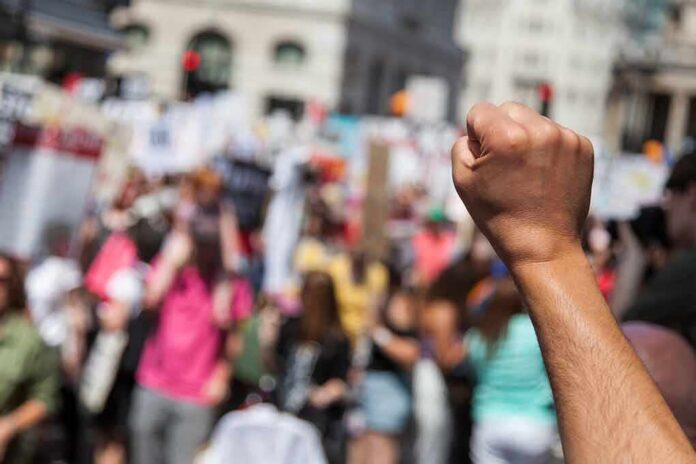
Police blocked a march toward Manila’s summit venue and clashed with protesters opposing President Trump’s visit.
Story Snapshot
- Protesters tried to leave a designated park and head toward the summit site.
- Police stopped the march and scuffled with the crowd at barricades.
- Organizers said thousands joined actions opposing Trump’s visit.
- Reports noted injuries and arrests, though exact counts varied.
Protesters Blocked From Marching Toward Summit Venue
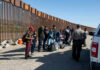
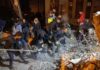
Local outlets reported that protesters gathered at Liwasang Bonifacio on November 15, 2017, and attempted to march toward the Philippine International Convention Center in Pasay City, where Association of Southeast Asian Nations meetings were held. Police set up barricades outside the park and blocked the crowd from advancing. The standoff led to shoving and brief clashes as activists pushed for access to the road network leading to the venue, according to contemporaneous Manila reporting.
Demonstrators voiced anger at President Trump’s presence during the summit period. Marchers carried signs and chanted slogans denouncing United States policy and labeling Trump a threat. International coverage described large anti-Trump actions in Manila that week, including effigy burnings and calls to “ban Trump,” reflecting broad opposition among left-leaning groups to his visit and agenda during the regional meetings in the capital.
Use of Force and Reports of Injuries and Arrests
Newsrooms documented force used during the broader week of protests, including water cannons and riot control tactics. A major wire service published an image showing protesters struck by a water cannon while trying to move toward the United States Embassy during a separate rally that week, underscoring a tense security posture across Manila during the summit. Outlets likewise reported injuries and arrests tied to confrontations as police dispersed or contained crowds near key government and diplomatic sites.
Specific counts from the Liwasang Bonifacio march varied across outlets. One report cited seven arrests and two injuries, while others relayed claims of nine arrests from labor and teacher groups. Organizers and police offered different tallies, and reporters emphasized that numbers could not be reconciled across the day’s actions. Despite the discrepancies, the core facts remained clear: police held the line at barricades, and several protesters were detained after the scuffles.
Why The Route Fight Mattered Under Philippine Law
The clash turned on a familiar line in Philippine law between where a rally can occur without a permit and where a march requires one. The Public Assembly Act states that rallies in designated freedom parks do not need permits, while marches and assemblies in other public places do. Courts have also said officials must grant permits unless there is clear evidence of danger to safety, order, convenience, morals, or health, setting a high bar for restrictions.
Protesters clash with police ahead of Trump's Philippines visit
Demonstrators clashed with police in Manila as they tried to reach roads leading to the ASEAN summit venue, ahead of US President Donald Trump's expected meeting with Philippine President Ferdinand Marcos on… pic.twitter.com/j2WTSo4637
— Global South World (@g_s_world) November 15, 2026
Authorities told reporters that protesters should remain inside the designated park rather than occupy roads toward the convention center. That position framed the dispute as a traffic and security issue during a major event, not a ban on speech. For activists, the restriction muted their message by keeping them out of sight from foreign delegates. That tension—permit rules versus political reach—has defined many summit-week showdowns in Manila over the years.
The Bigger Picture For U.S. Readers
These scenes abroad echo debates Americans know well. People on the right and left worry that powerful institutions set the rules to protect themselves first. Here, police guarded the summit bubble while citizens tried to bring their message to leaders. Whether you fear disorder or fear being silenced, the pattern is the same: security plans, barricades, and permits can decide which voices are seen and which are kept behind the fence line.
Sources:
youtube.com, rappler.com, dzrh.com.ph, mindanews.com, newsinfo.inquirer.net, gmanetwork.com