

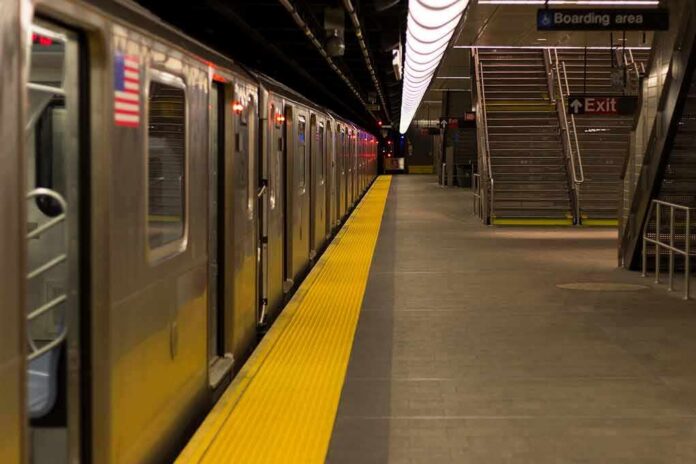
Two New Jersey Transit trains lost power under the Hudson River, snarling evening commutes only hours after state leaders touted fresh investment in rail upgrades.
Story Snapshot
- Two New Jersey Transit trains lost power around 7:15 p.m., disrupting service across several lines.
- New Jersey Transit advisories tied delays to an earlier disabled train and Amtrak overhead wire issues in a Hudson River tunnel.
- Systemwide delays reached up to an hour on some lines, rippling into Penn Station New York.
- The incident landed on the same day officials highlighted new spending on rail improvements.
What Happened During the Evening Commute
New Jersey Transit said two trains lost power and became disabled under the Hudson River at about 7:15 p.m. on Monday, slowing thousands of riders heading home from New York City. Agency alerts showed delays into and out of Penn Station New York after a train stalled in one of the Hudson River tunnels. The public advisory warned of up to 30-minute waits as crews worked to clear the line and move equipment. Passengers faced crowded platforms and shifting departure times as operations adjusted.
New Jersey Transit’s real-time rail feed also flagged “Amtrak overhead wire issues” in one of the tunnels as a cause for late trains. One listed Northeast Corridor train ran up to 25 minutes late due to the wire problem. The agency later said service was recovering by the 8:30 p.m. hour, but residual delays continued as dispatchers sorted traffic. The agency did not publish passenger counts, train numbers for both disabled sets, or the exact tunnel bore in the records seen by riders that night.
How the Disruption Spread Across the System
Operationally, a disabled train in the tunnel chokepoint can slow the entire network. Penn Station New York is a hub for many New Jersey Transit lines. When a train stops under the river, crews often must isolate track power, inspect the overhead wires, and clear the equipment before traffic can move. That sequence pushes trains into holding patterns. Media reports cited delays of about 60 minutes on several lines, including the Northeast Corridor, with knock-on slowdowns across others as dispatchers reprioritized scarce track slots.
The Hudson River tunnels serve both New Jersey Transit and Amtrak and handle a heavy share of the Northeast Corridor. Any unplanned stoppage there ripples fast. Even short incidents create long queues, because track space is tight and schedules run close to the limit during peak hours. Riders often feel these effects as platform crowding, canceled connections, and missed last-mile links. Monday’s event fit that pattern. Trains eventually moved, but schedules ran uneven for a period after the initial clearance.
Infrastructure Pressures and the Day’s Political Optics
The timing stood out. Earlier in the day, New Jersey Transit leaders promoted new spending for rail improvements, including a board action authorizing about sixty-five million dollars for Hudson-Bergen Light Rail work. The rail tunnel incident hours later did not involve that light rail system, but it highlighted how one weak point can overshadow good news on another project. Commuters judge success by whether trains run on time, not by press events or ribbon cuttings that feel far away from daily pain.
The Hudson River tunnels date back more than a century and were harmed by saltwater during Superstorm Sandy. Federal records describe them as safe but in poor condition, with aging electrical and track systems that need major repairs. Those repairs are part of the larger Gateway program that aims to add a new tunnel and fully fix the old one. Until that capacity exists, a single disruption can halt trains for both agencies. Monday’s stoppage showed that reality in the most public way.
What Officials Said and What We Still Do Not Know
New Jersey Transit’s public notices pointed to a disabled train and Amtrak overhead wire issues. A spokesperson also told media that two trains lost power under the river. One alert referenced loose wires as a factor, though the records available to riders did not include an engineering report naming a final cause. That type of technical finding often arrives after inspections and data reviews, not during an active rush-hour recovery when the focus is to restore service first.
🇺🇸 BREAKING: Major delays reported at New York's Penn Station after 2 trains became stuck in an underwater tunnel.
Two NJ Transit trains lost power inside the Hudson River tunnel Monday night, leaving commuters stranded UNDERWATER in the dark.
This comes amid a wave of cyber… pic.twitter.com/oqnBoFbBcW
— My Soul On Solana (@BeelalTrade) November 17, 2026
For riders, the key questions are simple: Why did the power drop, who owns the fix, and how fast will it be done? The tunnel is a shared asset, which can blur lines of responsibility in public view. Monday’s event again pressed a larger point that many Americans share across politics. When critical systems fail, families pay the price in time, money, and stress. Clear answers, steady maintenance, and honest timelines matter more than speeches when the stakes are a safe, reliable ride.
Sources:
njtransit.com, njtranshit.com, njherald.com