

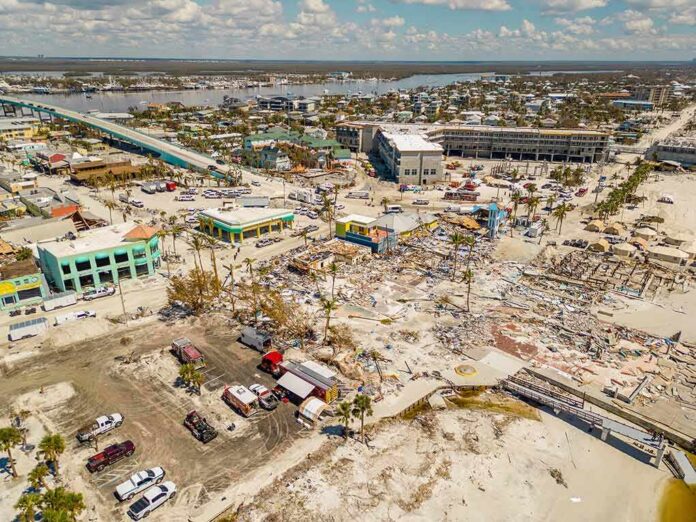
Hurricane Isaias has killed at least two people and buried parts of the Carolina coast under floodwater, with forecasters warning the flash flood danger is spreading across the Southeast.
Quick Take
- Storm surge and heavy rain flooded coastal towns in South Carolina and North Carolina, with water up to 18 inches deep on some roads.
- Isaias came ashore near Ocean Isle Beach, North Carolina, after moving up the coast as a hurricane.
- Power outages hit more than 165,000 customers across three North Carolina counties alone.
- Six tornadoes touched down and wind gusts topped 70 mph in the storm’s path.
- Local officials in one North Carolina town estimate damage near $40 million.
Storm Surge Swamps Coastal Towns
Hurricane Isaias pushed a wall of storm surge into coastal communities on August 3 and 4, 2020. The National Weather Service office in Wilmington reported the surge destroyed part of the Sea Cabin Pier, closed roads, and damaged waterfront businesses. Officials in Oak Island said the surge wrecked or destroyed as many as 100 vehicles, while shops in Southport took on water and bulkheads washed away along the shoreline.
Flooding was not limited to the immediate coast. South Carolina Highway 9 sat under 12 to 18 inches of water, and crews closed Main Street and Ocean Boulevard in Myrtle Beach because of rising water. Garden City and North Myrtle Beach reported similar flooding on local roads, forcing drivers to find other routes during the height of the storm.
Landfall, Winds and Power Outages
Isaias made landfall near Ocean Isle Beach, North Carolina, after strengthening into a hurricane along its path up the Atlantic coast. The storm’s winds and rain spread damage well beyond the beach towns. Weather service records show six confirmed tornadoes touched down in the Wilmington forecast area, and wind gusts passed 70 mph in several spots.
The outages told their own story about the storm’s reach. Brunswick County lost power to 53,000 customers, New Hanover County to 85,000, and Pender County to 27,500, according to the weather service report. Some residents waited as long as a week to get electricity back, a stretch that strained families already dealing with flood cleanup.
South Carolina Rainfall and Rising Tides
South Carolina’s state climatology office logged more than three inches of rain in parts of Georgetown and Horry counties. Water levels at Springmaid Pier hit 10.18 feet, and sand and storm debris covered roads on Pawleys Island, cutting off some routes until crews could clear them. The office noted that Isaias caused less damage overall than Hurricane Dorian had the year before, and that the heaviest rain bands stayed offshore rather than soaking the coast directly.
National Hurricane Center advisories issued before landfall had already flagged the exact dangers that followed. Forecasters warned that storm surge combined with normal tides would flood areas that are usually dry, and they predicted 3 to 6 inches of rain across the Carolinas and Mid-Atlantic, with pockets of higher totals in isolated spots. Those forecasts lined up closely with what weather stations and local officials recorded once the storm passed through.
Flash Flood Threat Still Spreading
Isaias kept moving inland after striking the Carolina coast, carrying its rain and flood risk into other parts of the Southeast. The same mix of saturated ground and heavy downpours that flooded coastal roads can quickly overwhelm rivers and low-lying areas farther from the beach, which is why forecasters kept flash flood warnings active well after the storm’s center moved on.
Coverage of storms like Isaias often shifts once skies clear. Live reports before landfall focus on worst-case risks like surge and evacuations, while follow-up agency reports measure what actually happened block by block. That gap does not mean the early warnings were wrong. It means the full damage picture, like the $40 million estimate from one town alone, often takes days to add up.
For residents in the Carolinas, the numbers are already concrete: thousands without power, roads buried in sand and water, and a death toll that climbed as the storm pushed through. Cleanup crews now face the same question that follows every major storm, how long it will take to clear roads, restore power, and total the final cost.
Take a look at the damage left behind in Pensacola Beach, Florida, as Hurricane Isaias moves through the Southeast.
🎥 Courtesy: CNN Newsource, ACCUWEATHER pic.twitter.com/PBOuuUxDPy
— FOX Baltimore (@FOXBaltimore) October 10, 2026
Officials in the hardest-hit counties continue assessing damage as power crews work through the backlog of outages left behind.
Sources:
facebook.com, newsroom.fpl.com, nhc.noaa.gov