When a federal agent fires a weapon on a residential block, the question that actually decides public trust is not who pulled the trigger, but whether the tactics that put a gun in play made that outcome likely — and avoidable.
At a Glance
- What is firmly established: an ICE enforcement encounter in Marble Hill ended with an agent shooting and wounding a man; the NYPD was not involved at the moment of gunfire, and the wounded person was conscious at the hospital.
- What is not yet established: the imminent threat that triggered the use of deadly force, whether the car was used as a weapon, and what warnings or de‑escalation occurred.
- Why the stakes are high: reports of a 5‑year‑old in the car transform a fast-moving stop into a scrutiny test for federal tactics in dense urban spaces.
- The broader pattern: ICE shootings have clustered around vehicle encounters in public places, with a history of sparse transparency after critical incidents.
What we actually know about the Marble Hill shooting
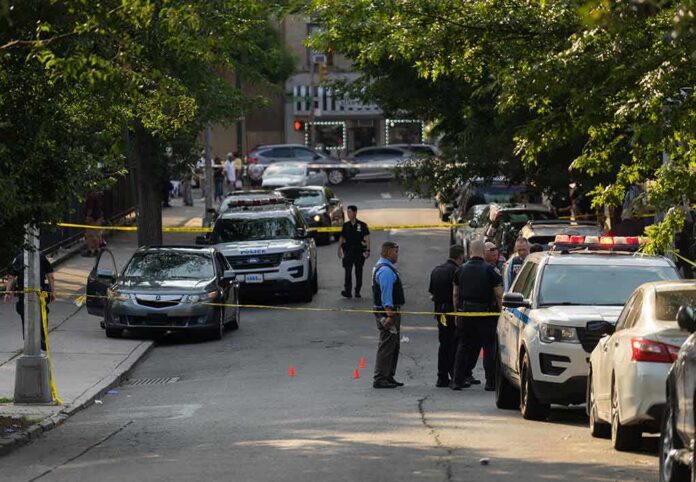
Multiple outlets, citing law-enforcement sources and NYPD statements, agree on core facts. Late afternoon in Marble Hill, federal immigration agents encountered a person they were pursuing; gunfire followed, and a man was transported to a hospital conscious and under medical care. The NYPD specified it was not on scene when shots were fired, underscoring that this was a federal operation in a city neighborhood rather than a joint task-force action. Some early reporting described the injuries as not life‑threatening. The federal response footprint — DHS personnel and the FBI’s evidence team — signaled a significant scene and a formal investigative posture from the outset.
Beyond that core, the public record has gaps that matter for judgment. There is no released federal narrative establishing the precipitating threat; we do not yet have whether a firearm was perceived, a vehicle was used as a weapon, or commands were issued and ignored. The identity and background of the wounded person and the operational target are undisclosed. Reports that a 5‑year‑old was in the car raise proportionality concerns, but available accounts agree only that the child was reportedly unharmed; without video or sworn statements, we cannot infer how the child’s presence shaped agents’ decisions or risk calculus.
How fast‑moving vehicle encounters make deadly force more likely
Street‑level immigration enforcement often plays out around cars because mobility is the point of operational leverage: stops, blocks, and arrests are simplest when a target is stationary or contained. But vehicles compress time and multiply risk. A driver can flee, use the car as a weapon, or reach for an object out of view. Training, across agencies, reflects that: officers are taught to avoid cross‑fire and “funneling” into the front of a vehicle, to control angles, and to use cover. When operations slide into ad hoc containment on a narrow city street, those controls degrade. That is why shootings in these scenarios are overrepresented in public spaces such as intersections and parking lots — the geometry incentivizes poor positioning, and the perceived window to act feels brutally short.
Independent tallies of ICE shootings between 2015 and 2021 recorded 59 incidents with 23 deaths and two dozen injuries, many in public or traffic‑heavy areas and frequently involving vehicles. That history does not settle what happened in Marble Hill; it establishes the baseline risk landscape and the transparency deficit that often follows. Put plainly: the mechanism — vehicles, compressed decision time, public bystanders — is the same; the unanswered questions — threat perception, de‑escalation, cross‑agency coordination — are, too.
Competing narratives and what the evidence can actually bear
Advocacy groups and some elected officials framed the shooting as proof of militarized, reckless tactics, pointing to reports of long guns on a residential block, a child in the car, and multiple rounds fired. Their demands are straightforward: an immediate investigation, release of any body‑worn or surveillance video, and accountability if excessive force occurred. These are policy claims, not forensic findings; they reflect the public‑safety values many New Yorkers hold and the skepticism that fills an information vacuum when federal agencies speak late or not at all.
On the other side, early law‑enforcement sourcing indicates agents encountered the person they were pursuing and that the shooting occurred in that operational context. That places the event squarely within a lawful enforcement attempt rather than a random altercation; it also heightens the need for the government’s use‑of‑force narrative to articulate the specific, imminent threat that converted an arrest into a shooting. Without that detail, neither condemnation nor exoneration carries weight; what remains credible are the limited, undisputed facts and the known pattern risks of vehicle‑adjacent encounters.
🚨An Immigration and Customs Enforcement (#ICE) agent shot and injured a person in the #Bronx, New York, on October 8, according to law enforcement sources – @CBSNews #USA
▪️The person was hospitalized with non-life-threatening injuries.
▪️The NYPD said it was not involved… pic.twitter.com/W6Pw4pdAE1
— ⚡️🌎 Sarwar 🌐⚡️ (@ferozwala) October 9, 2026
What a defensible investigative record must include
When the core justification is unknown, the path to clarity is routine but exacting. The federal incident report and use‑of‑force paperwork should answer two questions: what immediate threat to life or serious injury the agent perceived and what alternatives were available in the time and space presented. Radio logs and dispatch audio can demonstrate whether a planned stop became a hasty containment and whether local police were requested in time to stabilize the scene. Ballistics mapping and scene reconstruction — shot trajectories, vehicle position, casing locations — can corroborate or challenge claims that the car was used as a weapon or that an agent fired from a tactically disadvantaged spot, a common precursor to split‑second lethal decisions in vehicle stops. Video — body‑worn if present, fixed cameras from nearby businesses, and authenticated civilian footage — often resolves the final seconds when verbal commands, movement, and distance matter most.
Tactics that reduce the chance of pulling the trigger
Whatever the Marble Hill facts ultimately show, the operating lessons are stable. First, coordination: when federal teams conduct planned arrests in dense neighborhoods during school dismissal or peak pedestrian traffic, pre‑positioning local patrol for traffic control and scene security reduces chaos and narrows civilian exposure. Second, containment design: avoid frontal vehicle approaches that invite acceleration threats and cross‑fire; emphasize flank control, vehicle pinning with shields, and clear, amplified commands. Third, time discipline: unless an imminent threat is unfolding, delay is a de‑escalation tool — letting a suspect park, bringing in crisis‑trained officers, or shifting to a controlled takedown can lower force probability. Agencies that adopted strict prohibitions on shooting at moving vehicles except to counter an imminent deadly threat — and that trained relentlessly to avoid creating that threat by stepping into the line of travel — cut their shooting rates in similar scenarios. ICE, whose operations increasingly face urban density, has every institutional incentive to internalize that regimen.
Why transparency is not charity but operational hygiene
Governments earn public trust in two ways after a critical incident: by getting the facts right and by getting them out. In shootings that involve a child, silence is self‑defeating; it invites the worst inferences and hardens opposition to future operations. A prompt, specific account — even if provisional pending forensic work — paired with a release timeline for video and key records, signals procedural confidence. When an agency cannot release footage, explaining why and when that will change matters. The aim is not public relations; it is preserving freedom of movement for future operations by demonstrating that when force is used in a neighborhood, it can be independently examined.
Bottom line
The Marble Hill shooting is, at this stage, exactly what the public record supports: a federal enforcement stop that ended in gunfire, a wounded man at the hospital, and a child reported present but unharmed. The decisive facts — the threat cue that triggered shots, the tactical positioning that preceded it, and the alternatives available — remain unreleased. Given the well-documented risks of vehicle‑centered encounters and ICE’s uneven transparency record, the burden now rests with federal authorities to produce a defensible narrative grounded in evidence. That is not a political concession; it is how lawful, effective enforcement survives in a city that rightly insists on both safety and restraint.
Sources:
dailynews.com, nbcnewyork.com, amny.com, cbsnews.com, audacy.com, citizen.com, brooklyn.news12.com, npr.org