
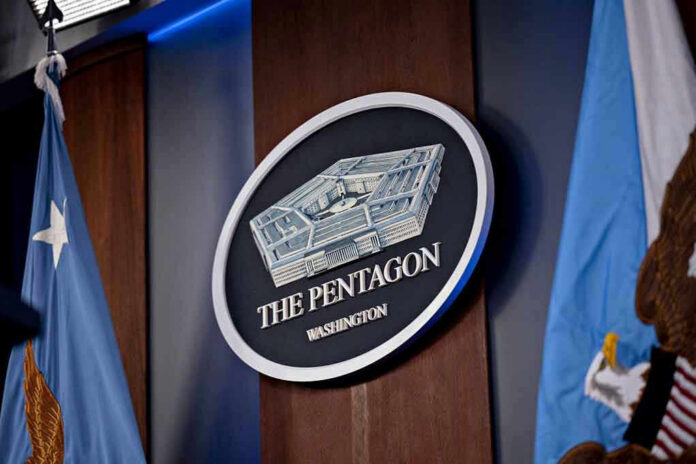
The Pentagon says a three-star general admitted leaking classified details on Iran and the Ukraine war, and it has asked the Justice Department to consider charges.
Story Snapshot
- The Defense Department fired Army Lt. Gen. Brett Sylvia after an internal probe.
- Officials say Sylvia admitted giving classified details on Iran and Ukraine to reporters.
- The Pentagon made a criminal referral to the Justice Department.
- Leaking cases are rare but have drawn harsher action in recent years.
Pentagon Removes Top Planner After Leak Findings
The Defense Department removed Army Lt. Gen. Brett Sylvia from his role leading strategy, plans, and policy on the Joint Staff after investigators concluded he made unauthorized disclosures. Officials said the firing protected sensitive information during active conflicts. Defense Secretary Pete Hegseth made the decision after reviewing the inquiry’s results, according to multiple reports. A Pentagon spokesperson said the department has zero tolerance for intentional leaks and referred the matter for possible prosecution.
Officials linked the alleged disclosures to Iran and the war between Russia and Ukraine. The role Sylvia held is central to war planning and policy, which increases both access and risk. Reports say the internal investigation concluded Sylvia shared classified details with two journalists from different outlets over about a year. Axios was identified as having obtained the investigative report, which described admissions by Sylvia about those disclosures.
Criminal Referral Signals Serious Legal Exposure
The Pentagon’s criminal referral sends the case to the Department of Justice, which decides on charges under federal law. Past leak prosecutions have sometimes used the Espionage Act, depending on what was shared and with whom. Officials have not detailed specific statutes in this case. They also have not released the underlying evidence, which is common when the information remains classified. The referral itself underscores that the department views the conduct as beyond internal discipline.
Firing a sitting three-star general for alleged leaks is unusual and high profile. Public steps like this are meant to deter future disclosures and show that senior ranks face the same rules as junior staff. At the same time, the move highlights a tension inside national security: the government must protect secrets while the public demands transparency about wars that cost money and lives. That balance often breaks toward secrecy when conflicts are active and risks are high.
What We Know About The Investigation Tools And Limits
Some reports mentioned polygraph testing as part of the probe, a tool the government often uses in security cases. Independent scientific reviews have long questioned the accuracy of polygraphs for screening, saying the tests can flag truthful people and miss skilled deceivers. The National Academies found the method too weak for broad screening, though it can aid specific investigations when used carefully with other evidence.
Officials have not publicly detailed every step investigators took, which is standard in classified cases. Leaks tied to active war planning draw tighter controls, and evidence is often held close. That secrecy can frustrate people across the political spectrum who want independent proof. Yet agencies argue releasing proof could reveal sources, methods, or even gaps in defenses that foreign adversaries could exploit. That tradeoff is a built-in feature of leak cases and shapes how much the public learns.
Leak Crackdowns Have Grown Over Time
Legal scholars note that leak prosecutions have surged in some periods as leaders push harder to control information. Historic cases stretch from the Pentagon Papers to recent years, when more employees faced charges over sharing classified material. Congress’s research service tracks how the Espionage Act has been used against people who disclose defense information without approval. While not every referral becomes a case, the threat of charges often changes behavior across agencies.
🚨BREAKING OVERNIGHT: SecWar Pete Hegseth has FIRED Lt. Gen. Brett Sylvia after he reportedly FAILED three polygraphs about leaking classified information to the press
GOOD RIDDANCE TO ALL LEAKERS! 👋🏻
He's now under investigation over LEAKS about the Iran war, the…
— Wtcrescuer911 (@wtcrescuer911) October 30, 2026
This episode lands in a climate of distrust, where many Americans on the left and right believe elites protect themselves while the public pays the price. For conservatives, the concern is that leaks can undercut missions and put troops at risk. For liberals, the concern is that secrecy can hide mistakes and block accountability. Both sides can agree on one point: clear rules, even for top brass, should be enforced fairly and explained as much as security allows.
What Comes Next And Why It Matters
The Department of Justice will review the referral and decide whether to open a case, seek an indictment, or decline charges. If prosecutors proceed, the government will need to prove the disclosures met the law’s elements. If they do not proceed, the Pentagon’s firing still stands as a major disciplinary step. Either path sends a message: when wars are live and tensions run high, the system will act fast to stop leaks and protect what leaders view as core secrets.
Sources:
thegatewaypundit.com, yahoo.com, cbsnews.com, newsobserver.com, nationalacademies.org, congress.gov