
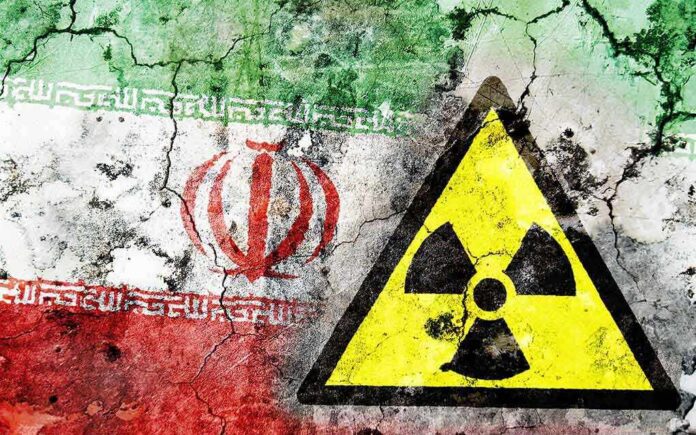
President Trump says the United States is in no rush to cut a deal with Iran after strikes that badly damaged key nuclear sites, keeping pressure on Tehran while questions remain about what survives underground.
Story Snapshot
- International inspectors confirm major damage at Iran’s top nuclear facilities, including Natanz.
- Preliminary U.S. intelligence says Iran’s program was delayed, not destroyed.
- Iran’s leaders deny collapse of capability while admitting serious damage.
- Trump signals leverage over talks by holding off on a quick agreement.
What Trump Said About Timing and Leverage
President Trump signaled the United States is not hurrying into an Iran agreement. He framed time as leverage after strikes aimed at Iran’s nuclear program. The White House has argued the attacks left Iran with only a small set of viable sites and limited options. That message aims to pressure Tehran to accept stricter limits. The strategy also appeals to voters who want firm action but fewer open-ended wars. The risk is that delay could let Iran rebuild faster than expected.
The administration links its stance to visible damage at major facilities. Officials cite destroyed buildings and shattered power systems at key sites. They argue this gives Washington a strong hand without more fighting. Waiting also tests Iran’s ability to fix complex systems under strain. But a pause can cut both ways. Tehran can disperse parts, move stockpiles, and harden sites. The longer the wait, the more the outcome depends on what survived below ground.
What Inspectors and Images Show on the Ground
The International Atomic Energy Agency (IAEA) reported heavy damage at Natanz, Iran’s main enrichment center. The above-ground Pilot Fuel Enrichment Plant, which produced uranium up to 60 percent, was destroyed, and power infrastructure was smashed. The IAEA also documented strikes and new damage at the Esfahan complex during repeated attacks. Craters at Fordow suggest use of deep-penetrating bombs, but inspectors said full assessment of underground damage was not yet possible soon after the strikes.
IAEA leaders told members that initial attacks knocked out electricity systems and likely damaged cascade operations at Natanz. A later media interview relayed the view that thousands of centrifuges there were likely badly damaged or destroyed due to the power cut and strikes. A safeguards report listed several facilities with declared nuclear material that were affected, including Fordow, Natanz, and the uranium conversion and fuel plants. These findings back the claim of major physical loss, especially above ground and in power networks.
Competing Claims: How Much Capability Remains
Iran’s Supreme Leader rejected Trump’s claim that the strikes destroyed Iran’s nuclear capability. He said the United States is “dreaming,” while Iranian officials also admitted that installations were badly damaged. A preliminary U.S. intelligence assessment found the strikes did not erase capability and may have set the program back only months. That review said enriched-uranium stockpiles remained and some centrifuges survived. The same reporting said sealed entrances did not equal collapsed bunkers.
Independent analysts warn that early damage checks favor what satellites can see. Above-ground buildings are easy to count. Underground halls, hidden stockpiles, and dispersed equipment are harder to judge. That is why experts separate “damage,” “disruption,” and “elimination” into different bins. Think of it like a factory: you can blast the roof and cut the power, but skilled workers, spare parts, and hidden rooms can speed a comeback. That frame matches both the IAEA’s visible damage and the intelligence view of remaining capacity.
Why “No Hurry” Matters for U.S. Politics and Policy
Holding off on a deal taps into a wider public mood. Many Americans on the right and left feel Washington often cuts quick bargains that do not last. They fear leaders talk tough, spend big, and then declare victory too soon. A slower path aims to force strict limits and stronger checks. It also tries to avoid another long Middle East war. The danger is mission drift. If the goal slides from damage to full dismantlement, pressure could rise for more strikes or risky raids.
TRUMP EYES IRAN'S KHARG ISLAND: BUT CAN AMERICA AFFORD THE COST OF OCCUPATION?
Kharg Island is not just another piece of Iranian territory. It is the strategic heart of Iran's oil export industry, handling approximately 90% of the country's crude oil exports.
President Donald…
— Geronimo analysis (@GeronimoBandit) October 31, 2026
For readers tired of spin, here is the plain view. Inspectors confirm real, serious damage at several of Iran’s main sites. Iran’s leaders deny collapse but concede harm. U.S. intelligence says the program is delayed, not dead, and that some assets remain. Trump’s “no hurry” stance tries to turn that mix into leverage. The next proof point will be whether Tehran slows enrichment and accepts tougher terms, or rebuilds faster than many expect.
Sources:
youtube.com, iaea.org, reuters.com, apnews.com