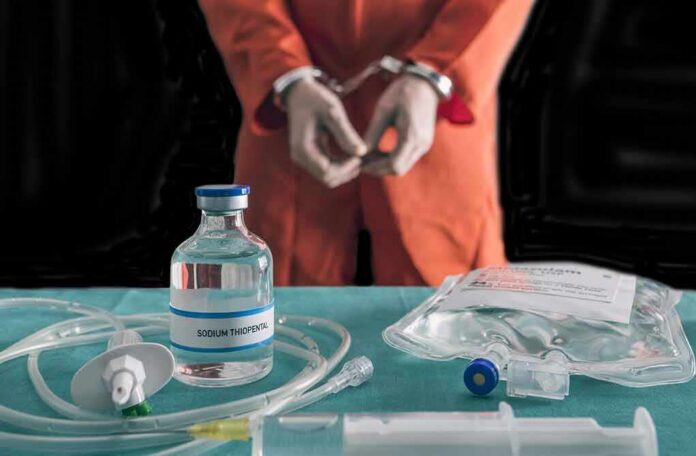
Texas witnesses say a condemned man screamed that his leg was “on fire” as officials struggled for nearly an hour to carry out a lethal injection, while the state insists everything followed protocol.
Story Snapshot
- Witnesses reported moans, screams, and pleas of pain during the execution.
- Officials acknowledged long delays finding veins and using the neck and foot for lines.
- Texas prison authorities denied a botch and said complaints began before drugs flowed.
- A veteran reporter called the scene “dramatically different” from hundreds of prior executions.
What Witnesses Saw And Heard In The Chamber
Reporters and a spiritual adviser said Reinaldo Dennes groaned, screamed, and begged for the pain to stop. Reverend Jeff Hood quoted Dennes saying, “My leg is on fire,” and, “It’s not working.” An Associated Press journalist reported hearing, “The pain! Go! Go!” and, “I don’t think this is normal.” Witnesses also described straining against restraints and repeated moans. These on-the-record accounts painted a scene of unusual distress inside the Texas death chamber.
Michael Graczyk, who has observed nearly 500 executions, said this one was “dramatically different” from past lethal injections he has covered. That judgment matters because it comes from a veteran observer with deep experience in Texas executions. His description aligns with others who said Dennes continued to vocalize pain for minutes as the process unfolded. These details drive public concern that the procedure did not function as intended.
What Texas Officials Confirm And Dispute
Texas Department of Criminal Justice officials said staff struggled to find viable veins and placed intravenous lines in Dennes’s left foot and the left side of his neck. The agency said protocols were followed and the execution “was successfully carried out.” A spokesperson said Dennes complained of pain before the lethal drugs were administered and in locations where no line was placed, including his right leg. Officials used those points to reject claims of a botched procedure.
Officials also reported specific timing. Attempts to place lines in the hands and arms failed. A line was placed in the neck at about 6:20 p.m., and another in the left foot at about 6:38 p.m. Dennes was declared dead at 7:08 p.m. Those times show an extended process compared with many executions. Authorities emphasized that the delay reflected difficulty finding veins, not a failure of the drug protocol itself, and said procedures were stopped at 7:07 p.m..
The Evidence Gaps And Why They Matter
Journalists could not see the exact moment the drugs began to flow. The public has not seen the execution log, drug preparation records, or a medical review of the intravenous lines. No autopsy or toxicology has been released tying the screams to an infiltrated line or a drug effect. These gaps limit clear answers about why Dennes reacted as he did, even as multiple eyewitnesses insist the distress was real and intense.
Confusion about anatomy also clouds the debate. Witnesses reported Dennes yelling about his leg, sometimes the right leg. Officials say the lines were in the left foot and neck. That mismatch gives the state a simple counter. Yet it does not resolve what caused the pain or whether a line malfunctioned. Until records are released, the public must weigh credible but competing accounts without the clinical proof that could settle basic questions.
Why This Resonates Beyond One Execution
This clash fits a larger pattern. States present lethal injection as controlled and humane, but secrecy rules often block outside review. Research on historical executions estimates a higher problem rate with lethal injection than with older methods. That does not prove this case was botched. It does show why people on the left and right worry when government controls the evidence and asks for trust after a painful scene like this one.
Texas took 63 minutes to execute 70-year-old Reinaldo Dennes while he screamed in pain, and advocates now want lethal injections halted nationwide.
Reinaldo Dennes was strapped to the gurney in Huntsville on Thursday evening while the execution team hunted for a vein. They… pic.twitter.com/mKdhnspi1K
— Shahid Rao (@S_Rao4U) November 20, 2026
Americans who see a system run by insulated elites will find fuel here. Witnesses describe screams. Officials cite protocol. The truth likely sits in records the state holds. A basic step forward would be public release of the execution log, intravenous placement notes, and an independent medical review. Transparency would not end the death penalty debate. But it would respect the public, honor the law, and reduce the sense that government answers only to itself.
Sources:
abc13.com, apnews.com, afp.com, galvnews.com, fox7austin.com, reference-global.com