

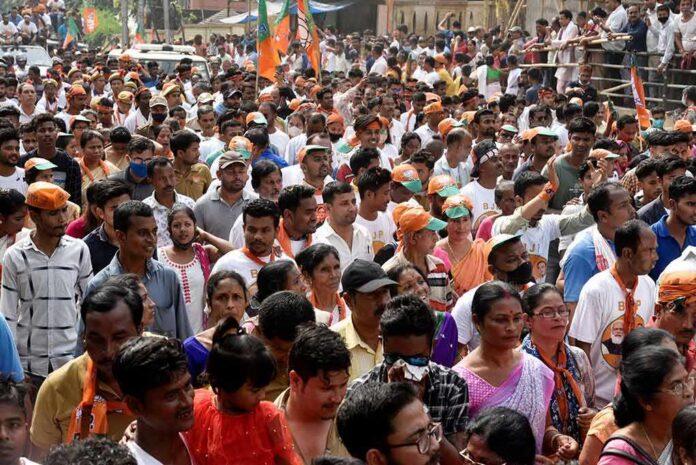
Thousands of Indians marched through New Delhi this week demanding the resignation of the country’s top election official, accusing him of erasing more than 133 million voters from the rolls.
Story Snapshot
- Opposition parties and youth groups marched to the Supreme Court in New Delhi, demanding Chief Election Commissioner Gyanesh Kumar step down.
- More than 133 million names were reportedly dropped from India’s voter rolls during a nationwide revision process.
- The Election Commission says the deletions targeted deceased, duplicate, and relocated voters, not political opponents.
- Police detained protesters and blocked gatherings at key sites, raising separate questions about the right to demonstrate.
- India’s Supreme Court is now set to hear petitions challenging the commissioner’s actions.
Massive Crowds Demand Resignation
Opposition parties and a youth movement called the Cockroach Janta Party led marches through India’s capital, with protesters calling for Chief Election Commissioner Gyanesh Kumar to quit. Rallies also broke out in Mumbai. Demonstrators say the voter-roll overhaul unfairly benefits Prime Minister Narendra Modi’s Bharatiya Janata Party by cutting eligible voters from the rolls.
Reuters reported that opposition groups accuse Kumar of widespread manipulation of voter lists. Protesters argue the cleanup process removed real, eligible voters in numbers large enough to tip close elections, especially in areas where the ruling party needs every advantage. Kumar has not publicly addressed the accusations against him.
What the Numbers Show
More than 133 million names were struck from electoral rolls during the review, according to reporting from Al Jazeera. Critics say Muslim voters were removed at a higher rate than other groups, though no independent study has confirmed that claim with hard data. The scale alone has made the figure a political flashpoint, even without a full public breakdown of why each name was removed.
The Election Commission says the cuts were not random. Officials describe a process requiring house-to-house visits by local workers, with voters marked only after repeated failed attempts to find them. Deletions were supposed to be limited to dead voters, people who moved away, duplicate entries, and those who could not be located at all.
Commission Defends Its Process
The Election Commission insists the review followed strict rules, including public draft rolls, a formal window for voters to file complaints, and an appeals process through local election officials. It also says it ran internal checks, including random audits of deleted names, and that the decisions were approved unanimously by the full commission, not ordered alone by Kumar.
India’s Supreme Court already weighed in once this year, ruling in May that the review process had a reasonable link to its stated goal and included enough safeguards against wrongful removals. The court is now set to hear fresh petitions challenging Kumar directly over the voter deletions, giving the dispute a legal track separate from the street protests.
Police Response Raises Separate Concerns
Delhi police detained Congress leader Rahul Gandhi and other opposition lawmakers during one protest, according to the BBC. Officers also blocked student and civil-society groups from gathering at Jantar Mantar, a traditional protest site, and detained other demonstrators elsewhere in the city.
Records have been shattered as unprecedented numbers of demonstrators have gathered in India's National capital, New Delhi, seeking the immediate resignation of the country's election chief, Gyanesh Kumar, amid serious allegations and concerns regarding the removal of voters… pic.twitter.com/3h9D2NEn1R
— KUMAR TALUKDAR (@kumar_talukdar1) October 12, 2026
The crackdown on assembly, separate from the voter-roll dispute itself, has drawn its own criticism. Blocking protest sites and detaining elected opposition leaders raises questions about free assembly that exist regardless of whether the underlying voter-roll allegations hold up.
An Unresolved Standoff
No court ruling or official audit has yet proven that Kumar personally ordered deletions to help the ruling party, and the Election Commission maintains it only removed ineligible entries through a documented, multi-step process. At the same time, the sheer size of the protests and the scale of the deletions show why millions of Indians are refusing to simply accept the commission’s word.
The fight over India’s voter rolls echoes a broader worry shared across many democracies: that the institutions meant to referee elections can themselves become targets of suspicion when secrecy and scale collide. Until the underlying voter-level data is made public, both the accusations and the Election Commission’s defense remain, for now, a matter of trust rather than proof.
Sources:
apnews.com, bbc.com, reuters.com, aljazeera.com, dw.com, online92.thedailystar.net, ceodelhi.gov.in, eci.gov.in