

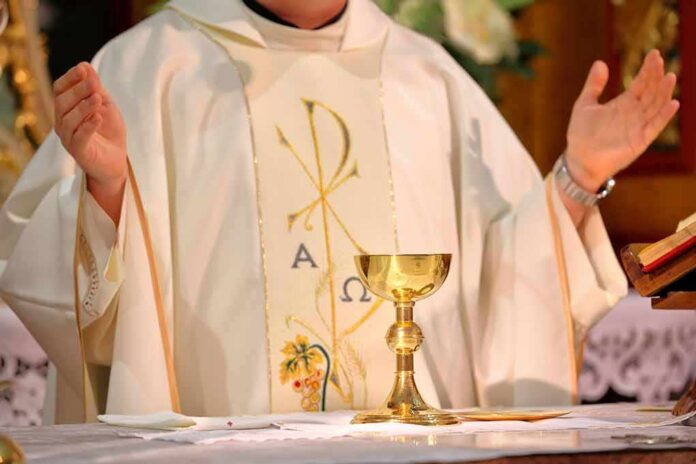
A Catholic priest publicly blessed a wedding-style ceremony for two men in Buenos Aires, despite Vatican rules that forbid wedding-like rites for same-sex couples.
Story Snapshot
- Reports say priest Francisco “Paco” Olveira blessed a public ceremony for two men in Buenos Aires.
- Witness accounts describe bridal gowns, veils, bouquets, and a six-hour street event.
- Vatican guidance allows only brief, simple blessings that never resemble a wedding.
- A Vatican-linked outlet called the event a ceremony that imitates a wedding, not a Catholic marriage.
What Happened on the Buenos Aires Street
Reporters identified priest Francisco “Paco” Olveira of the Diocese of Merlo-Moreno as the cleric who raised his hands and blessed two men, Cristian Valderrama and Lucas García, during a public ceremony on November 21, 2026. Coverage places the scene on a Buenos Aires street and describes a long event with wedding markers. Outlets noted bridal gowns, veils, and bouquets, and said the gathering lasted about six hours, matching a staged celebration rather than a brief prayer.
Accounts say the men had a civil marriage before this public celebration. That detail helps explain the couple’s stated commitment, but it comes through secondary reporting without a shared document in the sources here. Even so, the event’s visuals were clear and public. The priest’s blessing over the couple drew attention because it appeared to cross the line between a simple pastoral prayer and a ritual that looked like a wedding in the public square.
What the Catholic Rules Actually Permit
In 2023, the Vatican’s doctrine office issued a declaration on blessings. That text said priests may offer simple, non-ritual blessings to people in same-sex relationships, but not anything that looks like a wedding or signals Church approval of a union as marriage. The guidance forbids doing such blessings with wedding clothing, wedding gestures, set rites, or in connection with a civil ceremony. Leaders later stressed bishops cannot authorize rites that resemble marriage.
A Vatican press release in early 2024 repeated those limits. It said bishops can make simple blessings available but cannot allow blessings that look like a liturgical rite. The goal was pastoral care without changing doctrine on marriage. That balance depends on clear boundaries in practice. Clothing, staging, set texts, and public timing matter because they can make a blessing look like a wedding, which the Church teaches is between a man and a woman.
How Catholic and Public Reactions Split
A Vatican-linked outlet framed the Buenos Aires event as neither a Catholic marriage nor a permitted blessing. It called it a ceremony that imitates a wedding. That view rested on the very markers the Vatican bars: wedding clothing, gestures, and set presentation. Advocacy outlets also argued the priest went beyond the allowed scope by lending his ministry to a wedding look-alike in a public space that drew political overtones.
Some Catholic voices in Argentina have tried to explain how a blessing might accompany people without endorsing a union as a marriage. They argue blessings can call people to grace and conversion. But those arguments still accept the rule that priests must avoid wedding signs. The Buenos Aires ceremony’s gowns, veils, and length made that separation hard to defend, based on the cited guidance and reactions recorded here.
Why This Matters Beyond One Street Scene
This clash shows a wider problem that many Americans will recognize at home. Institutions set rules that promise balance, then local actors and activists push past them. Leaders say, “We did not change doctrine,” while practice on the ground tells a different story. People on the right and left end up feeling that elites speak in codes, move the lines, and rarely face clear accountability when rules are bent in plain sight.
For believers, blurred lines can wound trust. For secular readers, the core issue looks familiar: if public rules mean one thing in writing and another in action, who is in charge and what are standards worth? That sense of drift fuels cynicism about institutions, whether churches, schools, or government. When leaders avoid firm follow-up, many conclude the system protects insiders, not the public or the faithful.
What to Watch Next
Watch for any formal move from the Diocese of Merlo-Moreno. A clear statement, inquiry, or discipline would show whether rules have teeth. Look for Olveira’s direct explanation of intent. Words matter here. Did he see this as a pastoral prayer, a protest, or a wedding claim? Finally, track whether Rome or national bishops issue a new reminder on the practical limits for blessings after this high-profile case.
Until then, the record stands as follows. A priest gave a public blessing during a wedding-styled event for two men, with strong wedding signals present. Vatican rules allow simple blessings but bar wedding look-alikes and links to civil ceremonies. Key Catholic outlets labeled the event outside those rules. That is the narrow, factual frame. The larger question is whether institutions can keep their own lines when the street turns them into a stage.
Sources:
lifesitenews.com, vaticanreport.com, infovaticana.com, x.com, 617.news