What looks like a midair plumbing failure can, in fact, be a moisture-management problem doing exactly what physics dictates—and that difference matters for safety, operations, and how passengers interpret dramatic cabin video.
The Short Version
- Emirates says a visible cabin “waterfall” on EK123 was caused by condensation shortly after takeoff, not a system breach.
- Crew moved affected passengers; the A380 continued to Istanbul without diverting.
- Multiple outlets published the same airline statement identifying condensation as the cause.
- Moisture events in cabins often trace to condensation and drainage paths rather than structural or plumbing failures.
What happened on EK123
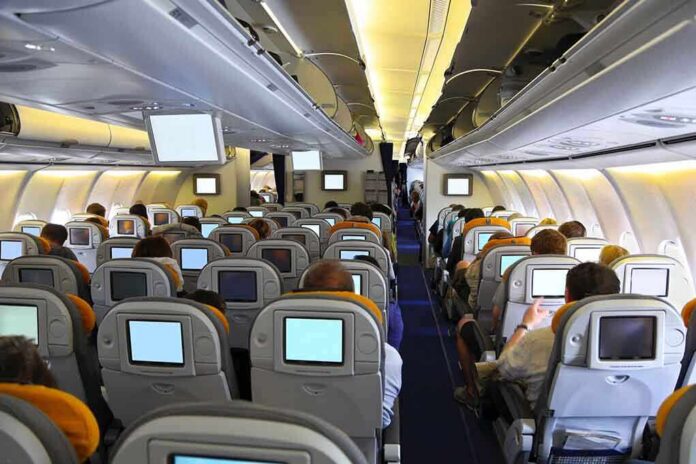
Shortly after takeoff from Dubai on September 17, 2026, passengers on Emirates flight EK123 to Istanbul recorded water pouring from an overhead area of the Airbus A380 cabin. Emirates issued a direct statement attributing the visible water to condensation that had accumulated and presented in a section of the cabin shortly after departure. The airline said cabin crew responded under established procedures by relocating customers whose seats were wet, and the flight continued to Istanbul as scheduled without further water observed en route. That core account—condensation as the cause, passenger relocations, onward operation—was reproduced consistently across several outlets that covered the incident, all identifying the same flight, route, date, and aircraft type.
For travelers seated beneath the flow, the optics were understandably alarming. A continuous stream from the ceiling reads as a leak. But the airline’s actions fit what operators do when nuisance moisture appears yet core systems are functioning normally: mitigate passenger discomfort locally, monitor the area, and, if the aircraft remains fully airworthy, complete the leg. In this case, that is exactly what occurred—no diversion, no emergency declaration; just targeted cabin management and a normal arrival.
Why condensation can look like a leak
Commercial airliners are humid environments wrapped in a very cold shell. Warm, moist air from hundreds of breathing passengers meets structure cooled by the low temperatures at altitude. Moisture condenses, often out of sight, into insulation blankets and structural cavities. Aircraft are designed with drainage paths and vapor barriers so that meltwater and condensed moisture migrate to known locations and exit overboard. When those passive controls are imperfect—small gaps in insulation, disturbed seams, or localized pooling—water can emerge inside the cabin and present as drips or even a brief sheet of runoff after climb, descent, or a thermal transition.
This phenomenon is widely documented in industry write-ups and vendor literature. Providers of anti-condensation systems and cabin-moisture solutions describe precisely this chain: water vapor condenses on cold fuselage surfaces, collects in insulation, and later releases as liquid when temperatures shift, sometimes overwhelming minor local drainage and appearing in passenger-visible zones before finding its intended path. The point is not that any water in the cabin is desirable—it is not—but that such “rain in the plane” events are consistent with the physics of pressurized metal tubes flying through frigid air and do not automatically imply a broken potable-water line or structural compromise.
How airlines manage visible moisture events
Operators train cabin and maintenance teams to differentiate between nuisance condensation and an active systems leak. Indications of the latter include persistent wetting tied to a specific system (lavatory, galley plumbing) or odors and discoloration suggesting contamination. Condensation events, by contrast, are often time-bound (shortly after takeoff or during descent), linked to zones near crown ducts or structural “cold spots,” and resolve as temperatures stabilize and water finds designed drains. In-flight, the crew’s job is passenger care and situational monitoring: relocate affected customers, isolate the area if needed, and watch for any escalation. Post-flight, maintenance inspects insulation blankets, vapor barriers, drain holes, and nearby systems to confirm the source and restore full moisture control.
The EK123 response described by the airline—move passengers, continue the flight once no further water was observed—tracks with that playbook. It also reflects a core operational judgment: if the airplane’s systems, pressurization, and controls are nominal and the water source aligns with condensation patterns, a diversion would introduce more risk and disruption than benefit. Conversely, if flight or maintenance crews suspected an ongoing plumbing or environmental-control failure, standard procedure favors containment and, where warranted, a return or diversion. The fact that EK123 proceeded normally is consistent with an episodic condensation release rather than an active leak.
How to tell condensation from a leak, in practice
There is no single visual hallmark, but several practical cues help. Timing matters: brief, intense flow shortly after takeoff or during descent aligns with thawing frost or shifting moisture in the crown and sidewalls. Location matters: areas near the cabin crown, overhead panels, and outflow of conditioned-air ducts are frequent condensation points. Persistence matters: ongoing wetting tied to a lavatory or galley cluster suggests plumbing. Finally, smell and clarity matter: potable-water leaks are typically odorless and clear; condensate is also clear; contamination (oil, fuel, blue lavatory fluid) brings odor or color and demands immediate escalation. Publications that explain these mechanisms emphasize that while aircraft have passive moisture controls, even small insulation gaps can yield conspicuous interior drips that look worse than they are from a safety standpoint.
Viral video often strips away these distinctions. A 10-second clip of water pooling above a seat row is a powerful image; it does not tell you whether the event persisted, whether it aligned with a known condensation zone, or whether downstream system checks found any ongoing fault. That is why operator statements, however terse, usually hinge on cause and duration, and why pilots and engineers view such footage through the lens of thermal cycles, drainage architecture, and system indications rather than spectacle.
WATCH: Water suddenly starts pouring from the ceiling of a plane mid-flight, sending passengers scrambling to protect themselves from the unexpected downpour.
One passenger said water began soaking her "like a waterfall" and that the experience "completely changed" her view of… pic.twitter.com/XDAwVKoI7q
— Fox News (@FoxNews) October 2, 2026
Why this matters to passengers and the industry
For passengers, the immediate concern is comfort and assurance. Airlines owe both: relocate people, keep them dry, and explain what is happening in plain language. For the industry, the imperative is engineering discipline—design and maintenance that limit internal moisture accumulation, verify insulation integrity after cabin work, and keep drains clear so that frozen or condensed water exits unseen. The existence of a market for anti-condensation solutions—and technical literature that treats fuselage moisture as ubiquitous—underscores that this is a known, manageable phenomenon across fleets and climates, not an outlier limited to one airline or aircraft type.
The EK123 incident sits squarely in that category. Emirates publicly attributed the water to condensation; multiple outlets carried the same wording; the crew mitigated the cabin impact; the aircraft completed the flight without diversion. Each of those facts is consistent with a nuisance-moisture event managed under procedure, not a systems emergency.
Bottom line
Airplanes are cold-soaked machines that carry warm, moist humans through subzero air; sometimes the physics intrudes into the cabin. When it does, the operational test is straightforward: protect passengers, verify systems, and fly the plan only if the airplane remains fully airworthy. On EK123, that is precisely what happened. The visible water was real; the explanation—condensation—fits both the timing and the outcome. The spectacle made for viral video. The substance points to moisture management, not mechanical jeopardy.
Sources:
facebook.com, foxnews.com, youtube.com, nypost.com, ground.news