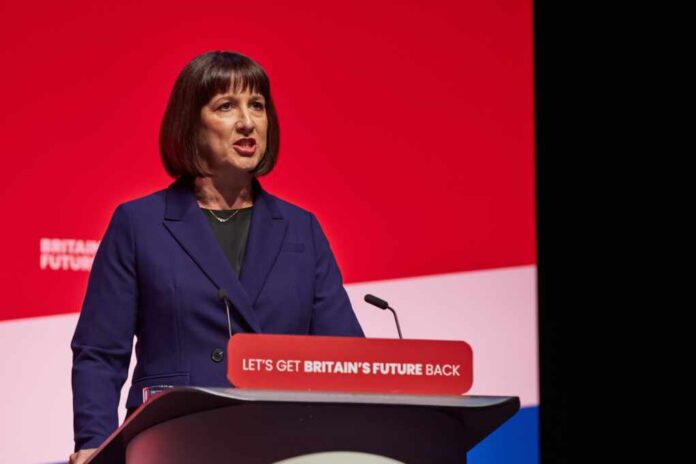
A new budget policy threatens fiscal transparency, raising concerns among watchdogs and the public.
Story Snapshot
- Chancellor Reeves claims a £22 billion fiscal black hole inherited from Conservatives.
- Critics argue the black hole was predictable and used to justify tax hikes.
- The Office for Budget Responsibility disputes the scale of the fiscal gap.
- Labour’s credibility is challenged amid accusations of misleading the public.
Chancellor Reeves’s Black Hole Announcement
In October 2024, Rachel Reeves, Chancellor of the Exchequer, announced the discovery of a £22 billion “black hole” in the UK’s public finances. This revelation was used to justify a £26 billion tax increase in the Autumn 2025 budget. Critics, including the Institute for Fiscal Studies (IFS), argue that these fiscal pressures were predictable and not a sudden discovery. The IFS claims that Labour was aware of the challenges prior to the election but did not address them in their manifesto.
The Office for Budget Responsibility (OBR), an independent fiscal watchdog, disputed the government’s £22 billion figure, suggesting only £9.5 billion in hidden costs from the previous Conservative administration. This discrepancy has sparked a heated debate about the true state of public finances and Labour’s fiscal management. The OBR has maintained its stance despite the government’s assertions, adding layers of complexity to the fiscal narrative.
The Conservatives crashed the economy and left a £22 billion black hole.
Labour are taking the tough decisions now to fix the foundations, so we can rebuild Britain and make every part of the country better off. pic.twitter.com/8UtZnzWhgB
— Rachel Reeves (@RachelReevesMP) September 3, 2024
Controversy Over Tax Increases
The Autumn 2025 budget announced by Reeves included substantial tax hikes, primarily targeting National Insurance, Capital Gains Tax, and Inheritance Tax. These measures are anticipated to generate significant revenue but have drawn criticism for contradicting Labour’s pre-election promises not to increase taxes. This has fueled the opposition’s narrative that Labour misled the electorate.
Further complicating matters, the OBR inadvertently leaked budget details early, an error they described as “deeply disappointing and serious.” This incident has strained the institution’s relationship with the government and raised questions about procedural transparency.
Political and Economic Implications
The implications of the budget controversy are wide-reaching. Politically, it challenges Labour’s credibility and provides the Conservative opposition with a potent narrative to question Labour’s fiscal honesty. Economically, the increased tax burden could dampen consumer confidence and business growth, particularly amid predictions of sluggish economic performance.
The expanding fiscal black hole, now estimated at potentially £50 billion, underscores the severe financial challenges ahead. Critics argue that tax increases alone may not resolve such structural issues. The ongoing debate highlights the need for transparent and accountable fiscal governance to rebuild public trust.
Sources:
October 2024 United Kingdom budget
£22bn black hole was obvious to anyone who dared to look
Autumn Budget 2025 tax rise predictions: stealth and wealth
Rachel Reeves sets out Labour’s budget to target cost-of-living crisis