

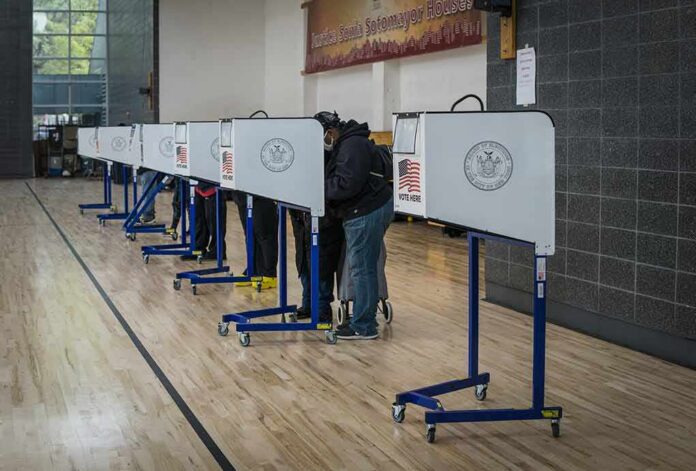
A well-known Tennessean says her voting machine tried to choose a U.S. Senate candidate for her, three times.
Story Snapshot
- Stella Parton says a Nashville touchscreen kept selecting Marsha Blackburn until she fixed it.
- State officials deny “vote flipping” and point to accidental touches and safeguards.
- Tennessee reports one formal complaint out of about 400,000 early votes so far.
- The incident underscores long-running worries about touchscreen accuracy and trust.
What Stella Parton Reported At A Nashville Poll
Stella Parton, the singer and sister of Dolly Parton, says a voting machine at the Hermitage Library in Nashville kept “defaulting” to Republican Senator Marsha Blackburn while she voted early. Parton says she had to correct her selection three times before printing and casting her ballot. Her account adds to a familiar pattern where voters report a screen showing a choice they did not intend before they finish the process and submit a paper record.
Tennessee’s Coordinator of Elections, Mark Goins, pushed back on the idea that machines are flipping votes. Goins said such incidents are “normally” caused by unintended touches on the screen. He also said bipartisan technicians check equipment when problems are reported. State officials say Tennessee systems include multiple checks to verify choices before a ballot is cast, including a review screen and a printed record the voter can inspect.
How The Safeguards Work Inside Tennessee’s System
Election officials describe a three-step check: voters make selections on the screen, then review all choices on a summary page, and then confirm a printed paper record before casting it. If anything looks wrong, voters can back up, fix the choice, or ask a poll worker to spoil the printout and issue a new ballot. The state has not confirmed whether Parton’s report was a device malfunction, user error, or something else at her location.
Officials say the scope of formal complaints is small so far. The Tennessee Secretary of State’s Office reported receiving one complaint about a “flipped” vote out of about 400,000 ballots already cast during this election period. That figure does not prove every screen behaved well, but it sets a base rate for verified reports that the state is tracking and can investigate with technicians from both major parties.
Why Touchscreens Draw Scrutiny From Both Sides
Touchscreen voting has faced doubts for years. Voters from both parties have reported screens showing the wrong choice before casting a ballot. Independent reviews and news reports say the most common causes are human error or a screen alignment problem, not hacking. The key step is the final review and the printed record, which let voters catch and fix errors before the vote is counted. That design aims to protect voter intent, even when the screen acts finicky.
This episode hits a nerve far beyond one celebrity’s post. Many Americans feel large systems serve the powerful first and the public last. When a screen seems to ignore a voter’s hand, it reinforces that fear. Clear steps help. Voters can slow down, check the review screen, read the printed ballot, and ask for help if something is off. Those actions are simple, fast, and give each person control at the point that decides the final count.
What To Watch Next In Tennessee
State officials say they will continue to examine any reported issues and dispatch bipartisan teams when needed. If any device shows real faults, counties can pull it from service and re-test it. The state also urges voters to report problems to poll workers on the spot so technicians can observe and diagnose the device that same day. These steps matter because early fixes prevent repeat confusion for the next voter who uses that booth.
The sister of the late country music icon Dolly Parton took to social media, claiming that a Tennessee voting machine switched her vote to the Republican candidate. Here's more from KRON: https://t.co/DF3ZFKRJrs pic.twitter.com/81NfDk7dqj
— WKRG (@WKRG) October 23, 2026
For citizens who feel let down by government systems, trust builds through proof, not slogans. Strong, simple practices—slow taps on screens, careful review pages, printed ballot checks, and quick help from poll workers—keep power with the voter. Stella Parton’s story is a reminder: everyone should verify their ballot before casting it. That habit turns a moment of doubt into a confirmed vote that reflects the choice only the voter can make.
Sources:
mediaite.com, wonderwall.com, wsbtv.com, wsmv.com, newsweek.com, independent.co.uk, themirror.com, yahoo.com