Russian state outlets said a motorcade carrying U.S. envoys Steve Witkoff and Jared Kushner entered the Kremlin for high-stakes talks on Ukraine.
Story Snapshot
- Russian state media reported a motorcade with Steve Witkoff and Jared Kushner arriving at the Kremlin.
- Reports said their plane landed at Moscow’s Vnukovo airport before the convoy moved into the city.
- Prior meetings between Witkoff, Kushner, and Vladimir Putin were confirmed by wire services and officials.
- Moscow signaled talks would resume when the U.S. envoys are available, showing ongoing channels remain open.
What Russian State Media Reported
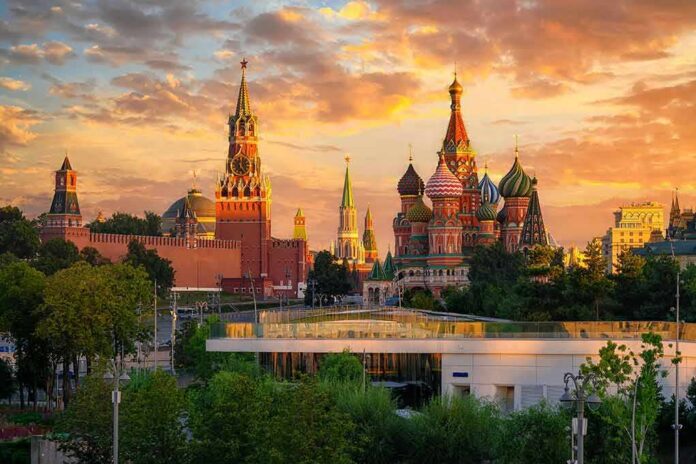
Russian state media said Steve Witkoff, President Trump’s special envoy, and Jared Kushner arrived in Moscow and were driven by motorcade to the Kremlin for talks on a United States plan to end the war in Ukraine. Vesti, a state outlet, stated the motorcade “has arrived at the Kremlin,” framing the trip as part of active diplomacy between Washington and Moscow. That account matches earlier patterns where Russian outlets first show plane and convoy movements before formal readouts follow.
Additional reports said the envoys’ aircraft landed at Vnukovo airport and then moved into central Moscow under escort. Local and regional outlets described the convoy heading toward the Kremlin after arrival, which is standard handling for high-level visits in the Russian capital. These movements align with how major meetings in Moscow often surface publicly: a flight seen on arrival, a motorcade through secured routes, and then coverage from state media as the first on-the-ground record.
What Prior Meetings Tell Us
Previous high-profile contacts provide context for why this convoy matters. Reuters reported that Witkoff and Kushner met President Vladimir Putin in Moscow in late 2025 and later briefed President Trump and Ukrainian officials on those talks. Those sessions were described as thorough and productive, signaling a channel that both sides kept open despite hard fighting in Ukraine. That track record helps explain current Russian signals that further meetings remain possible when schedules align.
The Kremlin’s spokesperson, Dmitry Peskov, said earlier this year that Russia expects contacts with the United States to resume when Witkoff and Kushner are available, which underscored Moscow’s interest in the channel even during lulls. Russian officials and state-linked outlets have also messaged readiness for more visits by the U.S. envoys, keeping the door open for discussions on terms and timing. Together, these points suggest the motorcade report fits into a steady, if narrow, diplomatic lane.
Why This Moment Resonates at Home
Americans across the spectrum want fewer wars, lower costs, and leaders who act in the public interest. A high-security convoy to the Kremlin for peace talks promises progress but also raises old worries. People on the right fear global deals that ignore U.S. workers and security. People on the left fear closed-door talks that leave out human rights and the rule of law. Both sides doubt a political class that often seems to serve itself first, not the country.
This episode touches those nerves because it blends power, secrecy, and risk. If talks ease the war, families and energy markets could see relief. If talks falter or trade away core interests, the public may see it as one more elite project that missed the mark. Past confirmed meetings show the channel is real, and today’s motorcade report signals activity again. The coming test is simple: can this quiet diplomacy deliver visible results that help ordinary people, not only the well-connected?
What To Watch Next
Watch for an official readout from the White House, the Kremlin, or both. Look for details on a cease-fire framework, prisoner exchanges, and energy transit guarantees. Track whether Ukraine’s leaders publicly engage with any plan tied to these talks. Expect more convoy and flight sightings before formal statements, since Moscow security practices limit early outside access to key venues and participants. Until then, judge progress by concrete steps, not motorcades and photo ops.
U.S. special representatives Steve Witkoff and Jared Kushner were seen leaving a restaurant in Moscow on September 5, alongside Russian presidential envoy Kirill Dmitriev.
A motorcade carrying the three men then headed towards the Kremlin.
The meeting comes as Washington… pic.twitter.com/JqqhWPthab
— APT News (@APT__News) September 5, 2026
If formal statements confirm this meeting, look for timelines and enforcement tools. Who monitors any pause in fighting? How are violations handled? Which sanctions change, if any, and when? Clear answers will show whether this is a real track toward peace or only positioning. The stakes are human lives, household budgets, and national credibility. Americans deserve results that match those stakes, delivered in plain sight and measured by facts, not ceremony.
Sources:
youtube.com, theweek.in, arabnews.com, reuters.com