
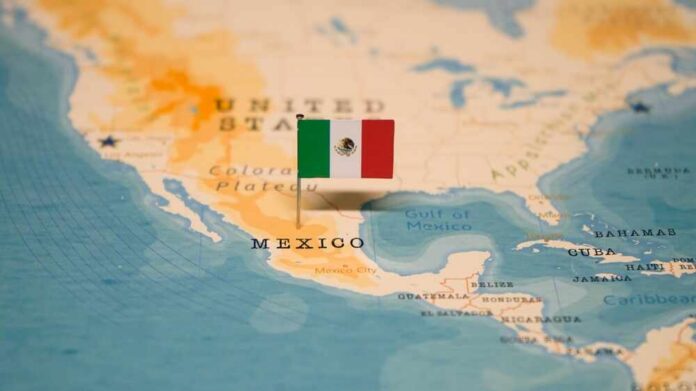
Mexico’s plan to flood the 2026 World Cup with 100,000 security personnel is a blunt reminder that cartel violence—not “woke” slogans—still dictates reality on the ground.
Quick Take
- Mexico announced a 100,000-person security deployment to protect the 13 World Cup matches it will host from June 11 to July 19, 2026.
- The plan follows major cartel-related violence after the Mexican army killed CJNG leader Nemesio “El Mencho” Oseguera near Guadalajara on Feb. 22.
- Officials say coordination with FIFA includes intelligence-sharing, prevention, and operational protocols across Mexico City, Guadalajara, and Monterrey.
- FIFA leadership has publicly expressed confidence in Mexico’s preparations despite recent instability and security alerts.
Why Mexico Is Deploying 100,000 Personnel for 13 Matches
Mexico’s government said it will deploy 100,000 police, military, and private security personnel to secure the 13 World Cup matches scheduled in Mexico between June 11 and July 19, 2026. The tournament is co-hosted with the United States and Canada, but Mexico’s host-city security requirements are being shaped by Mexico’s own public-safety realities, especially in Jalisco. Officials framed the deployment as a preventive, inter-institutional operation built to reassure FIFA and incoming visitors.
Mexico City, Guadalajara, and Monterrey are the three Mexican host cities, with Guadalajara slated to hold multiple matches and drawing heightened attention due to recent cartel violence in and around the state of Jalisco. Officials have also pointed to the scale of expected travel: reports estimate up to five million tourists over the five-week period. That volume means transportation nodes, fan zones, hotels, and stadium perimeters become security targets that require coordination beyond routine policing.
Cartel Retaliation After “El Mencho” Death Put Guadalajara in the Spotlight
Mexico’s World Cup security posture hardened after a major escalation tied to the Feb. 22 raid in which the Mexican army killed CJNG leader Nemesio “El Mencho” Oseguera near Guadalajara. Reporting described retaliation that spread well beyond a single city, including road blockades across 20 states, vehicles set on fire, and clashes that killed at least 74 people. That timeline matters because four World Cup matches are scheduled in Guadalajara, placing an international event amid unresolved cartel dynamics.
Mexico’s government has insisted the situation “returned to normal” after the retaliatory violence, but the public record still shows why officials are leaning heavily on a massive deployment rather than softer assurances. Jalisco has also been associated with a large missing-persons burden, with reporting citing more than 12,575 missing people. Even without attributing each case to a single actor, that figure underscores why security planning for a global event is being treated as a national-level operation.
What Mexico Told FIFA: Intelligence, Prevention, and Operational Protocols
Mexico’s security cabinet met with FIFA representatives in Mexico City on March 4 to coordinate intelligence, prevention measures, and operational protocols across the three host cities. Mexico’s security minister, Omar García Harfuch, has been linked in reporting to those coordination efforts, alongside other cabinet-level officials responsible for interior and defense portfolios. The public emphasis has been on integrating federal authorities with host-state and municipal structures, aiming for consistent rules and rapid response during matches.
President Claudia Sheinbaum has repeatedly aimed to project confidence, telling the public there was “no risk” to tourists and that Mexico would provide “all guarantees” for the event. FIFA President Gianni Infantino also offered public reassurance, signaling “full trust” in Mexico’s ability to host safely and indicating continued engagement, including a planned FIFA delegation visit. The broad alignment in messaging helps Mexico reduce relocation chatter, but it does not eliminate the underlying need for an unusually large security footprint.
What This Means for U.S. Fans and Border-State Travel Planning
American fans planning travel should read the 100,000-person figure as both reassurance and warning. A security surge can deter disruptions around stadiums and tourist corridors, but it also reflects how seriously Mexican authorities view the threat environment. With the U.S. hosting the majority of matches, many Americans may still cross into Mexico for specific games, tourism, or family travel. Those decisions should be made with situational awareness, especially around mobility routes linking airports, hotels, and match venues.
BREAKING – Mexico unveils 100,000-strong security deployment for World Cup: govt https://t.co/huYmQppffY pic.twitter.com/cVn5HQYg6M
— Insider Paper (@TheInsiderPaper) March 6, 2026
Reporting and academic analysis have also cautioned that “security alerts” can challenge Mexico’s hosting responsibilities even when leaders project confidence. The available public details still leave gaps: reporting describes the total headcount and broad categories—police, military, and private security—but does not fully spell out command structure, rules of engagement, or how resources will be balanced if violence spikes outside host zones. Readers should treat the plan as a major commitment, while acknowledging the limits of what has been publicly disclosed.
Sources:
Mexico to deploy 100,000 security personnel for World Cup
World Cup safety: Mexico security meeting
Sheinbaum guarantees security for 2026 World Cup in Mexico
Security alerts challenge Mexico’s World Cup hosting