A Florida deputy survived an ambush because a routine piece of accountability gear became an unexpected layer of armor.
Story Snapshot
- Volusia County Sheriff’s Office released body-camera video from a shooting that wounded Deputy Jose Rivera but likely prevented a fatal hit.
- Investigators say suspect Luis Diaz Polanco fired 12 shots as deputies approached his home over an earlier incident, striking Rivera in the shoulder and leg.
- Officials credit the body-worn camera with stopping or deflecting a bullet aimed at Rivera’s torso, turning a potential kill shot into a survivable outcome.
- Rivera is expected to fully recover, and a nonprofit grant is helping with his recovery at home.
Bodycam Footage Shows How a Routine Call Turned Into an Ambush
Volusia County deputies approached a home in Volusia County, Florida, to inquire about an earlier incident when the encounter escalated into gunfire, according to the Sheriff’s Office. Authorities say Luis Diaz Polanco came out and opened fire, unleashing roughly a dozen rounds at deputies and aiming at their vests. Deputy Jose Rivera was hit twice—once in the shoulder and once in the leg—before fellow deputies moved quickly to stop the bleeding and rush him to a hospital.
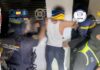
The Sheriff’s Office later released the body-camera video, highlighting both the attack and the immediate medical response. Deputies are seen transitioning from contact to rescue mode, applying tourniquets and coordinating a rapid transport—basic tactics that often decide whether a gunshot victim lives or dies in the minutes before surgeons take over. Officials say Rivera is now recovering at home and is expected to make a full recovery, a rare piece of good news in an incident that could have ended very differently.
Why Officials Say the Camera Didn’t Just Record the Shooting
The most unusual detail is the claim that Rivera’s body-worn camera helped prevent a fatal injury. In the accounts shared with the public, the device is credited with stopping or deflecting a bullet that otherwise would have struck Rivera’s chest area. Some social media posts describe it as a “miracle ricochet,” but the available reporting frames it more carefully as a deflection or stoppage caused by the bodycam itself, not a random bounce off the ground or a wall.
That distinction matters because it shapes what lessons agencies can reasonably take from the event. A true ricochet is unpredictable; equipment performance is measurable. Even without a full technical breakdown in the public materials, the Sheriff’s Office presentation underscores that body cameras are hard, dense devices placed near the centerline of an officer’s torso—exactly where many attackers aim. In rare cases, that positioning could change the path of a projectile enough to reduce lethality.
Body Cameras Began as Oversight Tools—Now They’re Also Safety Gear
Body cameras expanded nationally after the 2014 unrest in Ferguson, Missouri, as cities and counties sought more transparency in police encounters. That history is relevant because it shows why many departments bought cameras primarily as oversight tools, not protective equipment. Incidents like Rivera’s add a second argument for investment: cameras can protect the public by documenting events, and in extraordinary cases they may physically protect officers when violence erupts during routine policing.
The political friction around policing has not gone away, and that’s exactly why this story resonates beyond Volusia County. Conservatives often argue that criticism of law enforcement ignores the risks officers face on everyday calls, while liberals argue that cameras are necessary to deter abuses and ensure accountability. This video supports one indisputable point: when a suspect decides to shoot, the first victims are often the officers who showed up to ask questions. In that moment, training, medical readiness, and reliable gear become the difference between life and death.
What This Could Mean for Policy, Procurement, and Public Trust
Volusia’s release of the footage functions as transparency and as a case study in officer safety. Officials say the suspect admitted he intended to kill the deputies and would have continued if he had not run out of ammunition. While the public record in the provided materials does not include further court details, the allegation underscores why many Americans are uneasy about rising hostility toward police and why calls to “defund” departments fell out of favor in many places once crime and disorder became harder to ignore.
Watch: The Incredible Moment a Miracle Ricochet Saves a Florida Cop's Lifehttps://t.co/Gl29TpNgRF
— RedState (@RedState) April 27, 2026
For taxpayers, the takeaway is practical: if body-worn cameras are now being expected to survive violent encounters, agencies may push for sturdier models, better mounts, and clearer replacement schedules—costs that land in local budgets even when federal politics dominate the headlines. For citizens, the bigger picture is trust. A government that struggles to perform basic duties—public safety, honest reporting, and competent prosecutions—feeds the belief that institutions serve insiders first. Transparent releases like this one can help, but only if facts remain clear and hype doesn’t replace evidence.
Sources:
The Lineup: Making a miraculous shot to save lives
Video released from body cam that stopped bullet, saved …
Video released from body cam that stopped bullet, saved …
Body camera stops bullet, saves deputy’s life during gunfight