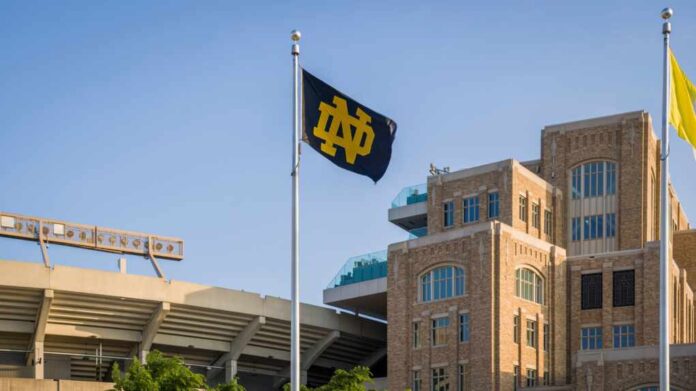
When a powerhouse like Notre Dame walks away from postseason play after a playoff snub, it raises bigger questions about accountability, entitlement, and the culture shaping young athletes today.
Story Snapshot
- Notre Dame declined a bowl invitation after being left out of the College Football Playoff by one spot.
- The decision sent shockwaves through college football, drawing criticism for appearing petty and entitled.
- Critics argue the move sets a dangerous precedent for how programs handle disappointment and adversity.
- Many fans see the decision as a reflection of a broader cultural trend of “take your ball and go home.”
Notre Dame’s Stunning Decision After Playoff Snub
The University of Notre Dame football program shocked fans and analysts by announcing it would not participate in any bowl game shortly after being left out of the College Football Playoff by a single spot. The storied independent program, long proud of its tradition and national profile, effectively chose to end its season rather than accept a lower-tier postseason opportunity. That choice immediately ignited debate over competitiveness, leadership, and what the program is teaching its players about handling setbacks.
College football observers quickly tied the decision to the emotional sting of missing the playoff despite a strong season and national expectations. Instead of using a bowl game as a chance to regroup, reward players, and send seniors out with one more contest, Notre Dame’s leadership closed the book on the year. For many fans who value perseverance, the optics look less like strategic planning and more like frustration driving a public statement that the program would not settle for anything perceived as second best.
Signals Sent to Players, Fans, and the Wider Sports Culture
Coaches and administrators at elite programs constantly preach resilience, humility, and finishing what you start, especially to young men preparing for life beyond football. When a brand-name program responds to adversity by opting out of competition, it risks sending a conflicting message about character. Fans who invest time, money, and loyalty reasonably expect their team to lace up and compete whenever given a legitimate chance, especially when many other schools would be grateful for any bowl appearance.
Parents and longtime supporters watching this unfold see more than a one-off administrative call; they see a reflection of a wider cultural pattern where disappointment is met with withdrawal instead of renewed effort. In a sports world that once emphasized playing for pride, school, and team regardless of stakes, bowing out can look like treating the postseason purely as a status symbol. That impression frustrates blue-collar fans who grew up believing you show up, even when you are angry about the circumstances or feel slighted by decision makers.
Fairness Concerns, Playoff Politics, and Personal Responsibility
Many observers sympathize with Notre Dame’s frustration over narrowly missing the College Football Playoff, especially given the opaque and often controversial nature of selection committee decisions. Questions about favoritism, strength-of-schedule metrics, and television-driven matchups have dogged the system for years. However, the broader principle at stake is how institutions respond when they perceive the process as unfair. Walking away from a bowl invites criticism that the program is choosing protest through absence rather than competing and letting performance speak.
Notre Dame Sends Shockwaves By Turning Down Bowl Invite After Playoff Snub: Don’t ‘Take Your Ball and Go Home’ — via @Mediaite https://t.co/NyZUnbhtRu
— MrTomDurante (@MrTomDurante) December 8, 2025
Conservative-leaning fans who value personal responsibility may see a missed opportunity in this decision. A bowl game would have allowed Notre Dame to prove its worth on the field, potentially dominating an opponent and strengthening its argument for future seasons. Declining that chance can appear inconsistent with the merit-based ethos many Americans want to see restored in sports and public life. Instead of accepting circumstances, preparing hard, and winning anyway, the program now carries the label of having stepped aside when it did not get the outcome it wanted.
Impact on Tradition, Legacy, and Fan Trust
Notre Dame has long marketed itself as something different in college football: independent, tradition-rich, and guided by a higher standard than simple wins and losses. Choosing to forgo a bowl game challenges that image. For alumni and older fans who remember eras when even minor bowls were treasured as rewards for months of grind, this decision risks eroding trust. They may reasonably ask whether the administration still shares their view that representing the school on national television is an honor, not an inconvenience.
Rival programs and young recruits are also watching closely. Some will view the move as a statement that only the very top stages are worthy of Notre Dame’s participation. Others may quietly wonder whether the program is more concerned with narrative control than embracing competition under imperfect circumstances. Over time, repeated choices like this could reshape perceptions of what Notre Dame stands for in the broader landscape of college sports, for better or worse, depending on how fans and future players interpret the message.
Sources:
Which college football teams have declined bowl invitations?
Notre Dame opts out of bowl game after getting ‘punched in the stomach’ by CFP