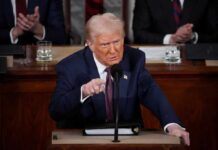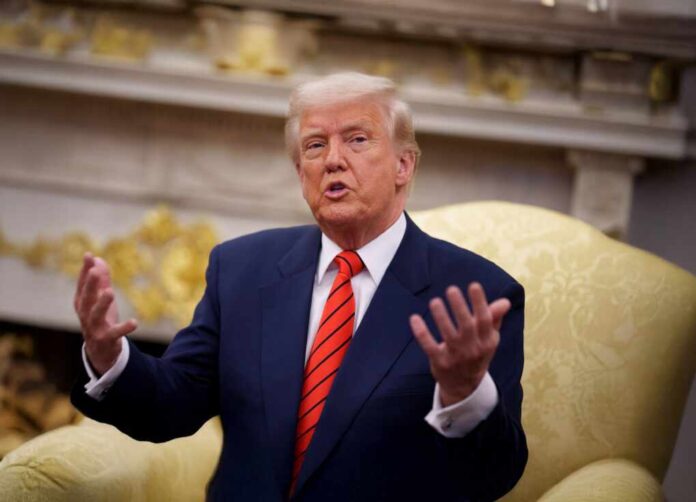
An unusual encounter at the White House on November 10, 2025, drew international attention as President Donald Trump greeted Syrian President Ahmed al-Sharaa with a Trump-branded cologne.
Story Highlights
- Trump sprays Syrian President Ahmed al-Sharaa with cologne during Oval Office meeting.
- Viral video sparks debate over Trump’s diplomatic style and cultural sensitivity.
- Meeting marks a significant step in U.S.-Syria relations post-Assad regime.
- Both leaders express positive outcomes, focusing on cooperation and reconstruction.
Trump’s Unorthodox Diplomatic Gesture
The meeting was the first of its kind since Syria’s independence and followed the ousting of the Assad regime in December 2024. Syrian interim President Ahmed al-Sharaa assumed leadership amid this transition, and U.S. and UN sanctions on Syria were partially relaxed, allowing for renewed diplomatic engagement. Trump’s approach, characterized by informal gestures, including the cologne incident, was described by attending officials as part of a broader effort to foster dialogue. Media outlets reported that the conversation covered counterterrorism cooperation and plans for Syria’s reconstruction, with both sides highlighting the positive outcomes of the meeting.
The Context of a Historic Meeting
Syria’s prior civil conflict and international isolation created challenges for diplomatic engagement. According to Times of Israel, the meeting was part of ongoing discussions to stabilize the region, encourage reconstruction, and counter the influence of other regional powers.
Al-Sharaa’s background includes previous affiliations with groups linked to extremist activity, as noted by multiple international news sources. The U.S. engagement reflects an emphasis on pragmatic outcomes, focusing on security and humanitarian cooperation rather than formal judgments of past affiliations.
Potential Implications and Reactions
Observers noted mixed reactions to the video. The Times of India described the gesture as “informal” and unusual for traditional diplomacy, while The Daily Beast characterized the incident as attracting widespread attention online. Analysts emphasize that the meeting could facilitate increased aid and investment in Syria’s rebuilding efforts, while some commentators raised questions about the perception of legitimizing Syria’s interim leadership.
As the U.S. continues to engage with Syria through direct diplomacy, the incident underscores the complexities of balancing cultural norms, protocol, and practical foreign policy objectives. Media coverage and expert commentary suggest that the long-term impact on regional stability will depend on follow-up actions and continued engagement.
During yesterday’s meeting between President Trump and Syrian president Al Sharaa, Trump gave Sharaa “Trump Cologne” and then jokingly asked, “The other one is for your wife. How many wives? One? With you guys, you never know!” 😂 pic.twitter.com/RoJGYvpcCh
— Breaking911 (@Breaking911) November 12, 2025
Sources:
Times of Israel
The Daily Beast
AOL
Times of India