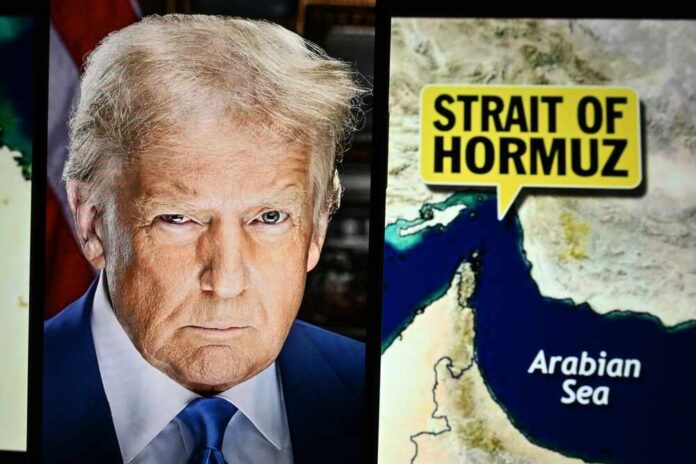
Trump’s 48-hour “all hell” ultimatum to Iran is colliding with the one thing working families can’t ignore—an energy chokepoint that can spike prices overnight and drag America into another Middle East war.
Quick Take
- Pakistan is brokering a fast-moving U.S.-Iran proposal featuring an immediate ceasefire followed by broader talks in roughly 15–20 days, but the Strait of Hormuz remains the core dispute.
- Trump’s administration is demanding Hormuz reopen as a condition, while Iranian officials are resisting deadlines and rejecting immediate reopening.
- Trump has publicly threatened strikes on Iranian power plants, bridges, and energy infrastructure if no agreement is reached by his Tuesday deadline.
- Markets and voters are getting mixed signals: the White House is warning of major escalation while also saying a deal could be reached quickly.
Pakistan’s backchannel diplomacy meets a hard Hormuz reality
U.S. and Iranian officials are weighing a Pakistan-brokered plan aimed at reaching a ceasefire within days, with a second phase of broader negotiations to follow about two to three weeks later. Reports describe Pakistan’s Army chief, Field Marshal Asim Munir, as central to overnight discussions involving U.S. figures including Vice President JD Vance and envoy Steve Witkoff, and Iranian Foreign Minister Abbas Araqchi. The sticking point remains immediate access through the Strait of Hormuz.
Hormuz is not a side issue; it is the leverage point. The strait is widely described as a key route for roughly one-fifth of global oil flows, and any sustained disruption quickly filters into higher fuel and shipping costs. Trump has tied progress to reopening the waterway, framing it as necessary to prevent an energy shock. Iranian officials, however, have signaled they will not accept U.S. deadlines or reopen Hormuz immediately as a first concession.
Trump’s deadline strategy escalates the cost of failure
President Trump’s public posture has been unusually blunt even by his standards, pairing a firm deadline with talk of large-scale strikes on Iran’s infrastructure. Coverage of the ultimatum describes threats aimed at power plants, bridges, and energy facilities if Tehran does not meet U.S. terms. That approach appears designed to force rapid movement at the table, but it also narrows off-ramps if talks stall and turns a negotiating tactic into a live escalation ladder.
Iranian leaders have answered in kind. Iran’s Parliament Speaker Mohammad-Bagher Ghalibaf has publicly warned the United States about “hell” in response to U.S. threats, and Iranian commentary has portrayed the U.S. posture as reckless. Reporting also notes continued regional violence and high-level casualties, including the killing of Iran’s top intelligence chief attributed to Israel. Those developments complicate diplomacy because retaliation cycles can outrun negotiators, even when backchannels are active.
Mixed messages rattle markets and split the pro-Trump coalition
Trump has simultaneously signaled that a deal could land quickly while emphasizing severe consequences if it does not. That split-screen message has been described as unsettling for commodities markets already keyed to every headline about Hormuz. It has also landed awkwardly with parts of the MAGA base that supported Trump in part because he criticized regime-change wars and promised fewer new foreign entanglements. The tension now is between deterrence talk and the risk of stumbling into a wider war.
For conservative voters already angry about years of inflation, overspending, and high living costs, the energy angle is the pressure point. A Hormuz disruption can hit diesel, gasoline, and supply chains fast, punishing families who did nothing to cause the crisis. At the same time, threats to strike energy infrastructure raise questions about duration and end-state—questions that haunt every long Middle East conflict. The reporting available does not clarify what enforcement looks like after the deadline if a partial deal emerges.
What the proposal does—and does not—solve
The reported framework centers on a quick ceasefire first, then wider talks days later, but it leaves major issues hanging. Gulf voices such as UAE adviser Anwar Gargash have warned that any durable deal must address not only shipping lanes but also Iran’s nuclear and missile programs to avoid an even more dangerous regional future. Other reporting has floated a longer truce window, suggesting negotiators may be debating how much time is needed to tackle the hardest files without losing control of events on the ground.
Conservatives should watch for two concrete signals: whether shipping through Hormuz actually resumes in a verifiable way, and whether Washington defines limited objectives that don’t quietly morph into open-ended war. The current reporting shows active mediation and real movement, but it also shows entrenched red lines and continued strikes. With the Trump administration now fully responsible for outcomes, voters will judge results, not rhetoric—especially if energy prices surge or if U.S. involvement expands beyond deterrence into another long conflict.
Sources:
US, Iran Eye Peace Proposal 48-Hours Before Trump’s ‘Hell’ Deadline – But Hormuz Standoff Remains
Trump warning Iran war: 48 hours deadline, Strait of Hormuz
Trump says he’ll be “blowing up the whole country” if Iran deal not reached in 48 hours
Trump vows “hell” for Iran if strait stays shut, says a deal is possible
‘All hell will reign down’: Trump gives Iran 48-hour ultimatum over Strait of Hormuz