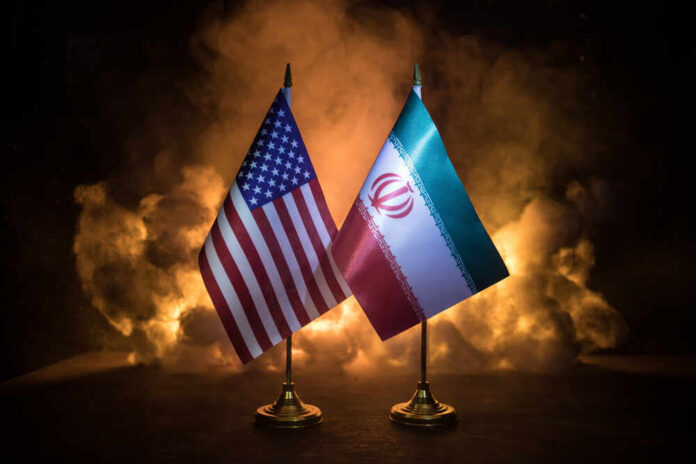
Iran’s former foreign minister publicly urged Tehran to negotiate a peace deal with Trump’s administration this week, marking the first high-profile call from inside Iran to end a war that has divided MAGA conservatives and exposed broken promises about keeping America out of regime-change conflicts.
Story Snapshot
- Mohammad Javad Zarif, architect of Obama’s 2015 Iran nuclear deal, published an op-ed urging Iran to trade nuclear concessions for sanctions relief and end the war
- The Strait of Hormuz remains closed, choking 20% of global oil supplies and driving energy costs higher for American families
- Trump threatened to bomb Iran into the “stone ages” while simultaneously hinting at negotiations, leaving his base confused about his exit strategy
- Former US diplomats warn the administration may settle for a hasty partial deal that fails to achieve denuclearization or secure lasting peace
Former Diplomat Breaks Iranian Silence on War
Mohammad Javad Zarif published an op-ed in Foreign Affairs on April 2, 2026, proposing Iran capitalize on what he termed its “upper hand” militarily to strike a deal with the United States. Zarif served as Iran’s foreign minister from 2013 to 2021 and negotiated the controversial 2015 Joint Comprehensive Plan of Action nuclear deal under the Obama administration. His public appeal represents the first significant Iranian voice calling for de-escalation since the current conflict erupted, breaking sharply with Tehran’s hardline leadership that continues demanding full US defeat before any talks.
Proposed Deal Trades Nuclear Limits for Economic Relief
Zarif outlined specific concessions Iran should offer: limiting its nuclear program, reopening the strategically vital Strait of Hormuz to global shipping, accepting a mutual nonaggression pact with Washington, and establishing normalized economic relations. In exchange, he demanded complete sanctions relief for Iran’s battered economy. The former diplomat argued continued fighting would inflict catastrophic civilian casualties and infrastructure destruction despite any psychological satisfaction from prolonging the conflict. His proposal acknowledged Iran’s distrust of Trump, who withdrew from the JCPOA in 2018, yet insisted a deal now serves Iran’s national interests better than endless war.
Hormuz Closure Hammers American Energy Consumers
The Strait of Hormuz has remained closed throughout the conflict, blocking roughly 20 percent of the world’s oil supply from reaching markets. This chokepoint shutdown directly contradicts Trump’s 2024 campaign promises to restore American energy independence and lower gas prices through peace, not perpetual Middle East entanglements. The administration presented a 15-point ceasefire plan earlier this year that included reopening Hormuz, but Iran rejected negotiations outright, citing past American betrayals during Trump’s first term. Energy sector analysts confirm the closure devastates global shipping and continues fueling inflationary pressures that squeeze working families already frustrated by years of fiscal mismanagement and government overspending.
Trump Administration Signals Mixed Diplomatic Intent
President Trump oscillated between threatening Iran with destruction to the “stone ages” and vaguely hinting at potential talks, confusing allies and opponents alike. Former US diplomats told media outlets the administration may pursue what one called “the better bad option”—a hasty exit strategy focused solely on reopening Hormuz through international pressure while abandoning comprehensive denuclearization goals. This approach risks emboldening Iran’s nuclear ambitions long-term and failing to secure the decisive victory Trump promised his base. Back-channel communications reportedly exist through Middle Eastern intermediaries despite public Iranian denials, yet no formal progress has materialized as of early April 2026.
Israeli Factor Complicates Any Peace Framework
Foreign policy experts, including former Indian diplomat Anil Goel, stressed that any sustainable agreement must include Israel as a tripartite negotiating partner. Israel remains an active belligerent in the current conflict, and its interests directly affect regional stability. Excluding Jerusalem from negotiations would likely produce an incomplete ceasefire vulnerable to collapse, experts warned. However, Iran’s leadership shows no willingness to engage Israel diplomatically, viewing any recognition as legitimizing the Jewish state. This impasse highlights a core problem: Trump’s administration entered another Middle East quagmire without a clear strategic framework for achieving peace without endless commitments of American blood and treasure—precisely the scenario his supporters elected him to avoid.
Base Frustration Mounts Over Broken Campaign Promises
MAGA conservatives who propelled Trump to a second term did so expecting an end to regime-change wars and globalist foreign entanglements that drain American resources while delivering nothing but higher costs and broken families. Instead, they watch another conflict unfold with unclear objectives, mounting expenses, and energy price spikes that punish everyday Americans. Zarif’s proposal, however cynically motivated, offers a potential diplomatic exit that aligns with America-first principles: secure concrete concessions like Hormuz reopening, avoid further military escalation, and let Iran’s internal dynamics determine its government rather than sacrificing American lives for nebulous nation-building goals that have failed repeatedly across two decades of Middle Eastern adventurism.
Whether Trump’s administration possesses the discipline to negotiate strategically or will stumble into another half-measure that satisfies neither hawks nor doves remains unclear. What is certain: the conservative base that trusted Trump to keep America out of new wars now watches skeptically as his second term repeats patterns they elected him to break, with Iranian moderates offering off-ramps the administration seems unprepared to navigate effectively.
Sources:
Iran’s former top diplomat urges deal with US to end war – Al-Monitor
Iran’s former top diplomat urges deal with US to end war – The Straits Times
Iran’s former top diplomat urges deal with US to end war – Arab News
For Iran war to end, US participation alone would not suffice: Ex-diplomat Goel – The Tribune India
White House signals it seeks diplomatic solution with Iran, experts weigh in – Good Morning America
Why a former top diplomat says the Iran war isn’t likely to end anytime soon – WVXU