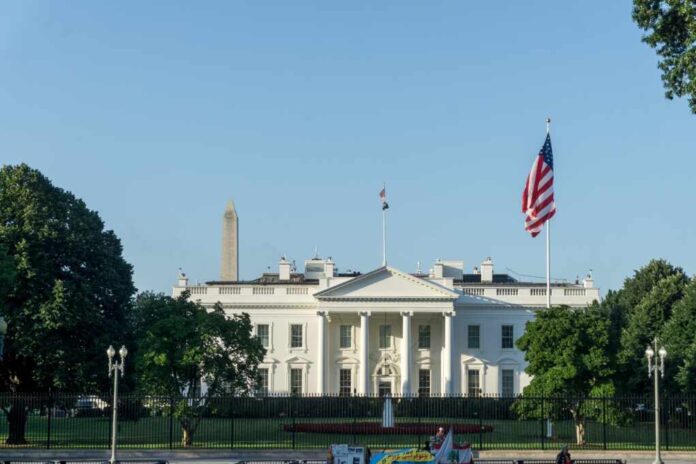
A new addition to the White House threatens to overshadow the very symbol of the presidency, sparking debate on scale and propriety.
Story Highlights
- Trump’s White House ballroom project scales up to 90,000 square feet, surpassing the Executive Residence.
- Architect James McCrery II was removed for cautioning against the grand scale, replaced by Shalom Baranes.
- Demolition of the East Wing raises concerns over federal oversight and preservation.
- The “No Palaces Act” was introduced to mandate reviews and limit unilateral changes.
- Project funded by private donors, questioning ethics and transparency.
President Trump’s Vision: A Grand Ballroom
In a bold move to expand the White House, President Donald Trump has initiated a project to build a 90,000-square-foot ballroom. The vision is to host up to 1,000 guests for grand events, potentially including an indoor inauguration. However, the project’s monumental scale has raised eyebrows and sparked controversy among preservationists and lawmakers.
Trump personally selected architect James McCrery II, known for traditional and smaller projects, to lead the design. Over time, tensions arose as Trump pushed for a larger venue. McCrery, advocating for restraint, warned that such expansion would overshadow the White House itself. This conflict led to McCrery’s removal and the appointment of Shalom Baranes to carry forward the project.
BALLROOM UPDATE: Construction continues on the 90,000-square-foot White House Ballroom, a $250 million project financed by President Trump and private donors. The East Wing replacement will be able to host up to 650 guests as the first dedicated ballroom in White House history. pic.twitter.com/FIelzoyJA8
— Fox News (@FoxNews) October 26, 2025
Demolition and Oversight Concerns
The demolition of the East Wing to make way for the ballroom has triggered scrutiny over federal oversight and historic preservation. Traditionally, such projects undergo extensive review by the National Capital Planning Commission (NCPC). However, the White House argues that NCPC approval was unnecessary since the demolition was not new construction, a position challenged by preservationists and some lawmakers.
In response, Senator Richard Blumenthal introduced the “No Palaces Act,” aiming to require NCPC review for any demolition on White House grounds and mandate congressional approval before private donations fund White House construction projects. This legislative move underscores concerns about unchecked presidential power and the personalization of public institutions.
Funding and Ethical Questions
The project’s cost has ballooned from an estimated $200 million to $300 million, with assurances from Trump that it will be funded through private donations. This approach raises ethical questions about influence and transparency, as private funding for a significant federal property alteration is unprecedented.
As site work progresses, including the installation of structural elements, the project remains on track for completion before the end of Trump’s second term in January 2029. The ballroom has become a political symbol, with supporters viewing it as a legacy addition, while critics see it as a personalized palace built with limited oversight.
Sources:
Trump Fires Ballroom Architect Who Said It Was Too Big
Trump Ousts White House Ballroom Architect as Scrutiny Grows