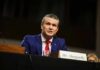
America just watched its top diplomat face the Senate amid a fog of conflicting clips and partial transcripts, raising the question: are we getting the truth about war and policy, or a narrative stitched together by gatekeepers?
Story Snapshot
- Official records confirm Marco Rubio as Secretary of State and a Senate witness, but the Iran-war testimony remains missing from the provided documents [2][3].
- Available hearing materials focus on Venezuela policy, not Iran, creating a visible evidence gap [1][3][4][5][7].
- Rubio’s on-record remarks show concrete sanctions design aimed at civilians, signaling a broader policy style [1].
- Mismatched videos and social clips risk shaping public perception more than the underlying Senate record [1][4][5][7].
What The Record Actually Shows About Rubio’s Role
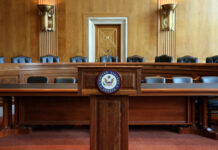
Senate Foreign Relations Committee materials identify Marco Rubio as the Secretary of State and a witness before the full committee, establishing his status and the institutional venue for oversight of United States policy [2][3]. A Senate-published document preserves Rubio’s confirmation-hearing opening remarks, providing an official baseline for his foreign-policy philosophy and role heading the State Department [2]. Those records confirm who spoke and where, but they do not, by themselves, document specific statements about Iran made in a new post-war hearing.
Video and transcript content surfaced in the research point chiefly to a full committee hearing on United States policy toward Venezuela, not Iran [1][3][4][5][7]. The committee’s archived page lists the Venezuela hearing with the Secretary of State on January 28, 2026, confirming date, topic, and venue [3]. That focus matters because it means the most accessible on-the-record exchange involves Latin America sanctions and stabilization aims, while the claimed first testimony since the Iran war lacks a corresponding committee transcript in the supplied set.
Substantive Policy Clues From The Venezuela Hearing
A YouTube transcript of Rubio’s committee testimony describes a short-term mechanism using licensed oil proceeds to stabilize Venezuela and route funds to the Venezuelan people, rather than to the prior regime system [1]. That design illustrates a sanctions approach calibrated to steer economic benefits to civilians while constraining elites. Even though this content is region-specific, it reveals how the State Department under Rubio frames sanctions as tools to manage risk, align incentives, and blunt collateral harm—an approach that often carries over into other theaters.
Committee records and videos show that Rubio addressed specific mechanics rather than only broad rhetoric, indicating that his witness-table arguments included operational detail [1][4][5][7]. That matters for evaluating future testimony: when a secretary emphasizes targeted financial channels and stabilization goals in one region, observers can reasonably test whether similar logic appears in Middle East policy. However, without the Iran-hearing transcript, linking design features across theaters remains an inference rather than a documented fact within this research set.
Why The Iran-War Testimony Remains Hard To Verify
The research package lacks a primary-source transcript, hearing notice, docket number, or dated Senate page for Rubio’s first testimony since the Iran war began [1][3][4][5][7]. That missing documentation limits verification of who asked what, what Rubio answered, and how administration policy was framed. The gap opens space for short-form clips, third-party captions, and partisan summaries to define public understanding. Viewers may believe they saw “the” hearing, when the material pertains to Venezuela or confirmation content instead.
To close the gap, seek the Senate Foreign Relations Committee hearing page tied to the Iran session, the official video archive, and Rubio’s prepared opening statement filed for the record. Cross-check with C-SPAN or the committee’s media gallery to match timestamps, titles, and witness lists. Until those items surface, claims about new Iran-policy lines should be treated as provisional. That caution serves both conservatives and liberals who worry that elites curate selective narratives while core records stay out of easy public reach.
Sources:
[1] YouTube – LIVE: Marco Rubio testifies before Senate for the first time since the …
[2] YouTube – Secretary Rubio testifies before the Senate Committee on …
[3] Web – Marco Rubio SFRC Confirmation Hearing Opening Remarks
[4] Web – [2026-01-28] U.S. POLICY TOWARDS VENEZUELA – Hearing
[5] YouTube – Secretary of State Marco Rubio testifies before Senate …
[7] Web – Marco Rubio Confirmation Hearing Secretary of State