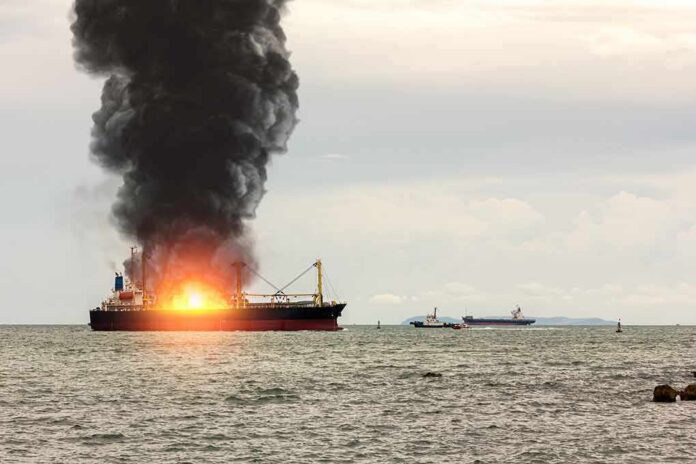
U.S. Central Command says American forces disabled three Iranian oil tankers after Iran targeted U.S. Navy ships near the Strait of Hormuz, raising the stakes at one of the world’s most fragile chokepoints.
Story Snapshot
- CENTCOM reports strikes on three Iranian oil tankers tied to recent Iranian attacks on U.S. warships and commercial shipping.
- U.S. statements frame the action as self-defense to protect navigation in a vital waterway.
- Iran condemns the strikes as illegal and says a fragile ceasefire was breached.
- The Strait of Hormuz has a long pattern of tit-for-tat claims and fast-moving escalation risks.
What CENTCOM Says Happened
U.S. Central Command said American forces carried out a round of strikes that disabled three Iranian oil tankers. The command linked the action to Iranian attacks on U.S. Navy ships and on commercial vessels moving through or near the Strait of Hormuz. The command also said recent operations aimed to degrade Iran’s ability to threaten shipping lanes and impose costs for hostile acts against international commerce. U.S. officials described these strikes as necessary and proportionate self-defense measures.
CENTCOM also reported a broader campaign against Iranian military targets this month, including air defense systems, coastal radar, missile and drone sites, and fast-attack boats tied to maritime harassment. A public release from the command said these actions respond to attacks on commercial ships and seek to protect freedom of navigation, a long-standing U.S. priority in the Gulf. Reports noted that U.S. Navy vessels evaded earlier Iranian missile fire without damage, which U.S. officials say underscores the need to blunt further threats.
How Tehran Is Framing It
Iran’s Foreign Ministry denounced the U.S. tanker strikes as “aggressive actions” that breach international law and violate a ceasefire understanding. Iranian statements said a U.S. air-launched missile hit a tanker’s engine compartment and accused the United States of harassing Iranian shipping and attacking a telecommunications site on Qeshm Island. Tehran warned it would use all available means to answer what it calls unlawful force. These are Iran’s claims; independent confirmation of each point was not presented in the cited reports.
Iranian state-linked outlets also asserted that U.S. attacks were launched from the territory of unnamed regional states and that Iranian forces retaliated against U.S. vessels near the Strait of Hormuz. They claimed significant damage to American assets. U.S. accounts dispute that narrative and say U.S. warships were not hit. The competing versions show how quickly both sides shape the story during a tense exchange, before fuller records are released.
Why This Waterway Drives Fast Risk
The Strait of Hormuz carries a large share of the world’s traded oil and gas. When ships there are attacked or threatened, leaders on all sides feel pressure to act, and fast. Researchers have found that maritime incidents in this strait often trigger quick claims of self-defense and counter-claims over who started it and what is lawful under the United Nations Charter. That pattern can harden long before outside investigators gather full evidence.
Past studies also note that even limited clashes can rattle markets and expose supply chains. Yet some analyses suggest even a conflict on the scale of the 1980s “Tanker War” would have only a modest, not catastrophic, impact on global oil prices. The bigger risk is miscalculation that drags outside powers deeper, closes lanes for days, or prompts broader attacks on ports and energy infrastructure.
What This Means for Americans
American readers see two core themes. First, Washington says it is defending ships in a vital trade corridor. That supports the idea that the United States must keep sea lanes open for global commerce and American jobs. Second, Iran says the United States is breaking rules and hitting civilian-linked targets. That feeds public worries, on the left and right, that great-power moves can slide into a wider war that ordinary families will pay for in higher prices and new deployments.
Many citizens also question whether leaders are leveling with them. They remember earlier Gulf crises where key facts came late. Here, U.S. and Iranian claims conflict on who struck first and what was hit. The best discipline is to stick to what reputable outlets and official releases confirm, and to watch for verifiable details like ship registries, damage photos, insurer reports, and independent maritime alerts. Until then, both escalation and off-ramps remain possible.
Sources:
facebook.com, reuters.com, defence-blog.com, aljazeera.com, foxnews.com, centcom.mil, axios.com, kurdistan24.net, moneycontrol.com, strausscenter.org