

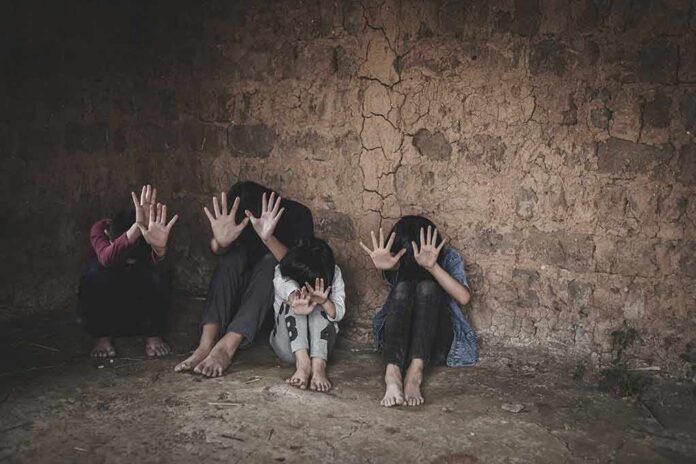
A kidnapping that drags on for three weeks and ends with survivors describing a captive population in the hundreds is not an isolated crime story — it is a window into how organized crime in parts of rural Mexico now operates less like a gang and more like an occupying force with its own logistics, its own detention sites, and its own territorial ambitions.
Key Points
- Six of seven men abducted September 24, 2026 in Ajuchitlán del Progreso, Guerrero, were released alive on October 16 after 22 days in captivity, according to survivor interviews and state prosecutors.
- Survivors told Milenio they were moved between three locations guarded by armed groups that grew from roughly 80 to some 280 gunmen, and that they counted about 136 total captives by tracking the tortillas handed out each day.
- One member of the group, Domingo Atanacio Quirino, 50, remains unaccounted for, with survivors reporting conflicting claims from captors about whether he died, was hospitalized, or was simply moved.
- Survivors say captors threatened to seize El Balcón ejido land and timber, linking the abduction to a broader pattern of land and resource dispossession that researchers have documented across Guerrero for years.
- The freed men and their families are now seeking Mexican government help to pursue asylum in the United States, describing it as their only path to safety.
Twenty-Two Days: What the Survivors Say Happened
The ordeal began on September 24, 2026, when seven men from Ajuchitlán del Progreso, in the Tierra Caliente region of Guerrero, were seized by an armed group. State authorities confirmed on October 16 that six of them had been located alive and released, ending a captivity that stretched across 22 days. In an account published by Milenio on October 23, one survivor described the group being marched and driven between three distinct locations — first to Mesa de las Yeguas, then to Los Orcones, and finally along mountain trails into the municipality of Arcelia — each move putting them deeper into territory controlled by their captors.
At each site the armed presence grew. Survivors described roughly 80 gunmen at the first camp and an additional 200 or so at the second, a scale of manpower that suggests something closer to a paramilitary encampment than a typical kidnapping crew. The six who returned did so showing sores, signs of violence, and severe dehydration consistent with weeks of deprivation and mistreatment, according to reporting on their physical condition at release. Guerrero’s state prosecutor’s office confirmed the release itself; the underlying investigative file, medical examinations, and any charges against identified suspects have not been made public in the reporting available.
Counting Captives by the Tortilla
The most striking detail in the survivors’ account is also the most methodologically plain: deprived of any other way to gauge how many people were being held alongside them, the captives began counting the tortillas distributed at mealtime — one per person, once a day — and arrived at an estimate of approximately 136 captives, including women, elderly people, adolescents, and children as young as twelve. That figure has not been independently verified through an official headcount or rescue operation, but it is the kind of detail survivors are well positioned to observe directly, and it points to a detention operation of a scale well beyond the seven men originally reported missing from Ajuchitlán del Progreso.
Coverage of the case has varied on the precise number of people originally intercepted — some accounts describe seven men taken, others describe eight men held after eleven people were initially stopped, with two women and a minor released early. That variance reflects the difficulty of reconstructing a chaotic, multi-stage abduction from survivor memory rather than any dispute about the central fact: a group of campesinos from El Balcón was taken, held for weeks among a much larger population of captives, and partially released.
Land, Timber, and the Economics of Territorial Control
Survivors reported that their captors were explicit about motive, with one quoted as declaring an intention to kill resistant members of the El Balcón ejido in order to seize their land and timber. That framing — kidnapping as a tool of land and resource dispossession rather than ransom extraction alone — fits a documented pattern. Academic research on Guerrero describes organized crime groups using coercion, including forced recruitment and displacement, to extend territorial and economic control over rural communities, with the state identified as one of the country’s historical epicenters of forced disappearance. An earlier Guerrero-focused study logged roughly 3,800 disappearance cases tracked by local collectives, concentrated around Chilpancingo, Acapulco, and Iguala — a reminder that what happened in Ajuchitlán fits a regional pattern rather than standing apart from it.
The One Who Did Not Come Home
Domingo Atanacio Quirino, 50, remains the unresolved center of the case. Survivors told Milenio they received contradictory signals from their captors about his fate — at various points told he had died, that he had been hospitalized in Arcelia, or simply that he had been separated from the group due to illness. A twelve-year-old boy, Jordi Alberto Atanasio Vidal, who had been released earlier in October, was reportedly told falsely by captors that he too had died, a claim apparently used to intimidate the remaining captives. His family has continued to appeal publicly for information and for his return, underscoring that the case, for them, is not closed simply because six others came home.
Why This Case Resonates Beyond Guerrero
Mexico’s disappearance crisis is not an abstraction for comparison — it is the backdrop against which every detail of this case should be read. The International Commission on Missing Persons recorded 111,521 people registered as disappeared nationally as of September 2023, a scale that has made Guerrero, alongside a handful of other states, a recurring focus of both domestic and international human rights scrutiny. The 2014 Ayotzinapa case, in which 43 student teachers disappeared after an ambush involving local police and cartel gunmen in Iguala, remains the state’s most infamous example of how deeply organized crime and local authority can become entangled — and a decade on, 40 of those students are still missing, a sobering marker of how long such cases can remain unresolved even with sustained international attention.
Against that history, the survivors’ decision to seek asylum in the United States reads less as an extraordinary request than as a predictable response to a documented pattern: families in regions with heavy organized-crime presence and weak institutional protection have repeatedly cited exactly these conditions — forced displacement, coerced recruitment, and impunity for perpetrators — as grounds for seeking refuge abroad. Whether that request succeeds will depend on evidentiary and legal processes that have not yet played out. What is already established is harder to dispute: seven men were taken from their community, six came home changed by what they endured, and one is still gone.
Sources:
borderlandbeat.com, elmanana.com.mx, crprensa.com, elpais.com, amp.milenio.com, nortedigital.mx, fabricadeperiodismo.com