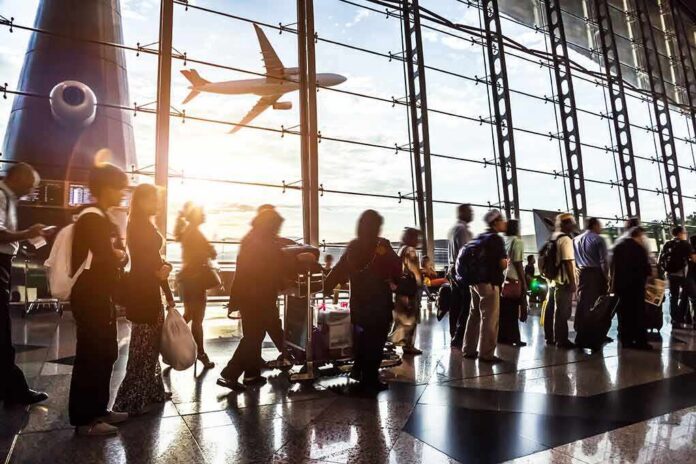
Jakarta’s main airport halted more than 200 flights after ash from Anak Krakatau drifted across flight paths, stranding tens of thousands and forcing emergency health warnings.
Story Highlights
- Soekarno-Hatta International Airport suspended operations as volcanic ash spread over Jakarta’s airspace.
- Authorities cited safety hazards to aircraft engines and public respiratory health.
- Hundreds of flights were canceled or delayed, leaving large crowds stuck at terminals.
- Air traffic managers rerouted traffic around the volcano as a precaution.
What Authorities Did And Why It Mattered
Airport officials at Soekarno-Hatta International Airport in Jakarta suspended flight operations after ash from the erupting Anak Krakatau volcano reached critical corridors. The airport announced the halt on social media and extended it as conditions persisted. National transportation officials said the volcano had been active since late Friday, and ash was detected near the airport early Sunday. The decision aimed to protect aircraft and passengers from engine damage and low visibility risks tied to ash.
Indonesia’s air navigation authority rerouted flights around the volcano to avoid the ash plume. This step follows long-standing global practice during eruptions, where keeping planes out of ash is the safest choice. Aviation manuals stress that ash can abrade surfaces, cloud windows, and melt in jet engines, which can cause failures. That is why the norm is simple: avoid ash-contaminated airspace, even if the plume is patchy or hard to map in real time.
How The Disruption Hit Travelers And Local Life
Airlines canceled or delayed hundreds of flights, affecting connections across Southeast Asia. Local outlets reported crowding in terminals and long lines at help desks as passengers scrambled for rebooking. Regional carriers also adjusted schedules and routes while they waited for clearance. Reports said school activities and some fishing near the Sunda Strait were paused as ash drifted over coastal areas, adding strain to daily life for families who rely on those routines and paychecks.
Authorities said these moves were temporary but necessary. Ash clouds can shift with the wind and rise high enough to reach common cruising altitudes. That means the danger is not only at the runway. Past events show even thin ash can raise safety concerns and force wider closures than some expect. The trade-off is familiar: accept travel chaos now, or risk a rare but severe accident that would be far worse for the public and the economy.
Why Volcanic Ash Grounds Planes So Quickly
Scientists explain that volcanic ash is not soft dust. It is sharp glass and rock that can sandblast a plane’s exterior and scratch cockpit windows. Inside engines, ash can melt, then re-harden and block air flow. That can reduce thrust or even cause an engine to stall. Because there is no universal safe threshold for ash concentration in flight, international guidance urges operators to avoid all ash until risk assessments show the air is clear.
About 170,000 passengers were left stranded on Sunday as Indonesia shuttered its main international airport and seven others, cancelling hundreds of flights after Mount Anak Krakatoa spewed a plume of volcanic ash and lava from more than 150 kilometres away.…
— Jamaica Observer (@JamaicaObserver) September 6, 2026
Policy debates often arise after these shutdowns. Travelers see high costs and delays. Workers lose hours when schools and fishing stop. But the incentives for airport leaders and regulators point in one direction. The penalty for doing too little can be tragic, while the backlash for doing too much is mostly anger and expense. That is why decisions tend to err on caution. When the ash fades and data confirm safer skies, traffic resumes, and the cleanup begins.
Sources:
bbc.com, reuters.com, arabnews.com, aviation-professionals.co.za, skybrary.aero, cambridge.org