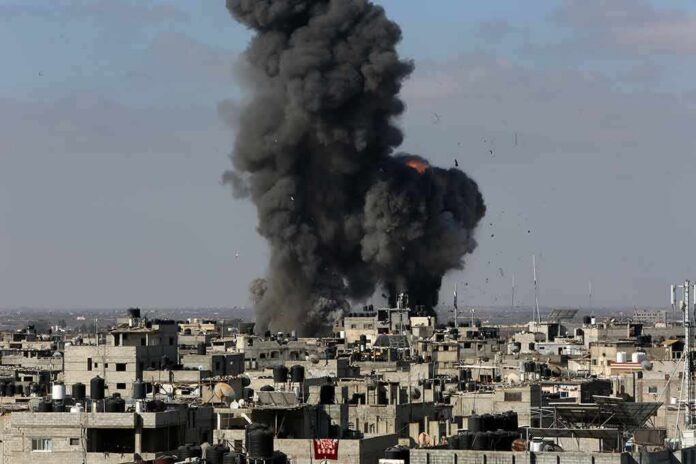
Black smoke and flames rose next to Riyadh’s main airport after overnight air-raid alerts, disrupting flights and exposing how a regional proxy war can hit vital fuel supplies.
Story Highlights
- Large smoke plume and flames appeared near King Khalid International Airport after booms in Riyadh.
- Images showed fire near fuel storage; several flights faced delays and cancellations, according to multiple outlets.
- The incident followed weeks of Houthi threats and strikes on Saudi energy and airport targets across several cities.
- Officials sent an all-clear after alerts; authorities did not immediately detail the cause in early reports.
What Happened Near Riyadh’s Main Airport
Saudi Arabia’s capital heard booms overnight as alerts warned of danger, and by morning a thick smoke column rose near King Khalid International Airport. Reuters video and photos showed flames in the direction of airport-linked fuel storage, while witnesses described black smoke visible from key roads by the terminals. Regional and international outlets reported flight delays and cancellations as firefighters worked the scene and authorities signaled an all-clear after the alerts. Early reports did not assign an official cause.
The episode came amid a surge in attacks tied to Yemen’s Houthi movement, which has targeted Saudi energy assets and airports in recent months. The Iran-aligned group claimed strikes on Saudi Aramco facilities and airports in August and early September, boasting of long-range drones and missiles that can reach deep into the kingdom. Analysts warned that these tactics aim to rattle energy markets and pressure Riyadh, not only by damaging infrastructure but also by forcing costly defenses and flight disruptions.
Why This Target Matters for Energy and Travel
Fuel depots at or near major airports are strategic choke points. Hitting jet fuel storage can halt flights, trigger safety shutdowns, and strain backup supply lines. Saudi Arabia runs one of the world’s busiest aviation hubs and a vast oil network, so even brief outages can ripple into higher insurance costs and schedule chaos. Recent Houthi attacks already forced temporary slowdowns at oil sites and showed vulnerability beyond front-line border regions, adding to market anxiety over export resilience.
Riyadh’s airport connects business routes across the Middle East, Europe, and Asia. A fire near fuel tanks raises risks for travelers, airlines, and cargo shippers who depend on tight timetables. Every diversion burns extra fuel and money. Every cancellation disrupts crews and maintenance plans. When the public sees black smoke by runways, confidence drops. That is part of the leverage these attacks seek: modest physical damage can still deliver outsized economic and political effects in a global hub.
How We Got Here: Escalation and Warnings
In July and August, Houthi leaders warned they would hit Saudi oil sites if the conflict escalated, then announced drone and missile attacks on Aramco facilities and regional airports. Reuters and other outlets chronicled these claims, noting strikes across southern cities and temporary shutdowns at energy locations. Gulf governments delayed talks with Iran as tensions rose, and Saudi forces launched retaliatory strikes in Yemen, deepening a cycle that often lands on energy or aviation infrastructure.
This pattern puts civilian infrastructure in the crosshairs and leaves governments juggling security and transparency. Authorities want to calm markets and travelers, yet also prove deterrence by naming responsible actors. In the crucial early hours, agencies often limit details while fire crews secure the site and air defenses check for follow-on attacks. That timeline can leave a gap where images and witness accounts drive public understanding before formal attributions arrive.
Why Americans Should Care
Attacks on Saudi fuel and airport assets can nudge global oil prices up and inject risk into airline networks. American families feel this at the pump, in airfares, and through supply chain costs that show up in store prices. Many readers on both the right and left already worry that energy shocks punish regular people while elites stay insulated. When foreign proxy wars reach critical fuel nodes, the same pattern repeats: higher costs for working households and more instability for small businesses.
Air attack hits jet fuel depot at #Riyadh airport, sparking firehttps://t.co/H2NdBTkFuP
— Euro Times يورو تايمز (@Eurotimesarabia) September 19, 2026
U.S. policy also sits in the blast radius. Washington relies on secure Gulf energy flows to stabilize prices and fund allies’ defenses. When drones or missiles threaten airports and fuel depots, it pressures the United States to spend more on air defenses, intelligence sharing, and naval patrols. Voters see rising bills and ask why endless crises keep bleeding into their lives. This event underscores a blunt truth: fragile infrastructure abroad can quickly strain wallets at home.
What to Watch Next
Watch for Saudi officials to release a cause finding, flight restoration timelines, and any air defense data. Look for claims and follow-up messaging from the Houthi movement, which often frames strikes as leverage for political or economic concessions. Monitor oil price moves and airline advisories tied to Riyadh routes. If strikes continue to hit energy and aviation targets, expect tougher regional responses and fresh debate in Washington over how to protect supply lines without fueling a wider war.
Sources:
thegatewaypundit.com, reuters.com, straitstimes.com, newindianexpress.com, news24online.com, english.ahram.org.eg, france24.com