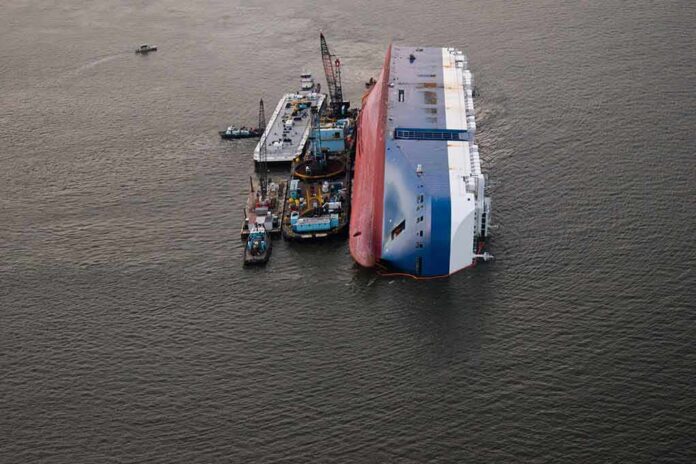
Rescuers are racing against time after a packed Indonesian ferry overturned in rough seas, leaving about 130 people unaccounted for.
Story Snapshot
- Officials say Virgo Transport 8 overturned in bad weather in the Java Sea with 240+ aboard.
- Search teams report 103 evacuations and one confirmed death so far.
- The ship lost contact around 2:00 a.m. local time after the captain reported a dangerous tilt.
- Navy and rescue vessels are combing waters roughly 150 km from the planned destination.
What Officials Confirm About the Overturning
Indonesian authorities said the passenger ship Virgo Transport 8 overturned during bad weather in the Java Sea while carrying more than 240 people, with about 130 still missing. Reporters and rescuers gave the onboard count as 243 passengers and crew. The figures may shift as teams verify the manifest and rescues, but officials agree the incident involved a large load and a sudden loss of stability in rough conditions.
The head of the Banjarmasin Search and Rescue Office, I Putu Sudayana, reported 103 evacuations by midday local time. Those evacuations included 102 survivors and one confirmed fatality. That tally came as crews kept searching for the many people who remain unaccounted for. Some outlets have cited higher death numbers, but the core rescue figure from the named local chief remains 103 evacuations at that time.
The Timeline: Lost Contact After a Tilt Report
Search leaders said the vessel lost communication at around 2:00 a.m. local time after meeting severe weather. Before contact dropped, the captain warned that the ship was tilting. That detail matters because a lasting tilt can signal flooding, cargo shift, or loss of balance. The combination of a reported list and heavy seas points to a fast-moving crisis that left little time for an organized evacuation.
Rescue teams moved toward the ship’s last known position in the Java Sea, which was reported to be roughly 148 to 150 kilometers from the planned destination. The response included the national rescue ship KN SAR Laksmana, the Indonesian Navy ship KRI Nala, and a navigation vessel, along with nearby commercial ships. That mix of assets shows the scale of the search and the urgency to find people still in the water or in life rafts.
Why Early Numbers Differ and What Comes Next
Early counts of people aboard and missing do not perfectly match across outlets. Some reports say “more than 240,” others say 243 or 241. Missing counts range from around 125 to about 140. This gap is common in the first hours of a rescue, when survivors are spread across several ships and the manifest is still being checked. Authorities have not confirmed a final cause and are weighing natural, technical, or human factors.
Search and rescue officials will likely release the ship’s passenger and crew lists, radio logs, and a fuller timeline once the urgent phase eases. Weather records, interviews with the captain and crew, and maintenance files will help explain how a tilt in rough seas turned into a capsize. For now, the priority remains clear: locate and recover the missing as fast as possible while seas and daylight allow.
The Bigger Picture: Ferry Safety Risks in Indonesia
Indonesia relies on ferries to link its many islands, which makes safety a constant concern. Studies of past accidents in the country point to a mix of causes. Human error appears often, with smaller shares tied to mechanical failures and bad weather. That pattern suggests storms can trigger trouble, but training, upkeep, and operating choices shape how ships handle stress. These lessons will frame the review of this overturning once the search ends.
For readers at home, this story hits a nerve we all feel. Ordinary people boarded a routine ferry and met a system under strain. Rescue crews are doing the hard work now. But the deeper fixes take leadership, clear rules, and steady follow-through. When leaders ignore maintenance, skimp on training, or let rules slide, people pay the price. That truth crosses borders and politics. Accountability and basics done right still save lives.
Sources:
youtube.com, gulfnews.com, reuters.com, iieta.org, repository.unsada.ac.id