
President Trump landed in Charlotte, then crossed into South Carolina to personally rally voters for appointed Senator Darline Graham in a race both parties now treat as tight.
Story Snapshot
- Trump flew into Charlotte and motorcaded to a South Carolina rally to boost Graham.
- Governor Henry McMaster appointed Graham to the Senate after Lindsey Graham’s death.
- Trump’s backing helped Graham win the Republican runoff in August.
- National coverage says the race remains competitive despite Trump’s push.
President Trump’s On-The-Ground Push In The Carolinas
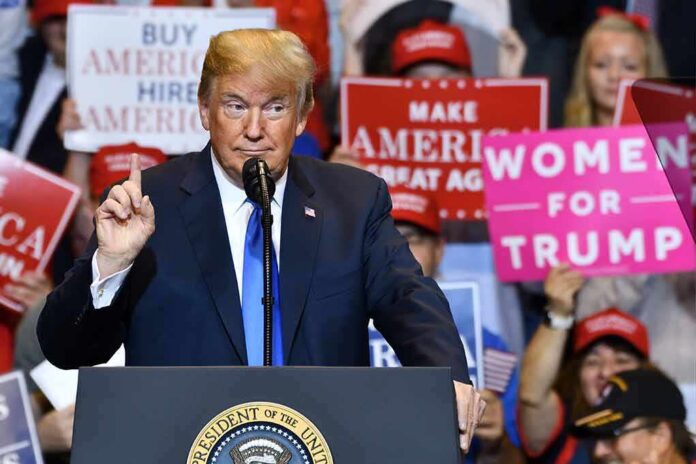
The Charlotte Observer reported that President Trump touched down at Charlotte Douglas International Airport late morning on October 29, 2026, then traveled by motorcade to Rock Hill for a South Carolina Senate campaign rally for Darline Graham. The stop follows an October 21 rally in Pendleton aimed at energizing turnout before Election Day. The personal visit shows the White House putting time and attention into a race that Republicans usually win with ease.
South Carolina Public Radio also described Trump’s return to the state as part of a focused effort to lift Graham in a competitive contest. The report placed Trump on stage with state Republican figures and framed the event as a turnout push. Together, the visits increased media coverage, drew volunteers, and signaled to Republican voters that the presidency views the seat as a priority this fall. That visibility can help raise money and shape the final news cycles.
How Graham Became Senator And Why The Race Is Close
Governor Henry McMaster appointed Darline Graham to the United States Senate in July to fill the vacancy after Senator Lindsey Graham’s death, giving her the advantage of incumbency heading into the fall campaign. She then secured the Republican nomination by winning an August runoff, a victory that outlets tied to Trump’s endorsement and attention to the race. Despite those edges, national reporting has described her general election as closer than expected in a red-leaning state.
CNN’s election coverage noted that Republican groups boosted spending in South Carolina as signs of a tight race emerged. That level of investment suggests party leaders see risk and want to lock down the seat. Appointments can carry benefits like name recognition, but they also invite extra scrutiny of a new senator’s record and positions. The pace of outside spending and presidential travel both point to a high-stakes finish.
Fault Lines Inside The Party And On Policy
Unity inside the Republican coalition is not perfect. Representative Ralph Norman, who lost the Senate primary to Graham, said he would not campaign for her, creating a public rift that could dampen enthusiasm in some conservative pockets. That kind of split matters in a close race where turnout at the margins can decide the outcome. Trump’s rallies aim to smooth over these gaps by giving supporters a single team message.
Policy questions have also tested the campaign’s message discipline. Reporting has highlighted that Graham has criticized Chinese manufacturing while her husband’s employer relies on factories in China, raising conflict-of-interest concerns that opponents can exploit. Campaigns often live or die on which story dominates the last weeks. Trump’s involvement keeps attention on party control and border-to-border stakes, while critics try to focus voters on personal and policy contradictions.
Why This Matters Beyond One Rally
Presidential travel changes the scale of a race. Trump’s appearances bring national cameras, more donors, and clearer party cues for voters. Research on endorsements and rallies shows they can boost attention and resources, though effects on votes can vary by state and timing. What is certain here is the choice to spend presidential capital in South Carolina. That choice signals that leaders see real risks and want every lever pulled before voters make the final call.
🇺🇸 A laugh from the crowd in Rock Hill.
Speaking about Senate candidate Darlene Graham, President Trump recalled how her brother, former Sen. Lindsey Graham, used to call her "the greatest person" he ever knew.
"What about me? I'm the president," Trump joked.#TruthSocial… pic.twitter.com/iP00F3ZKX3
— Truth Social (@truthsocial) October 29, 2026
For many Americans, this episode echoes a larger worry. Leaders in both parties pour time and money into campaigns while core costs rise and trust in Washington falls. Voters on the right see border and energy failures. Voters on the left see inequality and cuts to social supports. Both see insiders protecting their own. This race will not fix those deeper issues. But it shows how power moves when control of the Senate is on the line and how quickly national priorities can narrow to one state.
Sources:
facebook.com, charlotteobserver.com, governor.sc.gov, cbsaustin.com, edition.cnn.com, nbcpalmsprings.com, jta.org