

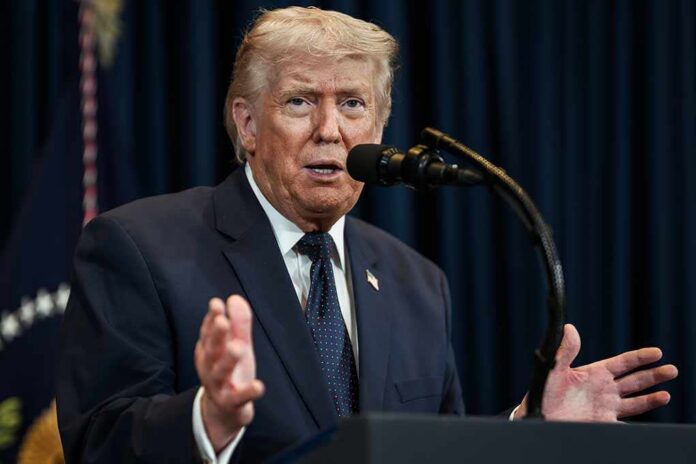
After Democrats won both chambers of Congress, President Trump still holds tools to block, steer, and stall laws that miss his agenda.
Story Highlights
- Trump keeps veto power, and Democrats lack the votes to override without Republicans.
- Executive authority lets Trump drive policy inside agencies despite losses in Congress.
- Senate filibuster rules make it hard for Democrats to pass partisan bills he opposes.
- Democrats can investigate and slow confirmations, raising day‑to‑day pressure on the White House.
Veto Power Sets the Baseline for Any New Law
Constitutional veto power gives President Trump a final say on any bill that reaches his desk. Contemporary reporting quotes him calling the veto one of the strongest presidential tools. Democrats do not hold two‑thirds majorities, so they cannot override a veto without Republican support. That math shapes every negotiation. Democratic leaders must either win some Republicans or scale down bills to avoid a veto. The veto threat alone can narrow options before votes even begin.
Veto fights are not automatic wins for the White House, but they shift leverage. Leaders weigh whether a tough bill is worth a public defeat. If they pass it anyway, they face a likely veto and then a high bar to reverse it. That sequence often pushes Congress toward narrower spending bills and short‑term deals. Gridlock is not a quirk. It is a feature of how the Constitution forces both branches to share power when they disagree.
Executive Branch Levers Remain in Play
Control of federal departments allows a president to act even without new laws. Presidents set enforcement priorities, sign executive orders, and direct rulemaking calendars. Reporting notes that losing Congress does not erase those powers. Trump can restrain or redirect policy through administrative action, though courts and statutes set limits. Agency guidance, grant criteria, waiver choices, and regulatory timing all influence daily life. These moves rarely grab headlines but can steer money, rules, and momentum.
Staffing gets harder under a Democratic Senate. The Senate can slow, reject, or leave nominees in limbo. That can sap speed and reduce the pool of loyal managers. Trump still can remove cabinet members and shuffle roles, but confirmations will take longer. Vacancies push more acting officials into key jobs, which can invite legal fights and instability. Even so, day‑to‑day authority over permits, inspections, and enforcement still sits inside the executive branch.
Senate Rules and Investigations Shape the Battlefield
Democrats remain below the 60 votes often needed to break a filibuster in the Senate. That floor protects Republicans’ ability to block bills early. It also raises the odds that sweeping partisan bills stall before they ever test a veto. Combined with the veto, these rules reinforce narrow, must‑pass deals over big packages. The likely result is a cycle of short funding bills and targeted negotiations rather than large reforms that either side dislikes.
Democratic control brings committee gavels, subpoena power, and hearing schedules. Those tools can drag the White House into constant defense. Investigations can expose documents, force testimony, and shift public focus. They also consume time that leaders might spend on policy. Reuters and ABC News report that Democrats can block nominees and expand oversight reach, creating pressure points across agencies and the West Wing. Formal power remains with the president, but daily momentum can tilt toward Congress.
What This Means for Policy, Spending, and the Public
Expect fewer large new laws and more fights over what not to fund. Spending bills are where leverage bites. The White House can press for policy riders or resist them, knowing a veto threat looms. Democrats can write bills that test Republican unity or split the opposition. Either path carries risk if the government nears a shutdown. Voters will likely see more brinkmanship and last‑minute deals, each side blaming the other for delay and waste.
For both conservatives and liberals, this phase can feel like the system is stuck. Many believe elites protect their turf while costs rise and services lag. This structure does not fix that feeling. It can deepen it. The president holds real blocking power. Congress holds real oversight power. Neither side alone can deliver sweeping change. That tension is the point of checks and balances. It safeguards against overreach, but it also slows bold action when problems feel urgent.
Sources:
youtube.com, thehill.com, abc.net.au, edition.cnn.com