

When lethal intimate-partner violence erupts, it rarely comes without signals; in the Moira–Lyons case, police-confirmed homicide and suicide sit alongside a documented protection order, an arrest for violating it, and a daughter’s detailed account of escalating obsession — a pattern that experts recognize all too well.
The Short Version
- New York State Police determined that Melissa Pelc-Lohr was killed by gunshot in a homicide and that her ex-husband, Norman “Ed” Lohr, died by suicide after a vehicle pursuit.
- Court records cited in local reporting show a judge issued a personal-protection order against Lohr in 2024; he was arrested in 2025 for violating it, with an additional alleged violation reported in 2026.
- The victim’s adult daughter, Allison Pelc, publicly alleged a prior rape, stalking, and a disturbing “shrine” — claims that shaped the narrative of escalating risk.
- The sequence aligns with known risk constellations in intimate-partner homicide-suicide involving firearms, separation, and prior controlling behavior.
What is firmly established: the homicide, the pursuit, and the suicide
State police investigators tied two scenes into one chain of events: the killing of Melissa Pelc-Lohr in Moira, New York, and the subsequent vehicle pursuit that ended near Lyons with Norman “Ed” Lohr dead from a self-inflicted gunshot wound. Newsrooms working from New York State Police releases and autopsy findings reported the manner of death in both cases — homicide for Pelc-Lohr and suicide for Lohr — and connected the pursuit to the Northern New York killing. Those determinations anchor the factual backbone of the case; they are not in dispute.
Coverage from regional outlets traced the timeline: discovery of the victim in Franklin County, an alert to downstate agencies, a pursuit that shut down stretches of Route 14 in Wayne County, and the final scene inside Lohr’s pickup truck. The essential point is not the spectacle of the chase but the investigative through-line: law enforcement identified Lohr as the suspect in the homicide and, before he could be apprehended and charged, he died by his own hand — a procedural dead end that foreclosed a criminal trial while leaving a clear narrative of fatality and sequence.
The documented legal interventions before the killing
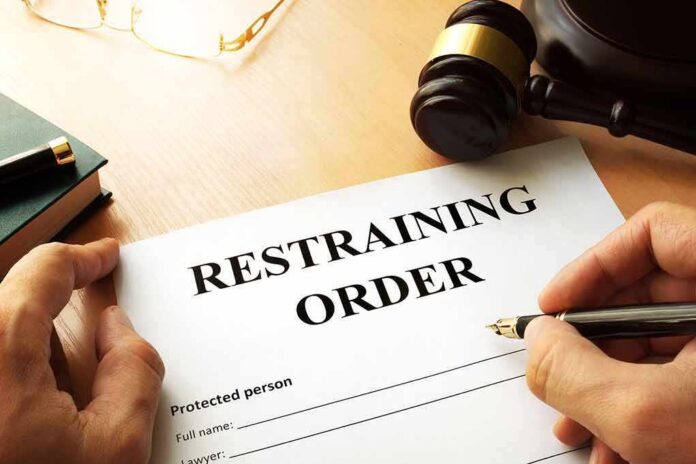
Before the homicide, a court had already intervened. Local reporting shows a judge granted a personal-protection order against Lohr in 2024. That was not a paper formality; in April 2025, Lohr was arrested for violating that order, according to News10NBC’s review. In early October 2026, Pelc filed an affidavit alleging another violation via group messaging that reached both her and her mother. These are tangible mile markers — a standing protection order, at least one arrest for violating it, and an additional alleged breach reported to authorities — that signal recognized risk and attempted containment by the justice system.
Protection orders are tools with real bite when enforced; they also function as dose–response indicators of danger, especially when breached. Research on intimate-partner homicide-suicide consistently flags firearm access, prior threats, stalking or harassment, and recent separation as warning signs; the presence of a firearm alone substantially elevates lethality when violence escalates. In this case, the order, the reported violations, and the ultimate use of a gun in both the homicide and the suicide track to that risk profile, even as each case’s causality remains particular rather than formulaic.
The daughter’s public allegations and how they fit the picture
After her mother’s killing, Allison Pelc went public with stark claims: that Lohr had raped her in January 2023, that he had harassed and stalked her and her mother for years, and that she found a closet “shrine” — underwear and “inappropriate items and liquids,” as she described them — in his residence. She also referenced nearly 100 firearms once stored in that space. These allegations, which she tied to a sheriff’s office contact and a sworn statement for a protection order, were carried by multiple outlets; they are specific, contemporaneously anchored in part, and offered by a named accuser on the record.
Two things can be said at once without contradiction. First, the sexual-assault and “shrine” allegations have not been adjudicated in criminal court or publicly corroborated by forensic files in the reporting to date. Second, those same allegations are detailed, sworn in part through protection-order paperwork, and consistent with patterns of fixation and coercive control often observed before intimate-partner homicide. The absence of a completed criminal case does not erase the gravity of a named account; it explains why some elements remain allegations rather than charges or findings. The homicide and suicide, by contrast, rest on official determinations.
The mechanism of escalation: why firearms and separation matter
Intimate-partner murder-suicide is a distinct subtype of lethal violence. Nationally, analyses estimate that roughly 62% of U.S. murder-suicides involve killing an intimate partner; firearm access sharply amplifies the odds that coercion ends in homicide rather than injury. A recent case-control study linked firearm use to markedly higher odds of perpetrating intimate-partner murder-suicide, underscoring the straightforward mechanics of lethality when a gun is present. Reviews and public-health syntheses reach parallel conclusions: the combination of escalating control, stalking, threats, and weapon access creates a combustible environment in which a rupture — a breakup, a move, a protective order — can trigger catastrophic violence.
Protection-order involvement, interestingly, has shown mixed associations in research: in some samples, it correlates with lower odds of intimate-partner murder-suicide, possibly reflecting intervention effects or selection differences. In practice, that nuance does not minimize the importance of orders; rather, it frames them as one strand in a web of risk mitigation that must be coupled with enforcement, safety planning, and attention to firearms — especially where violations surface, as they did here.
What competent systems do next
In the wake of a murder-suicide, the usual criminal arc ends, but prevention work continues. Best practice emphasizes rigorous review of prior contacts with law enforcement, the protection-order docket, service records, and arrest outcomes to stress-test where risk might have been flagged earlier or acted upon more decisively. That includes examining communications that allegedly breached court orders, the handling of any earlier sexual-assault report, and the chain of interagency notifications as the situation migrated across jurisdictions — in this case, from Michigan ties to Northern New York and finally to Wayne County.
For families navigating similar threats, the practical counsel remains grounded: document every unwanted contact; pursue civil protection promptly; coordinate with advocates who can translate a paper order into a safety plan; and, where statutes allow, seek removal or surrender of firearms alongside no-contact terms. The empirical literature is unambiguous on the physics of harm: when an abuser with fixated intent has access to a gun, the margin for error narrows to a sliver.
SO, THEY'RE ELIMINATING ALL THE JEWISH LEADERS.
Remember, Trotsky built the Red Army.
Ribentroof is the man from Germany representing Hitler. Molotov is the one from Russia representing Stalin.
And in this agreement they agree to work together. They are in treaty with one…— Billy Dunn (@DunnBilly87734) November 5, 2026
The through-line: a preventable pattern, not an isolated bolt from the blue
No single case can carry the weight of national statistics, but the logic is the same at the micro and macro levels. A homicide established by autopsy, a suicide at the end of a pursuit, a standing protection order and a prior arrest for violating it, and a daughter’s detailed portrait of obsession all point to a through-line — escalation over time culminating in the most final form of control. The system did not ignore this case; a court acted, police arrested, and agencies mobilized after the killing. Yet the outcome was still fatal. That is the hard lesson professionals in this space know well: interruption must come earlier, be enforced tighter, and, above all, reckon squarely with the role of firearms in turning warning signs into funerals.
Sources:
people.com, nny360.com, 13wham.com, syracuse.com, rochesterfirst.com, dailyvoice.com, pubmed.ncbi.nlm.nih.gov