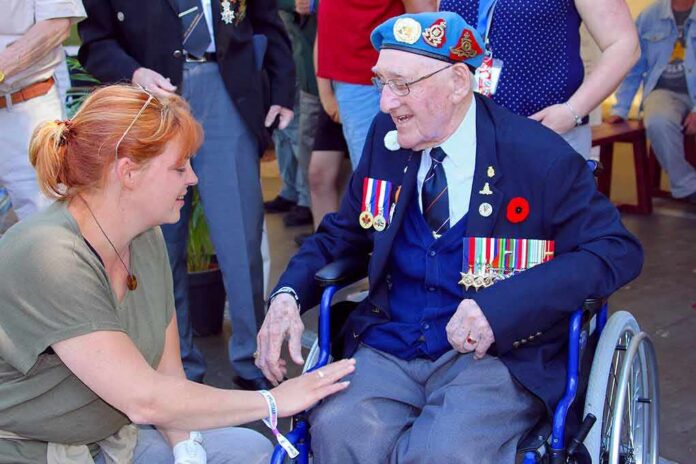
Fewer than 10 American veterans who walked through Hiroshima and Nagasaki after the atomic blasts are still alive, and their first-hand memories are vanishing fast.
Story Snapshot
- Fewer than 10 U.S. veterans who saw the bombed cities remain alive.
- Defense records show hundreds of thousands served in occupation zones, but only a tiny subset witnessed the ruins up close.
- Historians and filmmakers are racing to record final testimonies before they are gone.
- Oral history projects and documentaries offer one of the last chances to preserve these accounts.
The Vanishing Firsthand Record
Military and historical reporting now places the surviving Americans who personally saw Hiroshima and Nagasaki’s aftermath at fewer than 10 people. That number reflects a simple truth about time. World War II veterans are over 95 years old today. As they pass, the country risks losing unfiltered accounts of what nuclear war looks like at street level. These witnesses describe rubble, radiation fears, and human loss in plain words. Once they are gone, only recordings and archives will remain.
Defense documents help explain the bigger picture. The Defense Threat Reduction Agency’s Nuclear Test Personnel Review found that U.S. troops served in the Hiroshima area from early October 1945 into March 1946, and in the Nagasaki area from mid-September 1945 into July 1946. More than 255,000 veterans have been identified as part of these occupations. That large group includes logisticians, medics, and guards. The tiny number of living eyewitnesses reflects only those who actually walked the destroyed cities soon after the blasts.
Why Definitions Matter for History
Researchers warn about a gap between broad labels and narrow lived experience. Many Americans in the occupation count as “atomic veterans” in records, but far fewer entered the city centers and saw the damage first-hand. Journalists and filmmakers now focus on that smaller group to avoid blurring categories. Clean definitions shape how we teach the war, support veterans, and talk about nuclear risk. Precise language also stops future debates from twisting what these men actually did and saw on the ground.
That is why groups are pushing to capture voices now. The “Voices of the Manhattan Project” archive has built a deep library of oral histories from scientists, service members, and families tied to the bomb program. These recordings let the public hear details in the veterans’ own words: the smell of ash, the silence of streets, the fear of unseen health risks. Once the last eyewitness is gone, these tapes and transcripts become the main way the next generation understands the moral and human weight of atomic war.
The Documentary Push and Public Memory
Recent reporting highlights a renewed documentary push to feature the final American eyewitnesses from Hiroshima and Nagasaki. These projects aim to give context for a new audience raised far from the war, and to balance strategy talk with human stories. Filmmakers say the goal is simple: preserve direct testimony and pair it with Japanese survivor accounts to show how nuclear use reshapes lives for decades. That shared record helps citizens judge policy claims made today about deterrence and war.
The urgency also reflects a broader civic worry. Many Americans on the left and right feel the government fails to level with them on war costs and long-term care for veterans. Clear, preserved testimony can cut through that. It reminds leaders and the public what is at stake when decisions about force are made far from the battlefield. Hearing from the last eyewitnesses is not about blame. It is about truth, memory, and a duty to learn before the lights go out on living history.
Sources:
military.com, pbs.org, americanarchive.org, foxnews.com